
Marcus Bösch, the editor of the Understanding TikTok newsletter, has put together a checklist for “when a meme is everywhere and you’re unsure whether to cover it, contextualise it, or leave it alone.” (PDF version here).
The checklist — M.A.T.T.E.R. — covers six things to consider: Meaning, ‘Affect’ (emotion), Type of format, Temporality, Ethics and relevance.
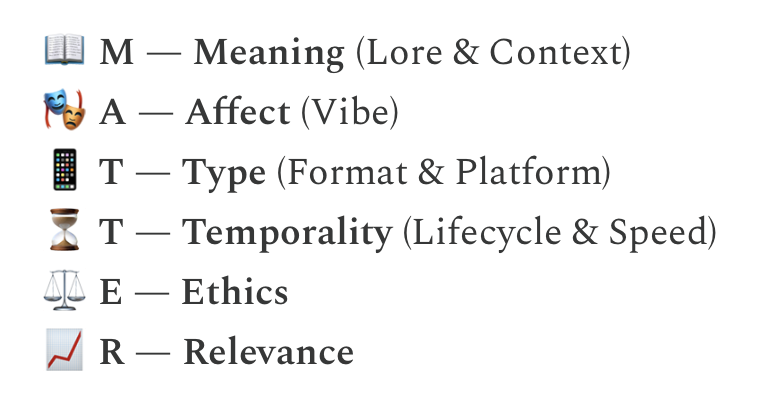
“It offers a fast, structured way to assess what a meme does, why it works, and whether it actually matters,” Bösch writes, encouraging reporters “to slow down, separate feeling from meaning, assess impact and ethical risk, and make a conscious editorial decision” before embedding or covering a meme.
The MATTER checklist
Meaning is all about checking if you understand the background to the meme, who is likely to understand it, and “which parts of its meaning are coded, dogwhistled, or only visible to in-groups.”
Affect asks “what emotion does the meme trigger first? Is it earnest, ironic, cynical, or ambiguous?”
Type involves looking at the format of the meme, if AI is involved, and to what extent it’s native to a particular platform.
Temporality requires you to consider how long the meme has existed and whether its meaning has changed in that time, as well as where it is in its lifecycle (for example, is it likely to trigger widespread recognition, or boredom)
Ethical considerations include any use for propaganda purposes and agenda-setting, the involvement of vulnerable people, trauma or harassment, and the potential to cause harm.
Relevance involves relating the meme to classic values around newsworthiness, asking the question why it matters now. It might be because of who is circulating the meme, or the impact that it is having. Relevance also relates to the audience and whether it is circulating among that audience and likely to affect them.
Marcus says he has tested the approach “on a mix of older and current memes” and is inviting others to try it out. You can contact him with feedback at m@marcus-boesch.de
 Online Journalism Blog