Category Archives: online journalism

Repubblica.it’s experiment with “Investigative reporting on demand”

Repubblica.it's experiment with

Alessandra Bonomolo reports on an Italian experiment to involve readers in investigative journalism.

Whether investigative journalism should be considered “dead” or “alive”, it still proves to be a topical issue able to engage readers by only mentioning its name.

Italian Repubblica.it, the online edition of the daily la Repubblica, has launched an investigative reporting “on demand” initiative. After the first three releases, the idea seems to be succeeding, with thousands of readers responding.

Every month, the online community is asked to choose an issue for reporters to investigate, among an array of options – all related to the environment. “Environment is a strategic editorial issue for us”, says Giuseppe Smorto co-editor of Repubblica.it.

The shortlist of options is drawn up by Repubblica’s correspondents. Most of the issues strongly affect a specific geographical community. Others may include follow-ups on big events in the past, such as the Winter Olympics held in Turin in 2006.

Although they are not all “nationwide and very appealing topics”, Repubblica considers the initiative as part of “an investment in the relation with the readership”. As the investigations are expected to mostly interest local communities, the proximity factor appears to play its part in the initiative’s good response. But, according to Giuseppe Smorto, the editorial focus remains on the environmental aspects.

The readers’ investigations are published both as online articles and videos. Such coverage clearly increases the costs for the news organisation, but it is seen as “an effective way to diversify the product for its final use (computer, smartphone or tablet) in order to reach out to more people”.

Unlike other outlets, Repubblica.it is not engaging its readers in the investigation itself (for instance, by asking them for tips like the Washington Post). Rather, the “investigation on demand” project involves readers in the editorial process, by choosing the topic of the investigation.

This strategy echoes another initiative of the website. Every day, Repubblica Domani broadcasts the morning editorial meeting, opening to the public the doors of their newsroom.

“This is a most advanced form of interaction with the readership”, says the online co-editor. But having readers participating in the editorial process implies that journalists also make their own investigative process open to the public. Should the original hypothesis not be verified by the facts, the reader will see an unexpected conclusion. Potentially, they will even read an investigation with no case at all, which can lead to disappointment.

“This comes with the imperative of transparency and verification”, says environment correspondent Antonio Cianciullo. The newspaper’s investigation into a controversial pollution case concluded, for example, that measures have been eventually put in place and now the situation is under control.

Given the response with the environmental “on demand” investigations, Repubblica says the initiative may be replicated in other sectors.

Getting full addresses for data from an FOI response (using APIs)

heatfullcolour11-960x1024

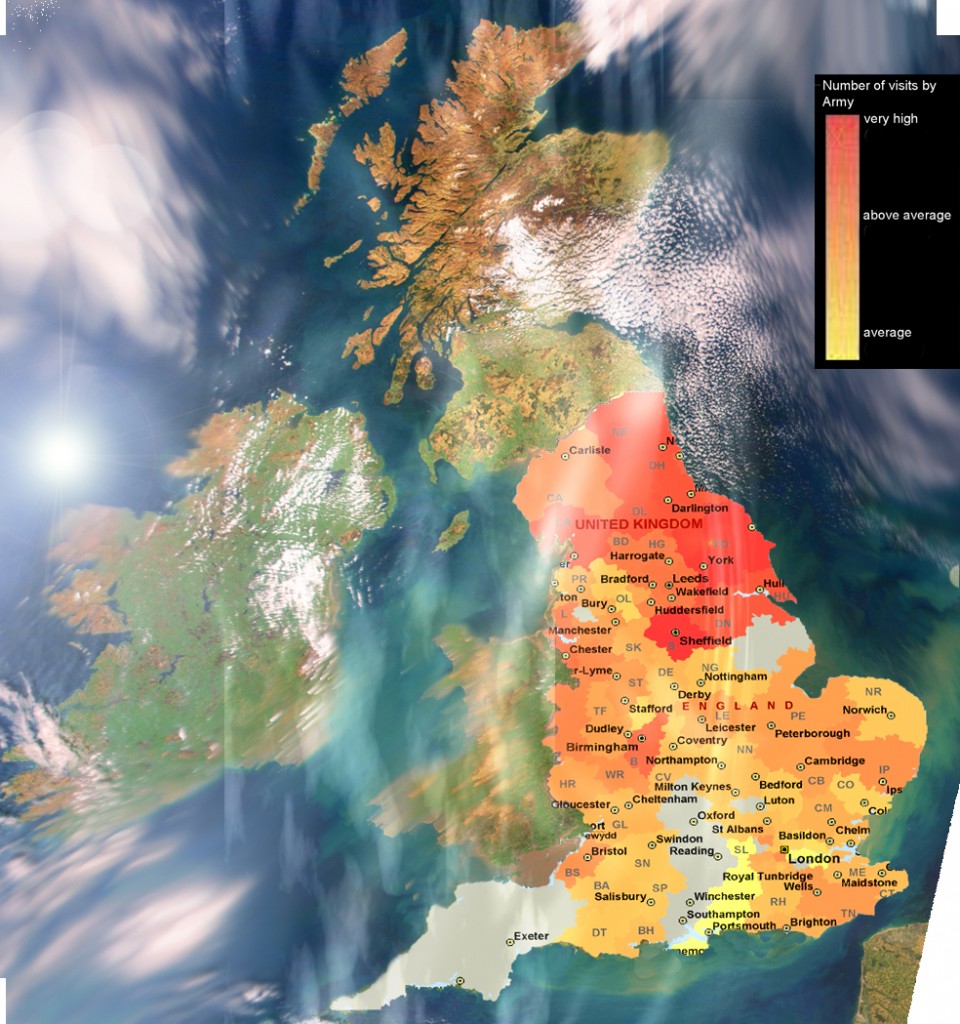
Here’s an example of how APIs can be useful to journalists when they need to combine two sets of data.

I recently spoke to Lincoln investigative journalism student Sean McGrath who had obtained some information via FOI that he needed to combine with other data to answer a question (sorry to be so cryptic).

He had spent 3 days cleaning up the data and manually adding postcodes to it. This seemed a good example where using an API might cut down your work considerably, and so in this post I explain how you make a start on the same problem in less than an hour using Excel, Google Refine and the Google Maps API.

Step 1: Get the data in the right format to work with an API

APIs can do all sorts of things, but one of the things they do which is particularly useful for journalists is answer questions. Continue reading

What is investigative journalism (for)?

On Wednesday I attended a fascinating conference addressing the question of whether investigative journalism was “dead or alive”. As is now routine at these events the ‘Is ice cream strawberry?’ question reared its head as those assembled tried to establish just where they stood in this Brave New World – but this time it got me thinking…

It was a stunning line up of speakers – live, pre-recorded, and remote – and after being drawn into a Skype two-way with David Leigh by chair Kevin Marsh on whether “professional” journalists still had a role to play in all this, I started to literally sketch out – on paper – some of the key questions underlying investigative journalism’s own identity crisis.

Is investigative journalism defined by how its done, or what it does?

Investigative journalism was described in many ways throughout the afternoon: as “uncovering the hidden”; “expensive”; “difficult”; “requiring dedication”; “has impact”; “holding power to account”. These terms are important: I’ve blogged elsewhere about journalism’s professional ideology and how it compares to bloggers’, and investigative journalism has its own professional ideology within that. If we are going to ask “But is it investigative journalism?” then these will be particularly relevant.

For example, there was a focus on investigative journalism as process that particularly fascinated me: Donal Macintyre talked about the ‘undercover reporter’ as a “narrative device” to allow them to create a narrative around important but difficult-to-dramatise issues, rather than something inherent in investigative work itself. In other words, for his purposes the process of ‘going undercover’ had a storytelling function as much as – if not more than – an investigative one.

On the other hand, some members of the audience dismissed modern examples of investigative work because it did not fit into this mythology.

A comparison of the Wikileaks, MPs’ expenses and Watergate stories is useful to flesh this out: in looking at those three where is the cut-off point that makes this one ‘investigative’, and another not? More to the point, why do we care?

If Wikileaks hadn’t had a website, would it make those stories more ‘investigative’? Do the parts of Watergate based on public documents not count as ‘investigative’ because they were available to anyone with a library card?

It struck me that this idea of ‘uncovering the hidden’ was key – and not too dissimilar to the general journalistic idea of ‘reporting the new’.

Defining ‘hidden’

What is ‘new’? It can be what happened today – but it is not limited to that. It can also be what is happening tomorrow, or what happened 30 years ago. It can be something that someone has said about an ‘old story’ days later, or an emerging anger about something that was never seen as ‘newsworthy’ to begin with. The talent of the journalist is to be able to spot that ‘newness’, and communicate it.

So does journalism become investigative when that newness involves uncovering the hidden? And if so, what is ‘hidden’?

I would argue that it is anything that our audience couldn’t see before – it could be a victim’s story, a buried report, 250,000 cables accessible to 2.5 million people, or even information that is publicly available but has not been connected before.

Like the journalist’s eye for ‘the news’, ‘the hidden’ is subject to individual perceptions, and the talent of a particular journalist for finding something in it – or a way of seeing it – that is ‘newsworthy’.

I sketched out a thought experiment: what if all of the investigative journalist’s material was public: documents, sources (witnesses, experts, victims, actors in the story), and information?

The role of the investigative journalist would perhaps be as follows:

  • To make the ‘hidden’ (to their audience) ‘visible’;
  • To hold power to account;
  • To make connections;
  • To verify;
  • To test hypotheses.

This doesn’t sound very different to how we see their role now.

But in reality, all of the investigative journalist’s material will most likely not be online, so if we leave that thought experiment behind we can add other elements to acknowledge that, particularly in a digitised world:

  • Making the invisible visible (i.e. digitising offline material, from paper documents and witness accounts to the ‘invisible web‘)
  • Making the disconnected connected
  • Identifying gaps in information – and filling them

These are all in fact ‘making the hidden visible’ in another form. It is the final one which comes closest to the process-based model identified above. But does it matter whether they fill those gaps with material that is in the public domain or which only exists in a single witness’s diary?

(I may have missed elements here – if I have, please let me know)

Narrative and authority

The role of a journalist in creating a narrative came through strongly in the conference – and also comes through strongly here: hypotheses are about narratives; making connections is about making narratives.

The other role that comes through strongly is institutional: holding power to account involves (but does not require) being in a position of power to do so; verification involves (but does not require) the stamp of institutional ‘due process’.

My own experience with Help Me Investigate suggests that these two roles remain important bases for journalism as a profession: in crowdsourced journalism, ‘writing the story up’ did not particularly appeal to people (the story was in their minds already) – only journalists wanted to do that. And it took an established media outlet to get official reaction.

This is not to suggest that only journalists can “have impact” as was mentioned at the conference – there are plenty of examples of groundswells of opinion online instigating media coverage: Memogate is perhaps the best known example. But this does not mean we need journalists – it means that we need publishers and broadcasters. There is a difference.

Demystification

Does deconstructing investigative journalism in the way outlined above make the craft any less special? I don’t believe so.

Does it make it less mysterious? Probably. But that’s no bad thing. I was heartened to hear the responses of two of the Coventry University journalism students in the room to a question from Kevin Marsh on how they saw investigative journalism: the first felt that institutional restrictions on time or money should not be an excuse for journalists failing to investigate important questions in their own time; the second felt that people no longer needed institutional validation to investigate something: they could publish on a blog and build an audience that way.

The mythology of our craft, however, has said that they have to get a job before doing investigative journalism. We have even – over the last 50 years – built an iconography to market it: the ‘undercover reporter’; ‘Deep Throat’. And in drawing a line between investigative journalism and journalism – and between journalism and everything else – we took a little bit of power away from our colleagues, and from our readers.

Giving some of that power back was one of the things that excited me most about Help Me Investigate – and research into its users suggests they have found it genuinely empowering. It’s not, of course, enough on its own: there remains a disconnect between citizens and journalists, and too often power is held to account for entertainment rather than the greater good.

Now, I’ve taught enough students to know the sort of initiative expressed by those two Coventry students is not shown by every aspiring journalist (which perhaps comes back to my differentiation between wanting to be a journalist and wanting to make journalism happen), but still: it demonstrated that they were not going to wait to be given the job title of ‘investigative journalist’ to get out there and do some investigating. That’s good: it also shows that they are doing so not for status but for the reasons for investigative journalism’s existence: to hold power to account, to make the hidden visible, and perhaps just for the pleasure of solving a problem and gaining knowledge.

If we can swallow our pride long enough to stop debating the membership requirements of who and what can be in ‘our club’ – whether that’s investigative journalism, watchdog journalism, or just ‘journalism’, we might just have time to help those students – and those who can’t afford to be students, or indeed journalists – do it better.

Internet destroys Fred Goodwin’s super-injunction about alleged affair

I’ve written before about superinjunctions, the difficulties of bloggers learning about reporting restrictions (featured) and the problems the internet causes for super-injunctions.

This morning, however, has seen a deliberate attempt by some people to use the internet to reveal the alleged affair that the super-injunction about disgraced RBS boss Fred Goodwin supposedly covers. Continue reading

A fantastic tool for presenting debates – come play

Debate tool Wrangl

Someone should ask Stef Lewandowski to look after children more often. Any children. Every time he does, he seems to invent something. His latest project – made while cradling his baby son – is Wrangl, a tool for “making sense of both sides of the argument”.

This is a problem that has been tackled before – most notably by Debategraph. But Wrangl – at least judging by the example on AV – is better: it looks beautiful, and works wonderfully.

That’s partly because it is aimed at for-and-against debates, rather than the broader issues which Debategraph focuses on.

With such a simple basis, it’s then possible to link each argument to a counter-argument – or add new arguments of your own.

The design of the site makes it easy to pick out each side’s arguments, and follow those through to counter arguments. These are often linked to evidence (for example, Channel 4’s Fact Check) or blog posts which expand on the argument in more detail.

It will be interesting to see how the site is used – and abused – and how it develops in response. At the moment it has a few design issues – such as the ‘Back’ button taking you out of the site, and responding to an argument involving a dropdown menu for arguments across the site – but those small tweaks aside this is a fantastic design solution to an ongoing journalism problem.

To test it out, I’ve started a Wrangl of my own – on NHS reforms. See if you can have a play.

*Full disclosure: Stef was a colleague with me on the crowdsourcing investigative journalism website Help Me Investigate, which he built.

5 predictions for journalism in 25 years

The following is cross-posted from XCity Magazine, the student magazine for City University, where I teach online journalism. They asked me to look ahead 25 years. I barely think you can look five years ahead at the moment, but I agreed anyway. This is, of course, not meant to be taken seriously…

If you’d asked someone in 1986 to predict what journalism would be like now, you would have ended up with Michael J Fox playing a techno-draped future hack. In a flying car. And lots of fluorescent pink.

We have a tendency to cast the future as an exaggerated present. We give too much power to technology, and not enough to people. Any prediction I can come up with for 25 years’ time will, of course, say more about 2011 than 2036.

But there’s nothing like a challenge… Continue reading

Is Ice Cream Strawberry? Part 6: Everything I’ve just said in 7 soundbites

This is the final part of my inaugural lecture at City University London, ‘Is Ice Cream Strawberry?’. You can also read part onepart twopart threepart four, and part five. A full PDF is available here.

Now, this lecture said that I would sketch out the two paths that I see journalism taking in the next decade – so here they are:

The first path is a self-interested profession that sees value in users beyond their eyeballs.

The second path is a self-interested profession that allows others to control the public sphere.

I would obviously not expect the industry to be anything but self-interested.

In either case, technology will not change journalism. People will. You will. Continue reading

Is Ice Cream Strawberry? Part 5: Protect the public sphere

This is the fifth part of my inaugural lecture at City University London, ‘Is Ice Cream Strawberry?’. You can also read part one, part two, part three, and part four.

Corporatisation of the public sphere

The public sphere used to be our territory, but we are failing to protect it online.

The difficulties experienced by Wikileaks last year were the most visible demonstration yet of just how far the corporatisation of the public sphere has become. Some people described it as the beginning of the first Internet war. They’re just being over-dramatic of course, but it was one fight in a whole series of turf wars over who controls online spaces.

We are thankful that our printing presses are not shut down without due process. But from Mastercard and Visa to Apple, Paypal, Amazon and even data visualisation tool Tableau – company after company pulled out of the production chain without a court order in sight.

In that case national security was given as the reason. In other – less publicised – examples relating to other content producers and distributors it has been copyright, where the mere accusation of infringement can lead to legitimate content being taken down. Continue reading

Is Ice Cream Strawberry? Part 4: Human Capital

This is the fourth part of my inaugural lecture at City University London, ‘Is Ice Cream Strawberry?’. You can find part one here, part two here, and part three here.

Human capital

So here’s person number 4: Gary Becker, a Nobel prize-winning economist.

Fifty years ago he used the phrase ‘human capital’ to refer to the economic value that companies should ascribe to their employees.

These days, of course, it is common sense to invest time in recruiting, training and retaining good employees. But at the time employees were seen as a cost.

We need a similar change in the way we see our readers – not as a cost on our time but as a valuable part of our operations that we should invest in recruiting, developing and retaining. Continue reading

Is Ice Cream Strawberry? Part 3: The production line has been replaced by a network

This is the third part of my inaugural lecture at City University London, ‘Is Ice Cream Strawberry?’. You can find part one here, and part two here.

The production line has been replaced by a network

The problem is that most media organisations still think they are manufacturing cars, and they still see journalists as part of an internal production line.

Even the most progressive simply expect existing staff to become multiskilled multiplatform journalists, doing more work – but still on the same production line.

But we can redraw that diagram of the overlapping of newsgathering, production and distribution as a network diagram. And the problem with the production line approach becomes more apparent.

NewsDigitisation3

The news industry is caught trying to straddle the gap between the physical, and the digital. Continue reading