
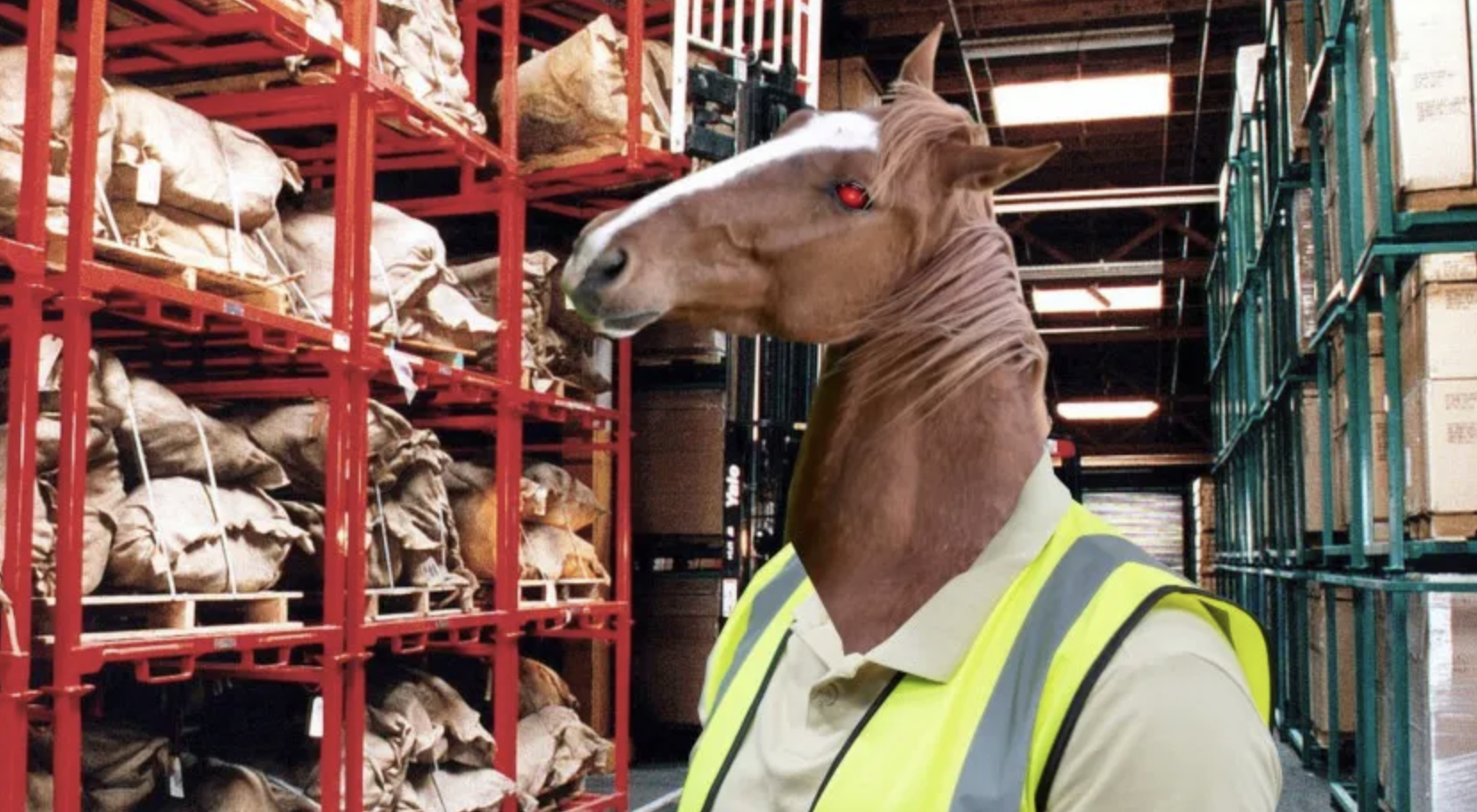
Some essential reading by Agnes Stenbom Swedling explores how news organisations integrate AI into their workflows and the idea of the “human in the loop“. Many newsrooms, she points out, “are not optimised for what humans do best”, and so far the introduction of AI hasn’t involved a critical consideration of whether we want to embed those features in new systems, or rethink them:
“What is being built – incrementally, often unintentionally – is a form of machine-centric hybridisation. Workflows are optimised for what machines do well: speed, scale, pattern recognition, cost efficiency. Humans are then positioned around those systems, adapting their tasks, roles, and decision-making to fit the logics of machines.
“The consequence is a subtle but significant inversion: rather than engaging in uniquely human activities, work is reorganised to fit machine-driven processes. And once that inversion is embedded at the infrastructural level, it becomes increasingly difficult to reverse.”
The writer Cory Doctorow has a term for those humans: reverse centaurs, “a person who has been conscripted to assist a machine.”
A recent issue of the FT newsletter The AI Shift documents this among software developers: “the most creative activities of the job are being replaced by the tedium of checking machine output,” writes one.
In contrast, a plain old “centaur” in tech terms is someone who enlists technology to assist them. Florent Daudens highlights one example of this recently in a Toronto Star investigation into Ontario’s strong-mayor powers. “The method,” he writes, “deserves just as much attention and shows what happens when you apply editorial judgment at scale. The team first made their editorial judgment explicit [and] a custom AI tool then applied those criteria across thousands of documents.
“The reporter hadn’t been replaced. They’d been amplified. By an agent built around their judgment, not against it.”
What these examples point to is that machine-centric hybridisation is not inevitable. At the same time as that dark future looms (if many of us aren’t already living it), AI also opens up a counter-intuitive opportunity to make work more human.
After all, one of the qualities that often makes work feel dehumanising is when it becomes overly routine. Many newsroom workflows are built on such habits: check the news diary and forward planning, check the emails, check the wires, rewrite a press release.
A part-automated workflow introduces opportunities to step back from that routine because:
- We have to design prompts and strategies, and engage with agents in ways that force us to make more explicit judgements about values
- We spend less time on (re)producing, monitoring and chasing, and more time on imagining, choosing, checking, reviewing and editing.
The AI Shift newsletter documents this too. One developer explains that their work now focuses more on “architectural decisions (I.e. how do we best assemble all of those small chunks of code to do something complicated?)
“This aspect of development is often overlooked by non-technical leaders because, yes, in the short term, you *can* mash a load of LLM-generated code together and be somewhat confident it’ll do the thing you’ve asked it to do… but you run out of runway quickly as your product becomes more complex. It’s also a non-starter for anything that could end with a lawsuit.”
And journalism involves enough legal risk and complexity for all of the above to apply to newsrooms too.

