
One of the most powerful ways to generate original journalism is to look at the systems behind stories — particularly the points where those systems fail.
For investigative work, those points are central. Surface-level scandals often stem from deeper systemic problems. So what tools do we have for recognising those patterns?
Donella Meadows’s classic book Thinking in Systems offers one: “system traps” — patterns that explain how systems get stuck, break down, or behave in ways nobody intends. They are “traps” because attempts to escape them often backfire.
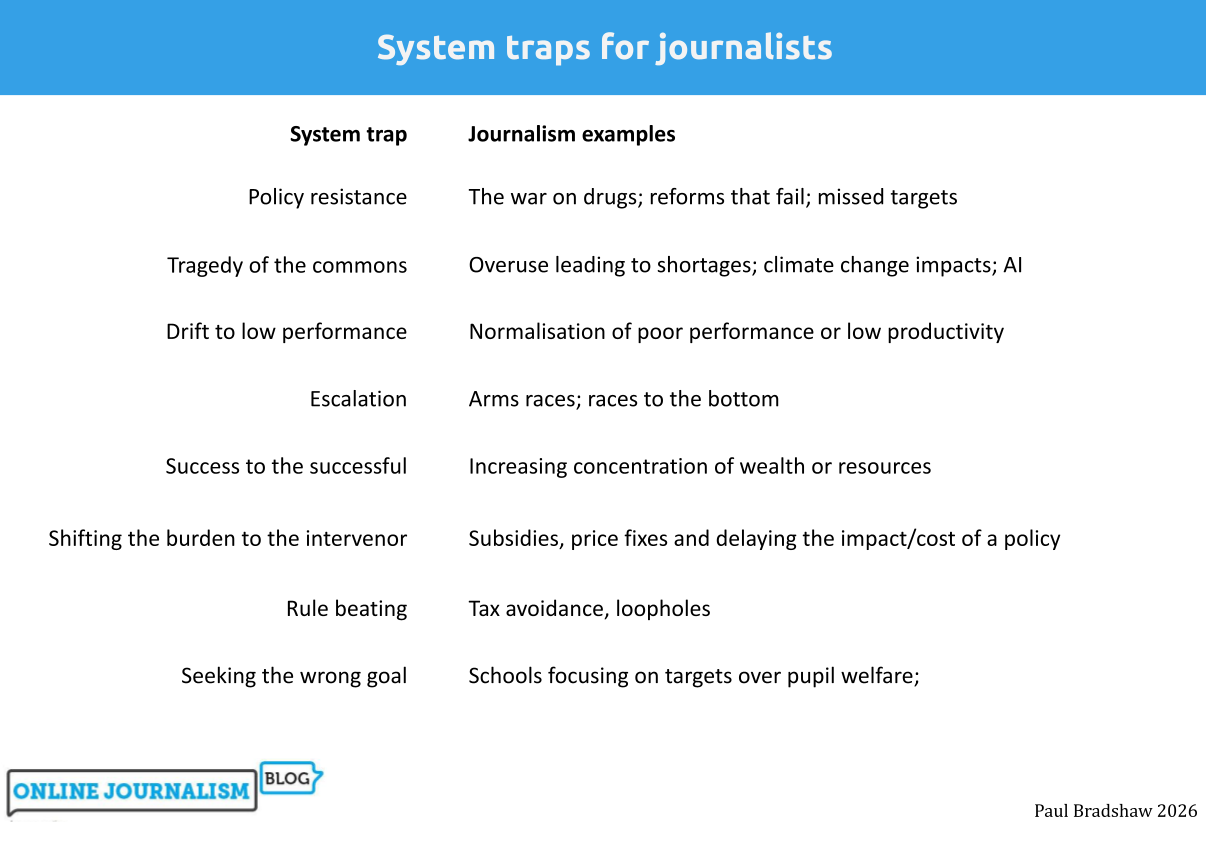
In this post I’ll explain each trap, what it looks like in the wild, and how to use it as a lens for story ideas.
1. ‘Fixes that fail’: policy resistance
Why wasn’t the war on drugs ever won? Why do healthcare reforms so often backfire? Why are targets to reduce emissions missed? These are classic policy resistance stories, where different parts of a system pull in opposite directions.
Policy resistance is perhaps the most visible ‘system failure’ — but recognising it means we know what questions to ask, and what to look for.
- What to look for: Reforms that don’t work, or make things worse. Outcomes that don’t improve. Missed targets, broken promises.
- Questions to ask: Who has a different goal within the system? Is one part of the system cancelling out another? Are there places where the problem is being tackled successfully?
In environmental reporting, for example, stories regularly emerge from conflicts between policies aimed at reducing emissions and policies aimed at increasing production, consumption or employment.
One of the simplest ways to identify and reveal “fixes that fail” is the ‘lack of change‘ story: once a policy has been in place for a long enough period, investigate if it seems to be working. Use data to spot where a system is resisting its own policy.
Look for resistance or opposition to change: The Washington Post, for example, “examined three historic firsts in policing reforms” to reveal reforms “stifled by entrenched cultures, systemic dysfunction, shifts in leadership and swings in public mood”.
That resistance can be external, too, such as local communities resisting green energy plans due to concerns over property prices or local wildlife
Anniversaries can provide useful hooks to review attempts at reform, as in ProPublica’s feature on the stalling of policing reform “More Than Two Years After George Floyd’s Murder Sparked a Movement”.
Another approach is to look for unintended consequences. The increase in orphans and orphanages in Romania in the 1980s and 90s is one example (the unintended consequence of a policy whose intention was to increase birth rates); communities scarred by the war on drugs is another.
2. Tragedy of the commons
This trap appears when shared resources — fisheries, roads, emergency services — are used by individuals in ways that degrade the whole.
- What to look for: Unregulated or poorly monitored access to a shared resource. Growing use without growing responsibility.
- Questions to ask: Who uses the resource? Who monitors it? Are there rules — and do they work?
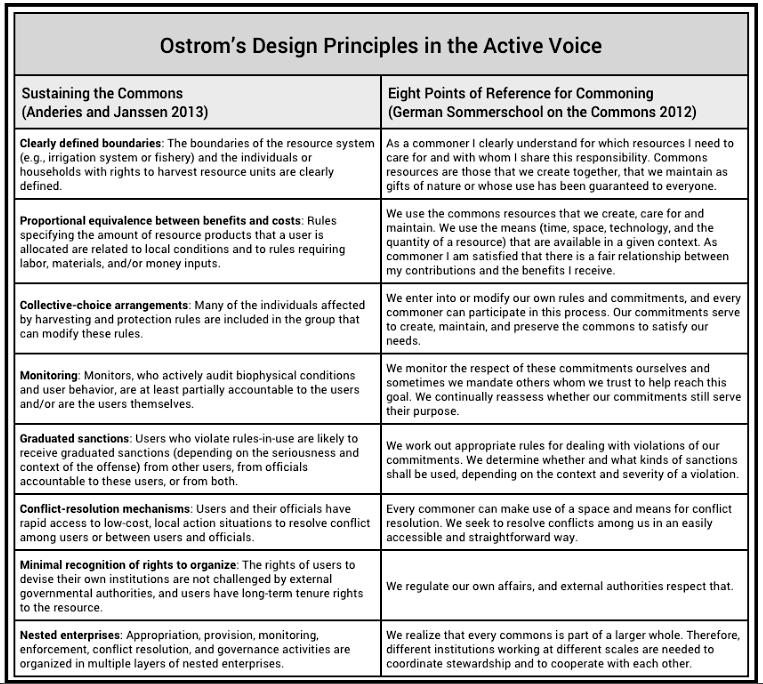
A potential story on this system failure might draw on political scientist Elinor Ostrom‘s eight pressure points to look in the following areas:
- What are the boundaries? Who counts as a “user” or stakeholder?
- Is the system being monitored? If so, by whom?
- Who has decision-making power — and is it legitimate?
- Are rules being broken or gamed, and if so, how are they enforced?
- What does the conflict resolution process look like — or is it missing?
- Are local voices recognised — or excluded?
Science‘s investigation into fisheries, for example, “tested how accurate estimates of fish stocks actually are” (monitoring). Daniel Wizenberg’s reporting on cruise ship pollution reports on ports considering bans and restrictions (punishments) and “a divide among residents about the benefits and drawbacks of tourism” (the balance of costs and benefits).
Green to Grey: How Europe Is Squandering the Little Nature It Has Left fills a gap in monitoring, identifies the ineffectiveness of non-binding EU goals, and quotes local voices that were ignored.
But this trap doesn’t just apply to environmental resources: a story about the increasing demands being placed on A&E services might similarly focus on boundaries (e.g. patients using A&E instead of other services) and relationships. Similar areas could be looked at in a story about housing stock being rented out to tourists. Antibiotic overuse is another example.
Jason Del Rey’s story on internal Amazon research warning that the company was “running out of people to hire” is a tragedy of the commons, and the “attention economy” is one way to describe another commons that is being exhausted.
3. Drift to low performance (aka eroding goals/boiling frog syndrome)
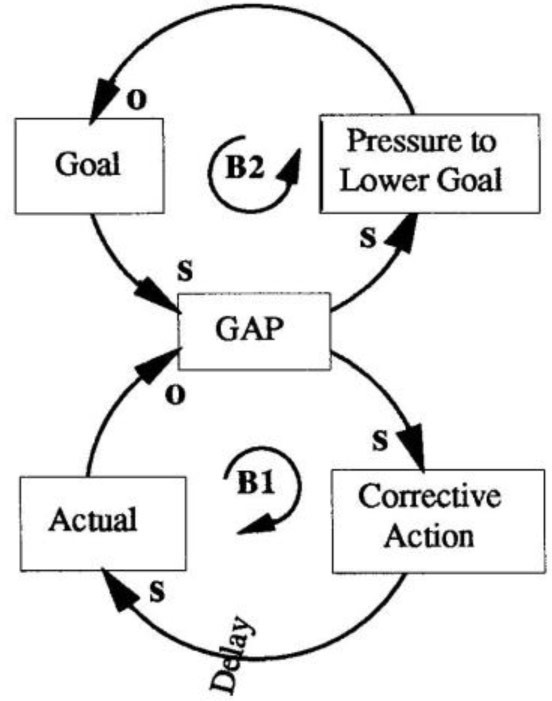
A typical “drift to low performance” trap is a negative feedback loop, where systems slowly get worse, people adjust — and low expectations (‘eroding goals‘) become the new normal.
A good example of this being made explicit is the BBC story Harm at risk of being normalised in maternity care.
In education, the Bureau of Investigative Journalism’s investigation into the “broken” special needs system identified how thresholds had been raised to “make it more difficult for children to receive support”, while grade inflation at universities is another symptom of standards being lowered.
In environmental journalism, you might look for targets being weakened, barriers to protection, or a lack of enforcement.
- What to look for: Declining standards, redefined targets, morale collapse.
- Questions to ask: Have goals or benchmarks been quietly lowered? Are people adapting to failure instead of fixing it? Are regulators turning a blind eye?
4. Escalation (arms races and races to the bottom)
Escalation traps form when organisations try to outdo each other, creating a feedback loop as each responds to the other. Examples include arms races, military conflicts, political polarisation, and cat-and-mouse relationships (e.g. spammers versus email filters).
‘Races to the bottom‘ are an escalation trap. Examples include negative political campaigns, increasing deregulation and lowering taxes, and price wars — where competing companies make products increasingly cheaper to undercut rivals.
Escalation of even apparently positive behaviours can also become an escalation trap: Meadows gives the example of morality leading to sanctimoniousness, Puritanism and intolerance. Other examples might include healthy eating becoming orthorexia, and healthy scepticism turning into conspiracism.
Many investigations into social media algorithms are stories about escalation traps: the Wall Street Journal’s Facebook Files, for example, shows how the company’s desire for growth led it to ignore warnings that algorithm changes were making “Facebook, and those who used it, angrier”, while NRK’s investigation into TikTok showed “how TikTok’s algorithms drag children into a world of extreme exercise”. Algorithm Watch’s investigation revealed the Instagram algorithms that encourage “showing skin”: users themselves are often caught in an arms race too.
Political arms races include parties trying to outdo each other on being “tough on crime” or anti-immigration. Stories on the escalation trap might also focus on how inflationary forces are playing out, such as tech companies or sports clubs trying to outspend each other on talent.
- What to look for: reactions and counter-reactions. Unhealthy or extreme behaviours being reinforced. Cat-and-mouse games between rule-breakers and enforcers.
- Questions to ask: What concerns are being raised? What’s driving the escalation? Who benefits? Is there a way out? How might ‘unilateral disarmament’ be facilitated (e.g. through regulation, agreement or redesign)?
5. Success to the successful/competitive exclusion
The rich getting richer and the poor getting poorer are well known examples of the competitive exclusion system trap. This is another feedback loop, where ‘winners’ in a system have an unfair advantage when it comes to competing for new opportunities or resources, leading to a vicious circle.
Cory Doctorow’s book Enshittification provides an endless list of examples of this system trap from multiple fields, along with the playbook that companies follow (including chickenisation and the giant teddy bear tactic), and the forces that lead to it.
Education is an area where this trap shows itself regularly: look for evidence that the gap between private and state school pupils going to university is widening, for example, how the use of private tutoring “deepens inequality”, or the “geographic exclusion” of poorer children from higher performing schools.
Tech is another: in 2015 Reuters revealed that Amazon used its access to seller data to design its own private‑label products and “manipulat[ed] search results to boost its own product lines in India”, while in 2015 The Wall Street Journal used FOI to reveal “evidence that Google’s algorithm was demoting the search results of competing services while placing its own higher on the search results page”.
Focusing on supplier vulnerability can help expose where dominant companies may be exploiting their power. The Guardian‘s coverage of the UK supermarket sector describes multiple examples, while its reporting notably focuses on the rules designed to prevent such exploitation, and the regulator’s (lack of) power to impose effective punishment.
Broader scrutiny of regulation (complaints, investigations, reports, data), tax laws (such as taxes on inheritance but also the use of “sweetheart tax deals for companies like Uber“), and anti-monopoly laws— how often they are enforced, the effectiveness (or not) of punishments, how companies avoid those, and the need for new rules — provides another potential basis of reporting.
In sport, for example, journalists have investigated how “Abramovich’s Chelsea may have secretly bypassed Financial Fair Play (FFP) rules governing world football, helping propel the club to the pinnacle of the game, at the expense of its rivals”.
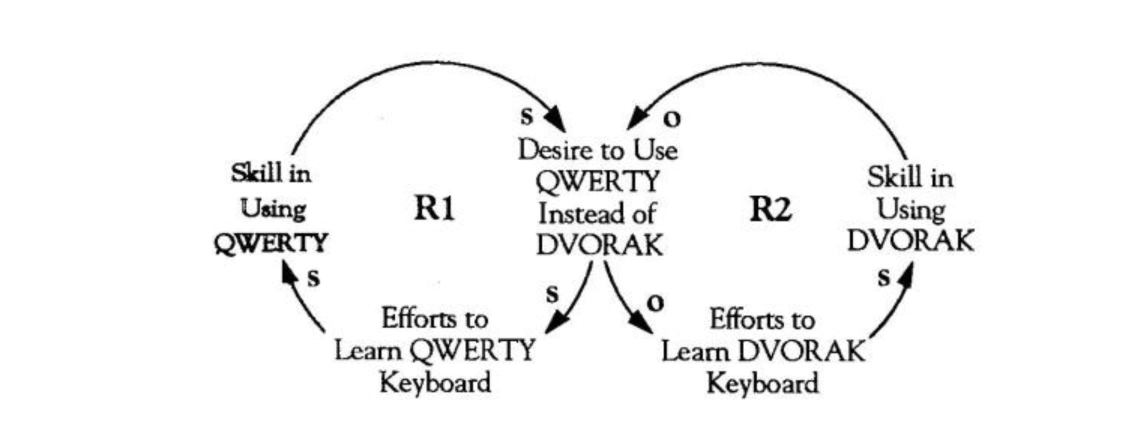
Other forces to consider include first-mover advantage, the “competency trap” (when people don’t switch to alternatives because they are used to a particular product), and ‘network effects‘.
- What to look for: Self-reinforcing inequality (e.g. funding that rewards institutions with better resources, reviews or results), whistleblowers, network effects, regulatory effectiveness, lobbying for regulatory change, tax deals and subsidies, ‘bundling’ of products
- Questions to ask: Who controls key resources? Are newer players being excluded? What is the experience of those at the bottom of the supply chain? What complaints are being raised with regulators? What reports are produced by regulators internally?
6. Treating symptoms not causes: shifting the burden to the intervenor

Examples of “shifting the burden to the intervenor” include the use of subsidies or price fixes to prop up failing industries or maintain access to cheap fuel or credit, or practices that will be damaging in the long term (e.g. overuse of fertiliser, drilling for more oil) instead of more sustainable options.
The Bureau of Investigative Journalism‘s investigation into the housing crisis, for example, highlights the problems caused by subsidies that ultimately flow to landlords, instead of regulating rents or building affordable homes. And the Marshall Project is just one of a number of organisations to have investigated how jails are used as a quick ‘fix’ for drug and mental health problems instead of treatment, or police being used to deal with public health failures.
Outsourcing is a common example of shifting the burden, as it often results in public bodies losing the ability to provide services themselves and becoming dependent on private agencies (who may prioritise costs over outcomes). When there are safety concerns over those private agencies, or they fail to deliver, it creates further problems.
This system trap is often also called “addiction”, because the ‘trap’ is that these are short term ‘fixes’ offering immediate relief but creating a cycle that’s increasingly hard to break without pain or disruption (addiction itself is just one example of this trap).
The first episode of the FACTA.eu investigation Non è un’agricoltura per piccoli, for example, quotes owners of small farms who have difficulty accessing subsidies and report “a widespread feeling of being faced with a trap rather than a support”.
- What to look for: Band-aid policies, outsourcing, bailouts, pressures in the system spreading to other parts (e.g. from health to police), recurring crises, companies promoting ‘quick fixes’ to deeper problems (e.g. AI), “addiction” to or dependence on subsidies or emergency measures
- Questions to ask: What deeper problem is being avoided? Who’s intervening? Are outcomes improving—or simply being masked? What skills or oversight has been lost as a result of outsourcing? What happens when the ‘contractor ‘intervenor’ fails? Who profits, and who pays when it goes wrong? How effective is regulation of outsourcing, privatisation or services ‘filling the gap’ for others? What is being done to tackle the root causes?
7. Gaming the system: rule beating

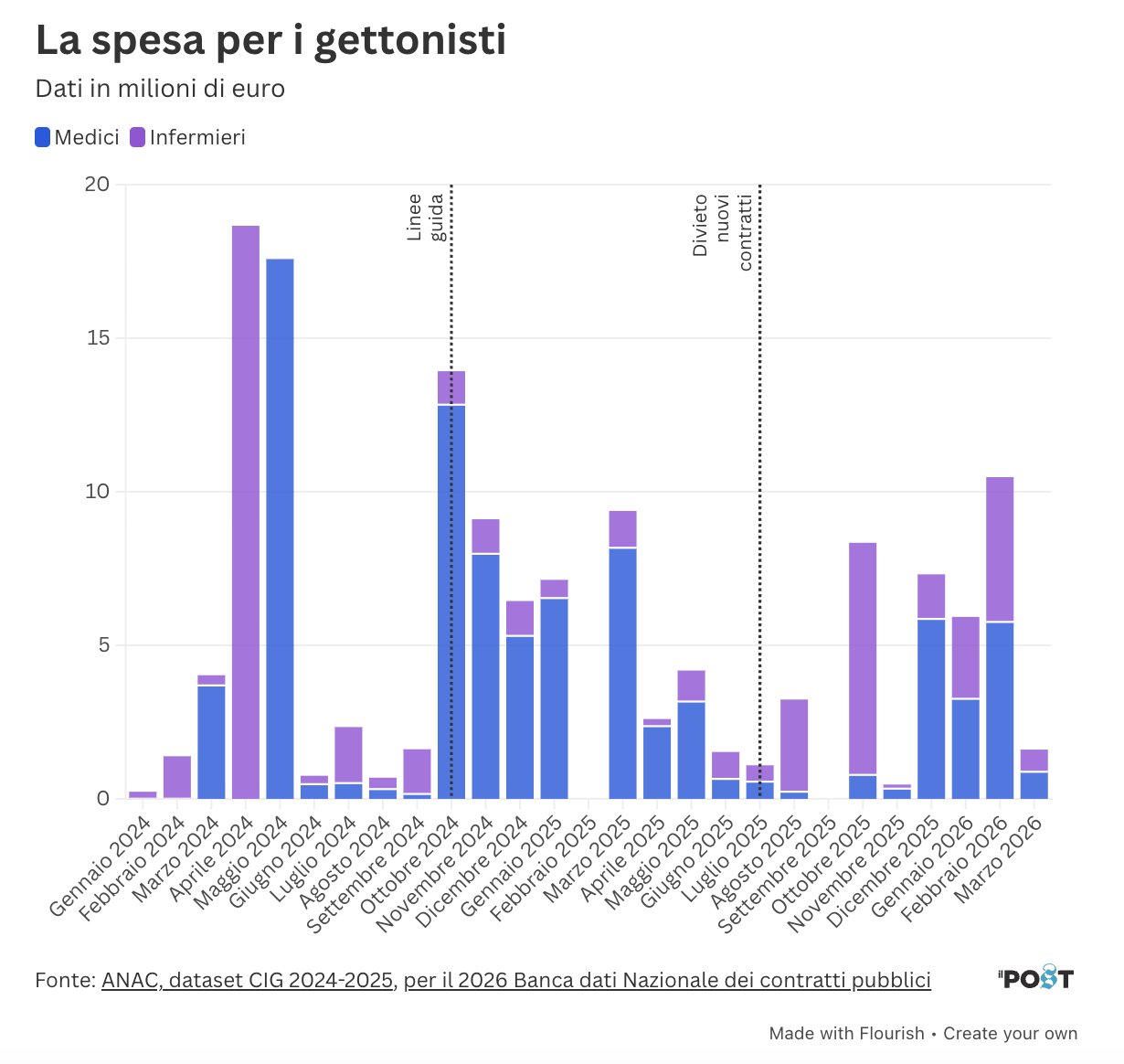
In this trap people and organisations follow the rules but violate the spirit of the law. The most widely reported example of this is tax avoidance: strategies for avoiding tax which are legal but widely perceived to be unethical (illegal strategies are called tax evasion).
Rule beating can be a good subject for factchecks or explainers, such as Channel 4 News’s factcheck of why Amazon UK pays so little tax and Ethical Consumer’s explainer on how much that costs citizens in lost taxes. Reporting can also focus on reactions to legal but unethical behaviour from experts and campaigners, including calls for loopholes to be fixed.
Deeper investigations can focus on:
- Uncovering the use of loopholes as in Sky News’s investigation into recruitment companies paying workers “by third-party umbrella companies … what were technically loans”.
- Using laws to avoid scrutiny or accountability, such as the doctrine of qualified immunity investigated in Reuters’ series Shielded, or SLAPPs.
- Revealing unusual behaviour, such as iWatchAfrica revealing that “Facebook had not paid any direct taxes in Ghana and Nigeria since it began operations over a decade ago”
- The scale of such behaviour (“One in six UK public procurement contracts had tax haven link” is one example; LuxLeaks is another. Il Post’s story on the use of agency staff in hospitals identifies its scale through the use of a different procurement code, but also identifies other tactics used to get around the law)
- Unfair variation, as in NRK’s report on foreign-owned wind power companies paying less corporate tax than Norwegian-owned ones.
These approaches can be adapted to other systems where rule beating can be found: in 2023 the Freedom of the Press Foundation reported that “intelligence and law enforcement agencies have been using data brokers as a loophole to get around the warrant requirement and other legal restrictions on accessing information for their investigations”, while in online gambling, The Investigative Post revealed that “Some betting apps promote fantasy sports formats to avoid classification as gambling. In states where online gambling is banned—like California—offshore casinos step in.”
- What to look for: Stagnant or reversed progress, exploited loopholes, odd behaviour at the end of the financial year, unexpected numbers, rules failing to keep up with new technologies, calls for rules to be changed
- Questions to ask: Who benefits from the current rules? Who loses out? Are rules being circumvented? Why does it matter if rules are circumvented? Have rules kept up to date?
8. Seeking the wrong goal
The final system trap is where a person or organisation is motivated by the wrong goal, often because of the metrics that are used for rewards or punishment. As a result, what should be the real goal is undermined (“What gets measured gets managed”) and the measure ceases to become meaningful.
For example, treatment targets may drive hospitals to discharge patients early, when it is not in the best interests of those patients. Police may misclassify crimes to improve their crime figures, and schools might teach students how to pass exams, rather than educating them.
The Stafford Hospital scandal is one high-profile example: “appalling” conditions at the hospital, exposed by local reporter Shaun Lintern, led to an inquiry which noted discussions at the hospital’s board “were dominated by finance, target and achieving foundation trust status. There is little evidence that poor standards of nursing care were identified and discussed.”
In education journalists have exposed the practice of “off-rolling” poor-performing pupils to boost results, while in crime the Tampa Bay Times exposed how police boosted statistics for rape cases despite not having “identified a suspect, assigned a detective or even confirmed that a crime had occurred”.
Sometimes the measure doesn’t even have to be a target: Tim Harford’s book Messy dedicates a chapter to various examples of incentives and measures skewing behaviour, such as “how the APGAR measure went from a metric for newborn babies to the target that drove (at least in part) the rise of C-sections in the United States.”
Identifying how an organisation’s performance is measured, particularly where it determines funding, can be a key step in identifying the ‘wrong goal’ trap in action.
- What to look for: How organisations’ or individuals’ performance is measured (particularly where it determines funding or promotion). Perverse incentives, metric-driven behaviour, goal distortion, signs of ‘gaming’ the system. In data: special/vague categories (which might be used for misclassification), failing to record data, or changing classifications. Board reports that indicate ‘wrong’ priorities.
- Questions to ask: Are the chosen goals actually improving outcomes? Is effort being rewarded instead of results? How should goals be changed?

