Tag Archives: human in the loop

“Many newsrooms are not optimised for what humans do best” (but we have an opportunity to change that)

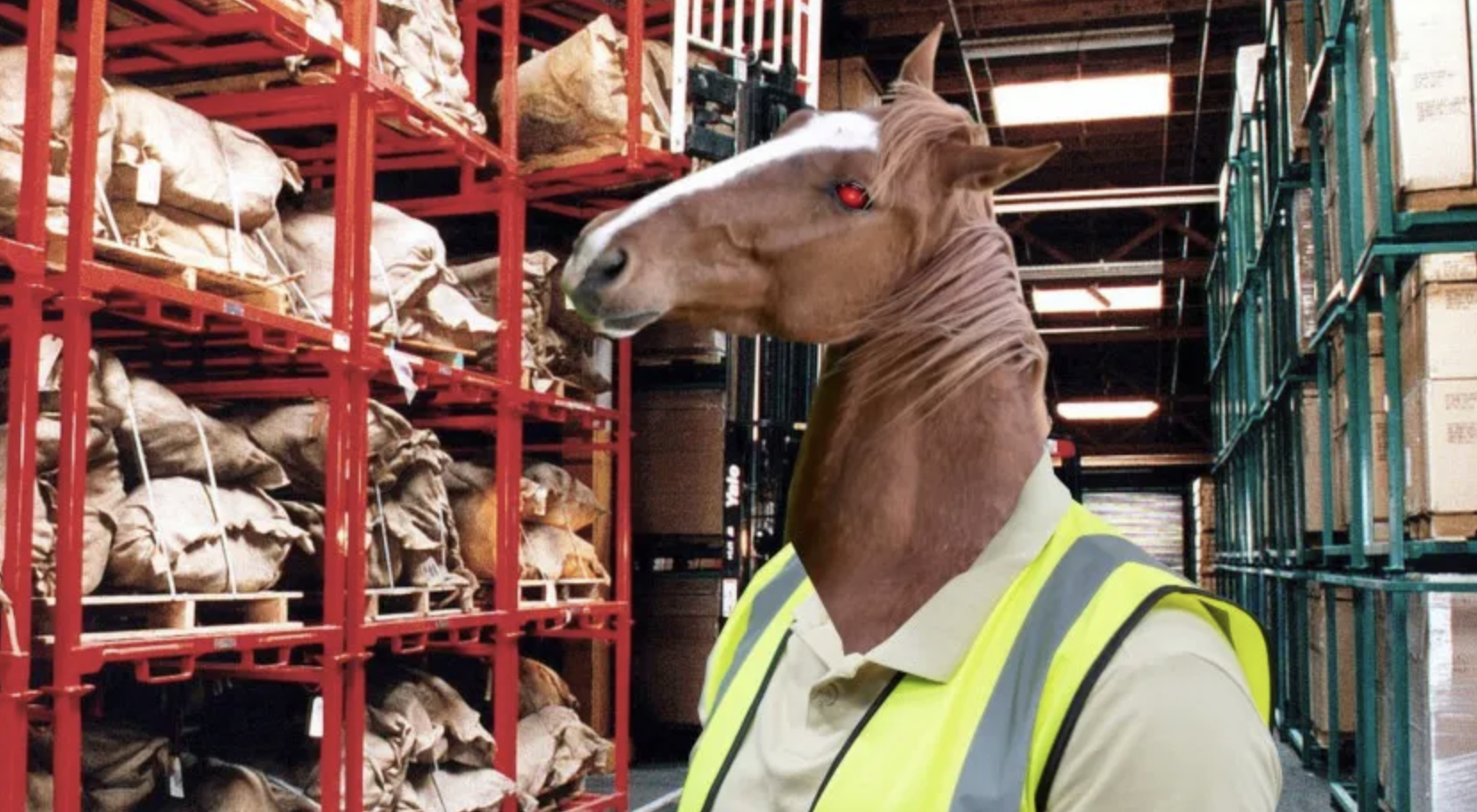
Amazon worker with horse head
Image by Cory Doctorow, from Revenge of the Chickenized Reverse-Centaurs

Some essential reading by Agnes Stenbom Swedling explores how news organisations integrate AI into their workflows and the idea of the “human in the loop“. Many newsrooms, she points out, “are not optimised for what humans do best”, and so far the introduction of AI hasn’t involved a critical consideration of whether we want to embed those features in new systems, or rethink them:

“What is being built – incrementally, often unintentionally – is a form of machine-centric hybridisation. Workflows are optimised for what machines do well: speed, scale, pattern recognition, cost efficiency. Humans are then positioned around those systems, adapting their tasks, roles, and decision-making to fit the logics of machines. 

“The consequence is a subtle but significant inversion: rather than engaging in uniquely human activities, work is reorganised to fit machine-driven processes. And once that inversion is embedded at the infrastructural level, it becomes increasingly difficult to reverse.”

Continue reading

“Journey prompts” and “destination prompts”: how to avoid becoming deskilled when using AI

A road
Photo: Tiana

How do you use AI without becoming less creative, more stupid, or deskilled? One strategy is to check whether your prompts are focused on an endpoint that you’re trying to get to, or on building the skills that will get you there — what I call “destination prompts” and “journey prompts”.

In creative work, for example, you might be looking for an idea, or aiming to produce a story or image. In journalism or learning, a ‘destination’ might be key facts, or an article or report.

But prompts that focus only on those destinations are less likely to help us learn, more likely to deskill us — and more likely to add errors to our work.

To avoid those pitfalls, it is better to focus on how we get to those destinations. What, in other words, are the journeys?

Continue reading