Tag Archives: hallucination

Using personalisation makes every AI chat less risky and more effective — here are five essential custom instructions to add


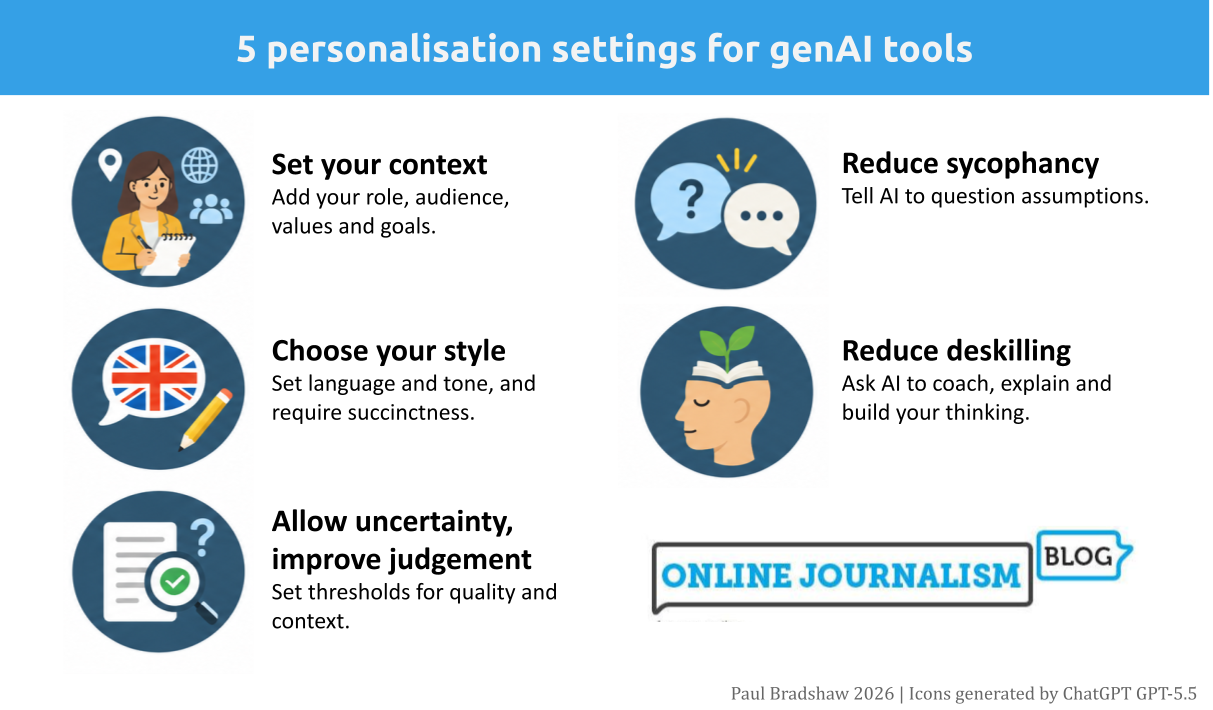
5 personalisation settings for genAI tools

Reduce sycophancy
Tell AI to question assumptions.

Set your context
Add your role, audience, values and goals.

Choose your style
Set language and tone, and require succinctness.

Reduce deskilling
Ask AI to coach, explain and build your thinking.

Allow uncertainty
Set thresholds for quality and context.

One of best things you can do to lower the risks of using AI and improve the quality of outputs is to spend five minutes with one of AI tools’ least-used features: their personalisation settings.

ChatGPT, Gemini, Copilot and Claude all have personalisation features: a section of the tool where you can give it permanent extra information that informs every conversation. You can find it in your general settings under names like ‘instructions’, ‘personal context’ or ‘personalization’, or using the links above.

Here are five instructions you can include in that section:

Continue reading →
How to stop AI making you stupid: hybrid destination-journey prompting

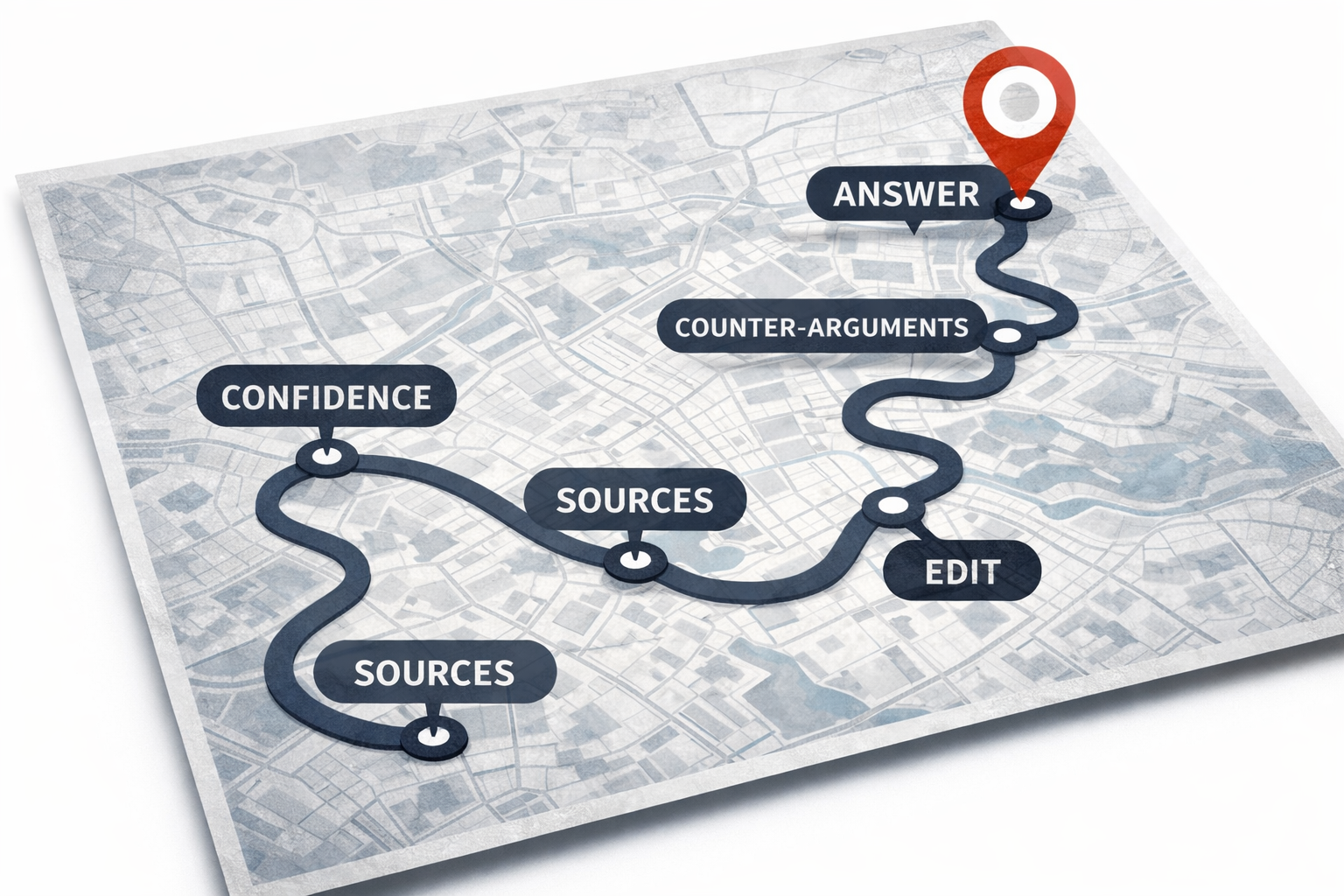
A local map-style illustration where a pinned "answer" destination is visible, but the route is overlaid with checkpoints labelled “confidence”, “sources”, “counter-arguments”, “verify”, “edit” (image generated by ChatGPT).

Last month I wrote about destination and journey prompts, and the strategy of designing AI prompts to avoid deskilling. In some situations a third, hybrid approach can also be useful. In this post I explain how such hybrid destination-journey prompting works in practice, and where it might be most appropriate.

Continue reading →

“Journey prompts” and “destination prompts”: how to avoid becoming deskilled when using AI

A road
Photo: Tiana

How do you use AI without becoming less creative, more stupid, or deskilled? One strategy is to check whether your prompts are focused on an endpoint that you’re trying to get to, or on building the skills that will get you there — what I call “destination prompts” and “journey prompts”.

In creative work, for example, you might be looking for an idea, or aiming to produce a story or image. In journalism or learning, a ‘destination’ might be key facts, or an article or report.

But prompts that focus only on those destinations are less likely to help us learn, more likely to deskill us — and more likely to add errors to our work.

To avoid those pitfalls, it is better to focus on how we get to those destinations. What, in other words, are the journeys?

Continue reading →