Monthly Archives: November 2007

Blogs e Jornalismo Investigativo: Blogs e Jornalismo

A seguir você encontra a primeira parte de um capítulo de livro sobre Blogs e Jornalismo Investigativo. O trecho introduz blogs em geral e sua relação com o jornalismo. Qualquer correção, informação extra ou comentários são bem-vindos. [This is a Portuguese translation of Blogs and Investigative Journalism part one. Thanks to Gabriela Zago]

Blogs e Jornalismo

Perguntar se “blogs são jornalismo” é confundir forma por conteúdo. Blogs – como websites, papel, televisão ou rádio – podem conter jornalismo, mas podem não conter. Eles são plataformas, embora – como outras plataformas midiáticas – sigam determinadas convenções genéricas. Como em todas convenções, elas possuem vantagens e desvantagens para o jornalismo, e é o que este capítulo objetiva tratar. Continue reading
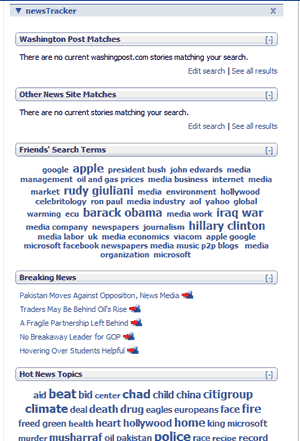
Washington Post Facebook app – the sequel

Washington Post Facebook appThe Washington Post have followed up their playful Facebook app Compass with the more functional newsTracker – and it’s very good indeed.

Not only can you specify which topics you want ‘fed’ to your page – but you can also include custom searches (which is why mine has no current matches – they’re very specific).

The ‘Hot News’ tag cloud is nice – but the ‘Friends’ Search Terms’ really takes advantage of the social element of Facebook technology – although it does raise possible privacy issues (Blog Friends does a similar thing very well).

Add the application here.

Read Rob Curley’s blog entry on the tool here.

An open letter to Roy Greenslade: Why I’m not leaving the NUJ

Dear Roy,

For someone who believes in the merits of the web conversation, your decision to leave the NUJ strikes me as strange.

You say you

“cannot, in conscience, go on supporting this crucial plank of NUJ policy when it is so obvious that online media outlets will require fewer staff. We are surely moving towards a situation in which relatively small “core” staffs will process material from freelances and/or citizen journalists, bloggers, whatever (and there are many who think this business of “processing” will itself gradually disappear too in an era of what we might call an unmediated media).”  Continue reading

Web culture “degrades valuable things”? A rant at David Leigh

Today’s rant is addressed to investigative reporter David Leigh, a person I respect enormously but who makes the typical mistake in the latest Press Gazette. of mistaking new media for old media:

He said that web culture “degrades valuable things” such as “the idea of discrimination, that some voices are more credible than others, that a named source is better than an anonymous pamphleteer (that’s what they used to call bloggers in the 18th century, when they published, for example, the politically dangerous Letters of Junius.) The notion of authoritativeness is derided as a sort of ‘top-down’ fascism. I fear that these developments will endanger the role of the reporter.” Continue reading

The risks of self-publishing

Last week, following deadly events on the Kurdish-Turkish border, a ‘spontaneous’ demonstration occurred in front of the American embassy in Brussels. Blogger and freelance journalist Mehmet Köksal was on the scene when some Grey Wolves (a jingoistic youth organisation) recognised him and tried to lynch him. He escaped, severely beaten.

No English-speaking media reported it except for some hard-line Armenian sites.

On Monday, Köksal wrote his last post. He quits blogging, “victim of [his] blog’s success” and intimidation. Without downplaying his long-lasting courage and works, one cannot but notice he ceases publication to protect himself and his family.

Continue reading

Blogs and Investigative Journalism: conclusion

The concluding part of this draft book chapter sums up some of the key points and looks at the future paths of investigative journalism in a new media age. I would welcome any corrections, extra information or comments.

Conclusion

Blogs and new media have undoubtedly changed the landscape of investigative journalism. In terms of its form, journalism as a whole has become more conversational, and iterative, as readers seek to contribute to the story, and journalists open more of their processes to public view. The time and space offered by the internet has provided opportunities for these conversations to take place, and for journalists to make raw material available to fuel them. And the networked nature of the Web has facilitated coordination of contributors across borders and industries, along with a now global distribution of material. Continue reading