Tag Archives: prompt design

“I don’t want it to be easy” and other objections to using AI

In September I took part in a panel at the African Journalism Education Network conference. The most interesting moment came when members of the audience were asked if they didn’t use AI — and why.

Continue reading

How to stop AI making you stupid: hybrid destination-journey prompting

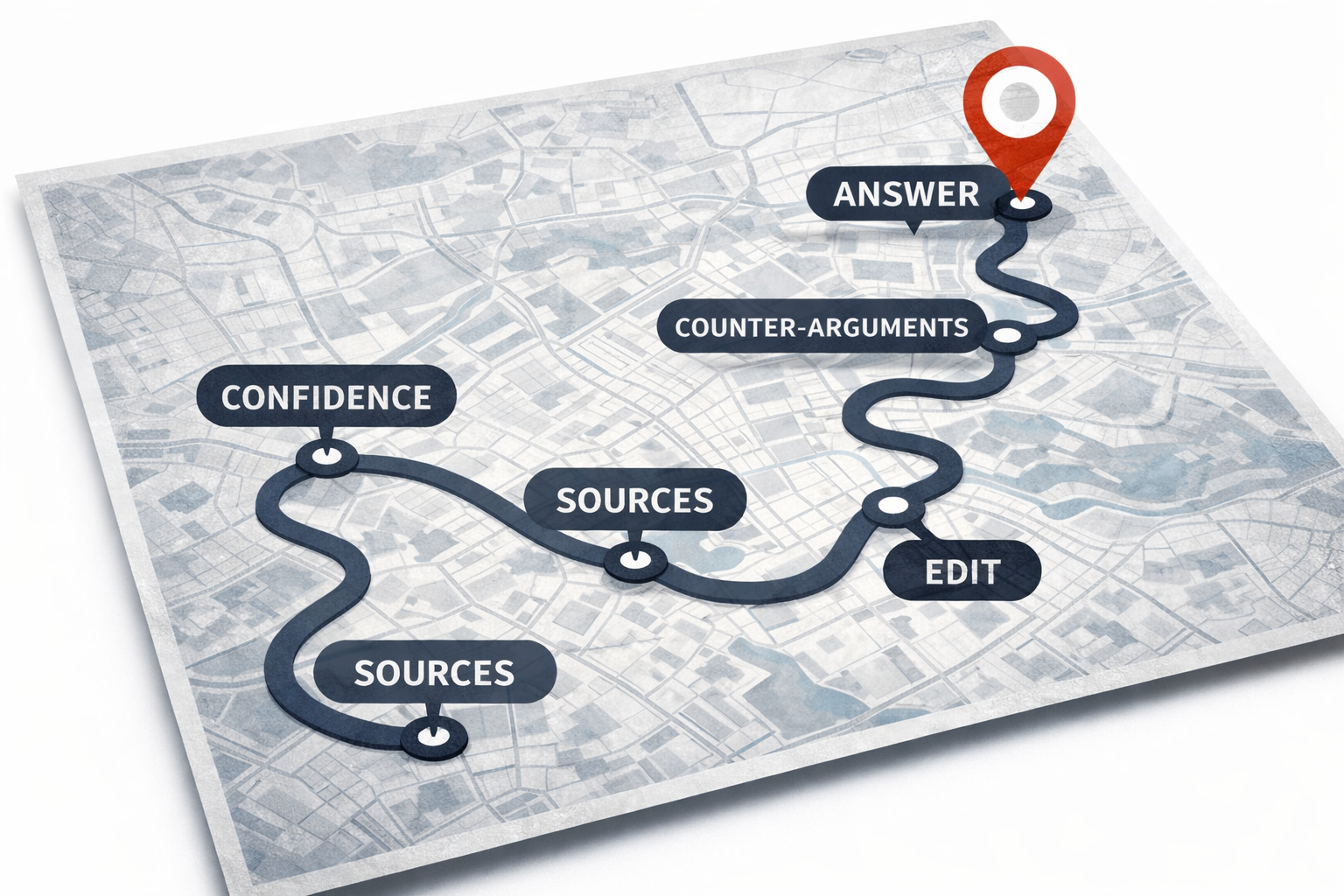
A local map-style illustration where a pinned "answer" destination is visible, but the route is overlaid with checkpoints labelled “confidence”, “sources”, “counter-arguments”, “verify”, “edit” (image generated by ChatGPT).

Last month I wrote about destination and journey prompts, and the strategy of designing AI prompts to avoid deskilling. In some situations a third, hybrid approach can also be useful. In this post I explain how such hybrid destination-journey prompting works in practice, and where it might be most appropriate.

Continue reading

How to ask AI to perform data analysis

Consider the model: Some models are better for analysis — check it has run code

Name specific columns and functions: Be explicit to avoid ‘guesses’ based on your most probably meaning

Design answers that include context: Ask for a top/bottom 10 instead of just one answer

'Ground' the analysis with other docs: Methodologies, data dictionaries, and other context

Map out a method using CoT: Outline the steps needed to be taken to reduce risk

Use prompt design techniques to avoid gullibility and other risks: N-shot prompting (examples), role prompting, negative prompting and meta prompting can all reduce risk

Anticipate conversation limits: Regularly ask for summaries you can carry into a new conversation

Export data to check: Download analysed data to check against the original

Ask to be challenged: Use adversarial prompting to identify potential blind spots or assumptions

In a previous post I explored how AI performed on data analysis tasks — and the importance of understanding the code that it used to do so. If you do understand code, here are some tips for using large language models (LLMs) for analysis — and addressing the risks of doing so.

Continue reading

7 prompt design techniques for generative AI every journalist should know

Tools like ChatGPT might seem to speak your language, but they actually speak a language of probability and educated guesswork. You can make yourself better understood — and get more professional results — with a few simple prompting techniques. Here are the key ones to add to your toolkit. (also in Portuguese)

Prompt design techniques for genAI
Role prompting
One-shot prompting
Recursive prompting
Retrieval augmented generation
Chain of thought
Meta prompting
Negative prompting
Continue reading