Author Archives: Paul Bradshaw

How and why to save politicians’ (and your own) tweets before they are deleted

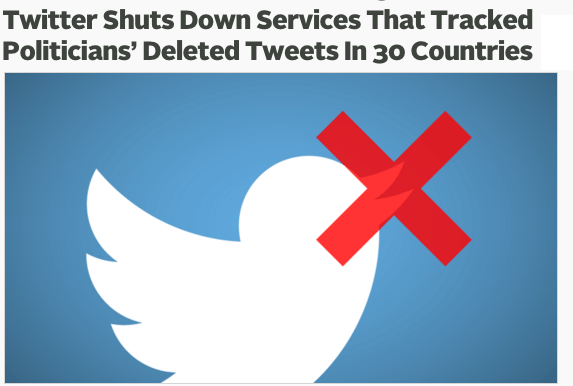
Headline: Twitter Shuts Down Services That Tracked Politicians’ Deleted Tweets In 30 Countries

In August 2015 Twitter shut down a number of ‘deleted tweets’ archives. Image: TechCrunch

If you rely on Twitter or other social media services to act as a record of history, a series of incidents over the past six months should make you think again – and take control. Continue reading

Twitter’s algorithm changes make it key that journalists take control

For some time now Twitter has been flirting with abandoning the reverse-chronological ordering that attracted so many journalists to the service.

Having already introduced “While you were away…” tweets a year ago, and the curated “Moments” storylines 4 months ago, the suggestion is that it may finally be ready to make the leap to a Facebook-style “what we think you’ll like” timeline.

This may be initially opt-in, but then so, once upon a time, was Facebook’s algorithm.

I’m not one of those old users who are inevitably crying about the death of Twitter. We all change as we get older, and Twitter is no exception: once an always-on special companion, now it is a more occasional big crowd encounter. Continue reading

Linking ethically (and for SEO): canonical and nofollow

copying_gif

If you’re cross-posting material online, being paid to include links in a post, or linking to material which raises ethical challenges around taste and decency, there are two snippets of HTML you should be aware of. Here’s a quick guide…

Cross posting: use canonical links

It’s not uncommon to post a copy of your work on your personal blog, or for someone to ask if they can republish on their site something you have written on yours. Continue reading

A new data journalism tool – and a new way of reporting uncertainty

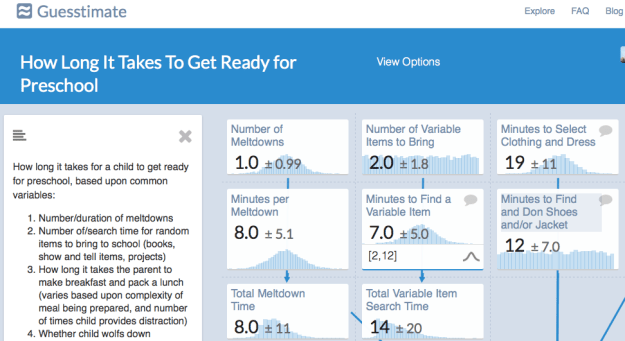
guesstimate: how long it takes to get ready for preschool

On the last day of last year, web developer Ozzie Gooen launched his new project Guesstimate, a spreadsheet ‘for things that aren’t certain’.

It is an inspired idea: software plays a key role in shaping what we do, and we take spreadsheets’ certainty about numbers for granted. Why should we?

Throw in journalism’s default dislike of ambiguity and a political tendency to play to that… well, it can all make for some flawed reporting.

I was so impressed with Guesstimate and the opportunities it presents for a new style of data reporting that I sought out Gooen to find out more about the project and how he came to launch it. Continue reading

Peach: social media meets sensor journalism

looping photobooth

Peach includes a feature called the ‘looping photobooth’

Will Peach be to 2016 what Meerkat was to 2015? This app fascinates me, but I have very mixed emotions.

Why? Well, this is a new social network which cherry-picks bits of functionality from Twitter, Snapchat, Tumblr and Slack, then adds some Storify-esque built-in media search tools and a bit of text-as-images functionality and its own ‘looping photobooth’.

But it’s the sensor-driven elements which fascinate me. Continue reading

Curation is the new obituary: 8 ways media outlets marked Bowie’s life and death [now 16]

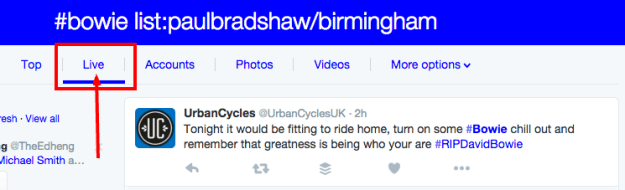
The media’s reaction to David Bowie‘s death from cancer early this morning demonstrates just how widely curation has become in journalism practice – and specifically, how it has become the web native version of the obituary. Below I’ve done a bit of curation of my own: 8 13 16 ways that different publications used curation to mark the death of a legend. If you have seen others, please let me know.

1. Liveblogging curation

The Telegraph’s live reporting of Bowie’s death is an example of curation itself, incorporating just some of the following elements:

  • The Facebook update of the statement confirming Bowie’s death
  • Embedded tweets from key figures reacting to the death
  • A video playlist
  • A single video of his last single, along with other videos to illustrate reactions
  • A posting from Bowie’s official Instagram account

Continue reading

2015 in review: you’re so retro

Snapchat's breaking news coverage

Snapchat’s breaking news coverage was one of the most significant developments of 2015

It’s that time again: Nic Newman‘s email has dropped asking various people to do some highly suspect future-gazing (at least I got WhatsApp and the election right last time). Here are my answers to his questions, delivered with suitable scepticism…

What surprised me most in 2015?

What surprised me most in 2015 is the enormous surge in ‘civic tech‘ around the election compared to 2010: coders collaborating to make apps and websites to help people make an informed decision on their vote. Continue reading

FAQ: How has working online changed how you write?

The latest post in the FAQ series (where someone has sent me questions and I republish it here) had 22 questions. This one just has two, and they’re all about writing online:

Q: Do you think that working online has allowed you to be more open and express your opinions more freely than through another medium (e.g. print)?

Absolutely, but I don’t think that’s to do with the medium so much as the institutional framework surrounding that. Continue reading