Category Archives: magazines

Elsevier’s ‘Article of the Future’ resembles websites of the past

Elsevier, the Dutch scientific publisher, has announced details of their grandly titled Article of the Future project.  Their prototypes, published at http://beta.cell.com, are the result of what Emilie Marcus, Editor in Chief, Cell Press called,

“…a challenge to redesign from scratch how to most effectively structure and present the content of a traditional scientific article in an online environment.”

Prototypes
Several things strike me about the prototypes — and let’s bear in mind that these are prototypes, and so are likely to change based on feedback from users in the scientific community and elsewhere; but also that they are published prototypes, and so by definition are completely open for comment — the most obvious being their remarkable lack of futuristic qualities.  Instead, the prototypes resemble an enthusiastic bash at a multimedia-infused online encyclopaedia circa 1997, when multimedia was still a buzzword, or such as you might have found on a CD-ROM magazine cover mounted giveaway around the same time. Continue reading

Lessons in community from community editors #11: Chris Deary, Hearst Digital

Chris Deary, Community Editor at Hearst Digital, adds his 3 things he’s learned about community management to this ongoing series.

1. Know your audience

Understand your audience and give them community tools that are designed to meet their needs.

There is a tendency to want to throw as many community tools as possible on to a site without considering what your users are actually going to do with them or giving them a reason to use them.

It’s the “If we build it, they will come” attitude. But why should they? What is it about your discussion forums or blogs that is different to the millions of other sites offering the same functionality? This is where the role of the Community Editor is really important in terms of setting the tone of the community and figuring out ways of encouraging interaction and participation.

2. Expect the unexpected

This isn’t a negative point. Often what you get from your users will far exceed what you expected, both in terms of quality and quantity. But there has to be an understanding with any user generated content that you cannot have 100 per cent control over what the community will do with an idea or with a tool.

Once you invite user participation you have to relinquish a certain amount of control, but the important thing to emphasise is that most of the time, what you get back will be worth it. You only have to look at Twitter to see how a community can take a tool and use it in ways its original creators would never have imagined.

3. Pay attention to the detail

It’s easy to come up with big, headline-grabbing initiatives that lead to short term, one-off spikes in traffic and look impressive to others within your organisation. But the key to building a community in the long term is doing lots and lots of little things really well.

They are the kind of things that your colleagues in other departments probably don’t even know you do, like helping a user who can’t log in or dealing with a moderation issue when everyone else is eating their Christmas dinner.

Six reasons why magazines have a future

“The future of magazines is glorious,” said Simon Wear of magazine house Future UK, wrapping up the industry event ‘What Happens to Magazines?’ held in London lon Monday. “Both print and online,” he added.

He would say that, though: Future has been selling a successful 1.7m magazines a month through the recession with its hobby and geek-lad magazines. As written elsewhere, you could call 2008 the Year of the Niche title as people look to do things at home, cheaply, or the things they love most during the economic downturn. Continue reading

Magazine production and interactivity – what the students did

I’ve just been casting my eye over the Magazine Production work of two groups of second year students on the journalism degree I teach on. In addition to design and subbing, they were assessed on ‘web strategy’ – in other words, how they approached distribution online.

To give this a little context: early in the module ideas for magazines had to be pitched to the student union for financial backing in a Dragons’ Den-style competition (where among other things they had to address web strategy and business model). One idea per class ‘won’, which the whole class then had to work together to produce.

The winning ideas were: Nu Life – a magazine aimed at international students; and Skint – a money-saving guide with a particular focus on food. This is what they did…

The social network as web hub

Both groups created a Ning social network as the hub of their activity. Nu Life‘s pulled RSS feeds from the magazine blog and from local news services, in addition to having blog posts on the Ning itself, hosting images, originally produced video, an event, and forums. Continue reading

Interview: Shaun Milne, ecoforyou magazine

Shaun Milne, founding Director of digital publishing company Planet Ink, shares his decisions and ambitions for new online-only magazine ecoforyou.

Why did you go for a turn-page magazine format?
There were a number of good reasons, not least it is a fairly straightforward skill to learn. We purchase the technology on license so we don’t need to know much about coding, we can just concentrate on the journalism and design side.

Also we think it adds a familiar process to the art or reading. People are used to turning the page of a newspaper or magazine, and this allows them to retain the ‘idea’ of that. We see it as combining the traditions of print with the best of the web and hope to build a community around it. At this stage not everyone has had a chance to play with digital magazines yet, so there is a certain novelty factor. Continue reading

They’re not “geeks” – they’re early adopters

Last week I was at a magazine publishers talking about social media platforms, when it was put to me that the platform I was talking about was “mainly used by Valley types”, and why should journalists invest time in a platform when the majority of readers of more conservative titles don’t use it?

It’s a recurring question – so much so that I have decided to present my answer here. I’d welcome any additions. Continue reading

Cartoons online – what are news organisations doing? (guest post)

In a guest post for the OJB, The Professional Cartoonists’ Organisation give an overview of how news organisations are treating cartoons online.

Cartoons have long been an essential part of British newspapers, so why do so many of those publications fail to do justice to drawn content on their websites?

The digital display of the web is a visual medium and cartoons and illustrations thrive on it. Yet many newsprint employers have not been quick to develop the advantages that drawn imagery offers as a digital communication tool and as existing sticky content for their sites and products. Continue reading

Hellomagazine.com launches reader blog – interview with David Witcomb

Barely four months after launching its own blog, Hellomagazine.com* is inviting readers to “become official hellomagazine.com online bloggers“. I spoke to Online Marketing Manager David Witcomb about the detail behind it:

Why the decision to move into reader blogs so soon after launching the first hellomagazine.com blog? Continue reading

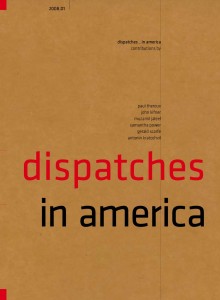
Interview: Gary Knight on ‘dispatches’ magazine online

front cover of current issue of dispatches - 'dispatches in america'

dispatches is a new current affairs quarterly with a companion website, Rethink-Dispatches.com featuring original content as well as extracts from the magazine.

Virtual Intern Natalie Chillington put forward a few questions to editor and art director Gary Knight about the online side to dispatches. Continue reading

Music magazine launches ‘Beard Aid’ business model

Independent free music magazine Bearded is launching a curious initiative to try to fund the magazine through reader donations. ‘BeardAid‘ asks readers to “give £2 a month in exchange for exclusive music content, free magazines, discounts and free entry to Bearded gigs as well as a host of freebies.”

So, a music club then? Well, only if you’ve got your Old Media hat on. Because the magazine is explicitly inviting readers to be part of their project, rather than simply paying money. I’ve spoken before about ‘punk capitalism‘ and this seems to me to be another example. Not only that, but it’s another symptom of the disintermediation of the media industry – more on that later. Continue reading