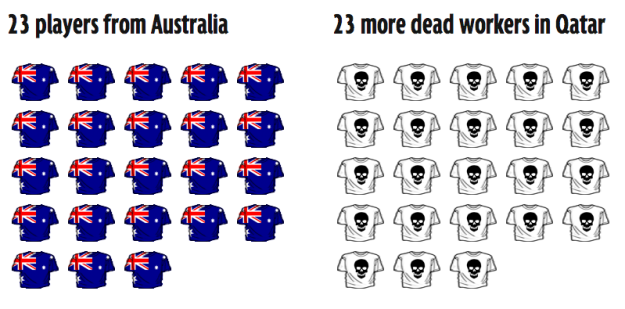
Giving a voice to the voiceless is one of the core principles of journalism. Traditionally this means those without the power or money to amplify their own voices, but in recent years a strand of work has developed in data journalism that deserves particular attention: projects which give a voice to people who literally don’t have one — because they are dead. Continue reading →
It is perhaps a sign of the success of Trinity Mirror’s web-savvy projects Ampp3d, UsVsTh3m and Row Zed that reports of their closure have generated such strong reactions from journalists across a range of titles.
UsVsTh3m launched in early 2013; Ampp3d towards the end of the same year. The launches themselves represented a fresh approach to mainstream publishing online: standalone teams free to innovate without the baggage of print costs, systems and cultures.
The projects were initially given 3 months to prove their worth as separate projects but ended up becoming part of the Mirror site and sticking around for 2 years.
On those grounds alone UsVsTh3m, Ampp3d – and Row Zed in 2014 – have been a success. They achieved what they set out to do, and more.
Good luck to & sympathy for folks at @UsVsTh3m & @Ampp3d. v much admired the latter's data output and shouted at the former's games
This has been the election when the geeks came in from the cold. There may be no Nate Silver-style poster boy for the genre this side of the pond – but instead, I believe we’ve finally seen the culmination of a decade of civic hacking outside the newsroom. And if anyone deserves credit for that, it is not the Guardian or the Telegraph, but MySociety, Tweetminster, and Democracy Club.
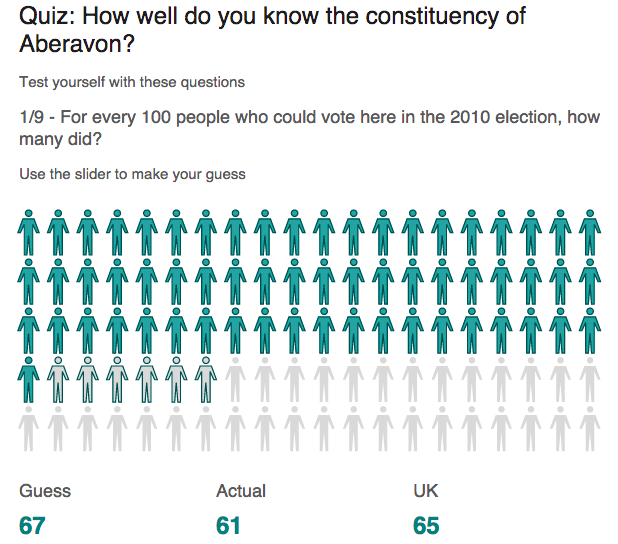
Looking back at my review of online election reporting in 2010 it’s striking how much has changed. Back then data journalism’s contribution was all about interactive presentation of results, but little else.
In the time between that election and this one, however, two things have changed within the news industry: firstly, a more code-literate workforce, including dedicated data project teams; and secondly, the rise of mobile, social media-driven consumption and, as part of that, visual journalism. Continue reading →
When should you stop buying football stickers? I don’t mean how old should you be – but rather, at what point does the law of diminishing returns mean that it no longer makes sense to buy yet another packet of five stickers?
It’s not often I encounter a piece of data journalism which solves a common problem in the field – and it’s even rarer to find a piece of work which tackles two.





 Online Journalism Blog