
Earlier this month I was interviewed for a feature about data journalism in the Argentina newspaper La Nacion. Here are the full questions and answers, in English, published as part of the FAQ series.
Continue reading
Earlier this month I was interviewed for a feature about data journalism in the Argentina newspaper La Nacion. Here are the full questions and answers, in English, published as part of the FAQ series.
Continue reading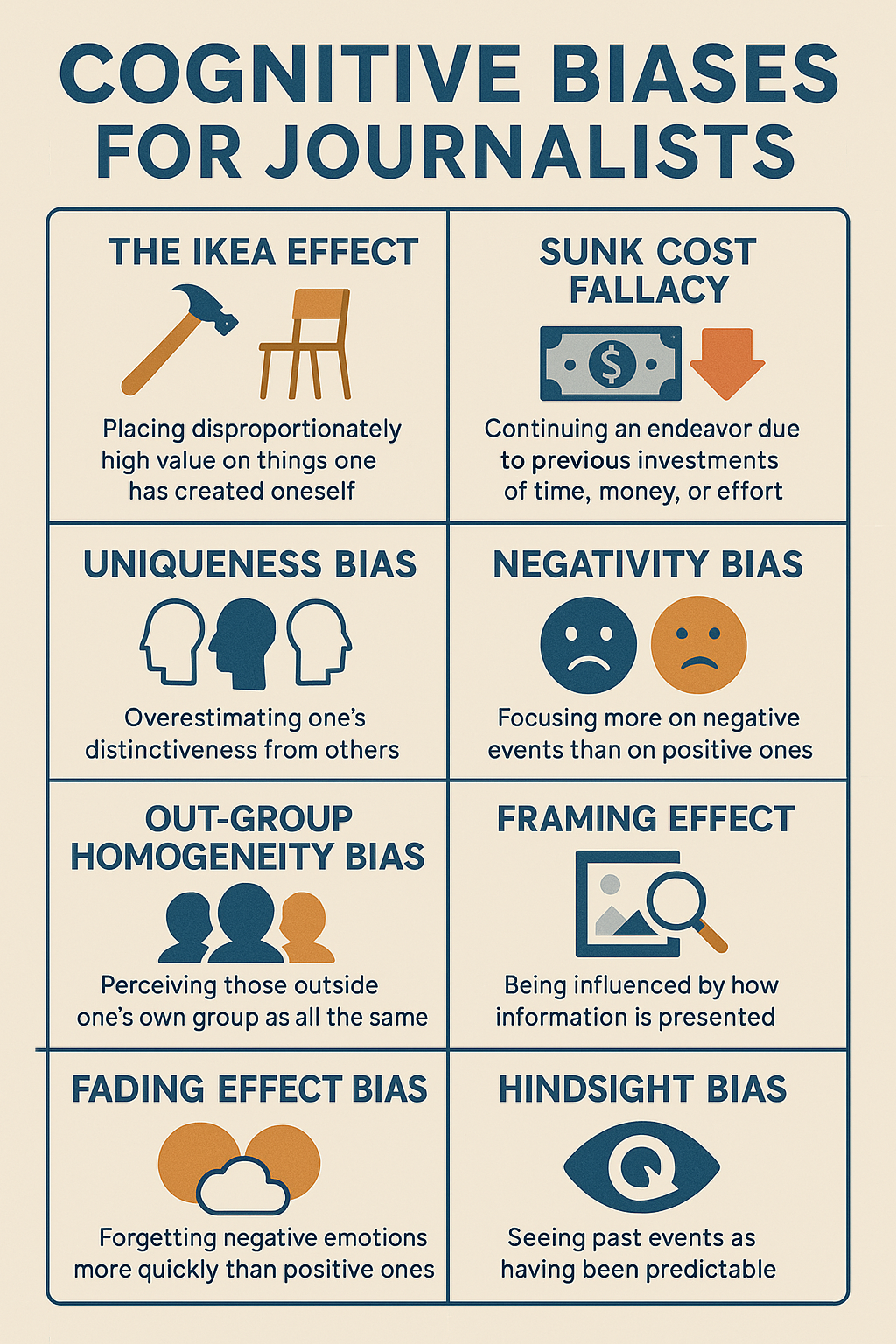
For the last few years I’ve been teaching my journalism students a dedicated class on cognitive bias — common ways of thinking that lead journalists (and audiences and sources) to make avoidable mistakes.
Journalism is particularly vulnerable to cognitive bias: we regularly make decisions at speed; we have to deal with too much information — or extract meaning where there isn’t enough of it. Each of those situations makes us vulnerable to poor decision-making — and many of the rules that we adhere to as journalists are designed to address that.
Some cognitive biases — such as groupthink, prejudice, and confirmation bias (covered in a second post here) — are well-known, but many others are not (there are over 180 of them). That includes bias blind spot: the tendency to see how biases affect other people, but not yourself.
So if you were thinking “this doesn’t apply to me”, read on for a guide to some of the cognitive biases likely to affect journalists — from being manipulated by sources to being bad editors of our own copy — and what to do to tackle them.
Continue reading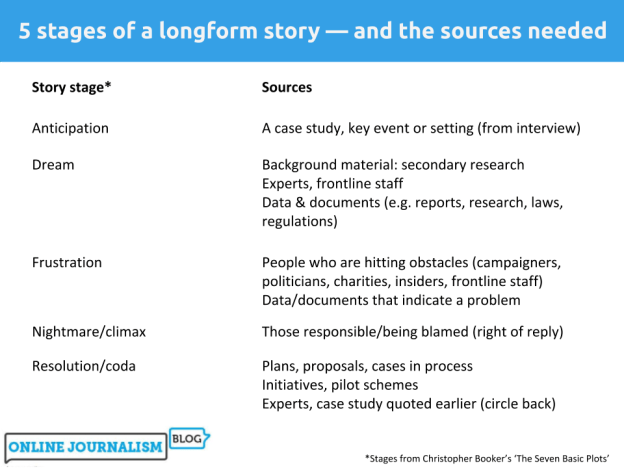
This year I’ve been working with my MA Data Journalism and MA Multiplatform and Mobile Journalism students on techniques for telling longer form stories. In this post I explain how a consideration of story structure can help you clarify the sources that you will need to talk to in order to gather the elements needed for an effective longform story.
In a previous post I discussed how different plot frameworks identified by Christopher Booker in his book ‘The Seven Basic Plots‘ – such as the ‘quest’ or ‘tragedy’ – can help a journalist think about longer investigations. In addition to those types of story, however, Booker also identifies 5 stages of a story. These are:
I would argue that you can see these stages at work in most longform journalism, too. Here’s how: Continue reading
 Online Journalism Blog