Author Archives: Paul Bradshaw

Hyperlocal Voices: Jason Cobb, Onionbagblog

Onionbagblog

As part of the Hyperlocal Voices series, Yessi Bello speaks to Jason Cobb, publisher of Wivenhoe’s Onionbagblog, which has moved with its author from town to town, and from covering local sport to an increasingly civic focus, including coverage of council meetings. Cobb describes attending his first Full Council meeting as “almost on par with this despair of watching sub-standard non-league football.” He now also publishes The Wivenhoe Forum.

Who are the people behind the blog?

My blog is essentially my own personal online home, where I can create and dump any digital content that comes my way.

My day job involves managing online communities, as well as producing online content for local schools. Sitting somewhere in-between is my blog, hopefully as a platform for local co-operation and engagement.

When did you set up the blog and how did you go about it?

I started blogging in 2003 using Blogger. It was the online equivalent of the old punk rallying call of here’s a chord, here’s another one – now go and start a band. Starting a blog was as simple as setting up an account with Blogger.

I’ve since moved platforms to a WordPress self-hosted site, which offers more flexibility and control over the design. But ultimately it really is still all about the content.

I’ve changed direction, if not focus, in the eight years that I have been blogging. This shift more or less reflects my own offline lifestyle changes from sport, to local community issues, and then my current lifestyle change having moved out of South London to the North Essex estuary wilds. Essentially I blog about what I see around me.

In Lambeth I witnessed an incredibly poor level of local accountability when it came to local council matters. The press gallery for Full Council meetings was often empty, with local journos guilty of being caught asleep on the job.

Through blogging and tweeting about some of the political twaddle that was taking place, I was able to engage the local community in how petty local politics can often appear from the outside.

It is great to now see many similar local blogs carrying on this level of political accountability, as well as the traditional media taking to tweeting from within the Town Hall.

What other blogs, bloggers or websites influenced you?

The mighty Urban 75 has always been an inspiration in terms of community passion, and what is possible to achieve collectively online.

The South East 853 blog often overlaps with similar local authority themes that I addressed in Lambeth.

Lurking About SE11 was an online neighbourhood friend, although we only ever met once by accident, despite constant accusations that we were in league together.

memespring is doing some very interesting work with data journalism in South London.

Since my move out towards North Essex, Keep Colchester Cool and the online/offline creative hub at 15 Queen Street have both offered much support and many opportunities for collaboration.

There is a tangible sense that Colchester is going through a period of positive creative growth. It is no coincidence that this move coincides with the emergence of the Cultural Quarter in the town.

By continuing to blog about hyperlocal matters in my new home of Wivenhoe, I have been able to connect with others members in the community and share ideas as to what direction our estuary town is hopefully taking.

How do you see yourself in relation to a traditional news operation?

The distinction is often one that is made by the traditional news media, and not by bloggers who are simply going about their business. We are all observers and reporters of events that happen around us. Traditional media may make money out of this process, but that is the only difference.

I personally operate best in a news patch that I know inside out. Size is all-important here – I have little interest in what is happening in a one mile radius outside of where I live and work: that is for others to look into.

Traditional media spreads itself thin by the very nature of being tied down to a financial model of covering a greater footprint.

Having moved into a new town, I am slowly, slowly finding my feet, and finding out more about the social history. Being active online in the area is a great opportunity to go about learning more about the sense of history in the place I now call home.

What have been the key moments in the blog’s development editorially?

Covering local sport was a large part of my old blog. I then began to ask more questions about how local decisions were made, and why this supposedly democratic process was often leading towards a shambles of democracy in the local town hall.

Attending my first Full Council meeting was something of a key moment, and one that was almost on par with this despair of watching sub-standard non-league football.

This has led to breaking new stories such as the Lambeth Councillor who attended only 50% of meetings yet still claimed his full allowance ; the local journo who received a police caution for the common assault of a cabinet member and the allegation that the Leader of Lambeth Council ordered an apolitical officer to hack into the email account of a fellow Councillor.

Sadly the downside to this local level of journalism is that you don’t exactly make yourself popular with the local politicians that you are holding to account. I felt some sense of justice when a Lambeth Councillor who left a completely random comment with racist connotations on my blogwas then ordered by the Council to participate in social media training.

Moving forward and I have recently set up a hyperlocal forum for the community where I now live. The Wivenhoe Forum is growing organically, and it has been great to see how locals are joining the online community and starting conversations about how we can make out town an even greater place to live and work.

What sort of traffic do you get and how has that changed over time?

To my great surprise my traffic levels have doubled since my blog took a more rural direction along with my house move.

I prefer the more qualitative approach to measurement than quantitative. Many new opportunities come my way via my blog. I am able to make offline connections in the local community, something that a daily data report of unique users is unable to compare with.

How to create a Facebook news feed for a journalist (or anything else)

James Ball articles Facebook page

I’ve been enjoying The Independent’s individual Facebook feeds for journalists, football teams and other ‘entities’ of their news coverage. So much so that I wanted the work of journalists on other news organisations to be brought to me in the same way.

But other newspapers are not offering the same functionality, so I thought I’d do it myself. Here’s how you can do it too:

Create a Facebook page for the journalist

Go to the Facebook Pages page and click ‘Create Page‘ in the upper right corner. Continue reading

All the news that’s fit to scrape

Channel 4/Scraperwiki collaboration

There have been quite a few scraping-related stories that I’ve been meaning to blog about – so many I’ve decided to write a round up instead. It demonstrates just the increasing role that scraping is playing in journalism – and the possibilities for those who don’t know them:

Scraping company information

Chris Taggart explains how he built a database of corporations which will be particularly useful to journalists and anyone looking at public spending:

“Let’s have a look at one we did earlier: the Isle of Man (there’s also one for Gibraltar, Ireland, and in the US, the District of Columbia) … In the space of a couple of hours not only have we liberated the data, but both the code and the data are there for anyone else to use too, as well as being imported in OpenCorporates.”

OpenCorporates are also offering a bounty for programmers who can scrape company information from other jurisdictions.

Scraperwiki on the front page of The Guardian…

The Scraperwiki blog gives the story behind a front page investigation by James Ball on lobbyist influence in the UK Parliament: Continue reading

How will people use your content? (Bad slideshow design)

gruffalo cake recipe

Design is not just about aesthetics but usability as well. This is particularly relevant when you are designing content online. So when I encountered this example of a slideshow for a cake recipe, I had to share it.

1. There is no ‘print’ option on the page

2. The ingredients are on one page, the recipe instructions take up a further 9 pages. So using the browser’s print option would involve clicking at least 19 times (9 times to get to the next page, 10 times to print each page – more clicks if you add in clicking on menus, etc.)

What do people do with recipes? Not this, if they can help it.

Thinking about how people might use your content should be part of how you design it. Newspapers have evolved over centuries in response to this – and even that doesn’t stay still, as the way that people use newspapers continues to change.

So what should this slideshow include? Well if you have to use a slideshow then at least include a link to a printable or fullscreen version (if they have the laptop or tablet in the kitchen) of the full recipe.

And if you’re going to allow people to ‘share’ it (as this slideshow did), don’t let that mean sharing just one part of the recipe (as, sadly, this slideshow did. I pity the person who received my message saying that I thought they might like step 1 of an incomplete recipe).

Thankfully the slideshow format is not used for any other recipe on The Guardian’s recipes page. Meanwhile, it’s a good lesson in bad design.

Should you ‘brand’ a hashtag?

Faisal Islam: Sure that all the brilliant BBC reporters realise that #BBCBudget goes against the entire point of SOCIAL media. It will be abandoned.

Two experiments by news organisations with Twitter hashtags during today’s UK budget have raised an issue around ‘branding’ and how appropriate it is to social media.

The BBC, it seems, is encouraging users to adopt the #BBCBudget hashtag to flag their tweets as part of the ‘national conversation’. Channel 4’s Faisal Islam, above, feels it’s a waste of 3 characters.

But Channel 4 itself is trying something not too dissimilar: #C4cuts aims to crowdsource details of UK spending cuts. Ed Fraser, online editor for Channel 4 News, is quoted by Journalism.co.uk as saying the channel wants to “harness the power of social media and the wisdom of the crowd”. Continue reading

Repubblica.it’s experiment with “Investigative reporting on demand”

Repubblica.it's experiment with

Alessandra Bonomolo reports on an Italian experiment to involve readers in investigative journalism.

Whether investigative journalism should be considered “dead” or “alive”, it still proves to be a topical issue able to engage readers by only mentioning its name.

Italian Repubblica.it, the online edition of the daily la Repubblica, has launched an investigative reporting “on demand” initiative. After the first three releases, the idea seems to be succeeding, with thousands of readers responding.

Every month, the online community is asked to choose an issue for reporters to investigate, among an array of options – all related to the environment. “Environment is a strategic editorial issue for us”, says Giuseppe Smorto co-editor of Repubblica.it.

The shortlist of options is drawn up by Repubblica’s correspondents. Most of the issues strongly affect a specific geographical community. Others may include follow-ups on big events in the past, such as the Winter Olympics held in Turin in 2006.

Although they are not all “nationwide and very appealing topics”, Repubblica considers the initiative as part of “an investment in the relation with the readership”. As the investigations are expected to mostly interest local communities, the proximity factor appears to play its part in the initiative’s good response. But, according to Giuseppe Smorto, the editorial focus remains on the environmental aspects.

The readers’ investigations are published both as online articles and videos. Such coverage clearly increases the costs for the news organisation, but it is seen as “an effective way to diversify the product for its final use (computer, smartphone or tablet) in order to reach out to more people”.

Unlike other outlets, Repubblica.it is not engaging its readers in the investigation itself (for instance, by asking them for tips like the Washington Post). Rather, the “investigation on demand” project involves readers in the editorial process, by choosing the topic of the investigation.

This strategy echoes another initiative of the website. Every day, Repubblica Domani broadcasts the morning editorial meeting, opening to the public the doors of their newsroom.

“This is a most advanced form of interaction with the readership”, says the online co-editor. But having readers participating in the editorial process implies that journalists also make their own investigative process open to the public. Should the original hypothesis not be verified by the facts, the reader will see an unexpected conclusion. Potentially, they will even read an investigation with no case at all, which can lead to disappointment.

“This comes with the imperative of transparency and verification”, says environment correspondent Antonio Cianciullo. The newspaper’s investigation into a controversial pollution case concluded, for example, that measures have been eventually put in place and now the situation is under control.

Given the response with the environmental “on demand” investigations, Repubblica says the initiative may be replicated in other sectors.

FAQ: Journalism vs blogging

Here’s the latest in my attempt to answer questions publicly so that I can lazily point people to the answers when they ask them again. These are from a Norwegian student at London Metropolitan University:

Do you consider yourself a journalist? Why?

Yes, when I produce journalism. That is: finding newsworthy information and communicating it to others. I find G Stuart Adam’s definition best here – sadly no longer online but copied below: Continue reading

Getting full addresses for data from an FOI response (using APIs)

heatfullcolour11-960x1024

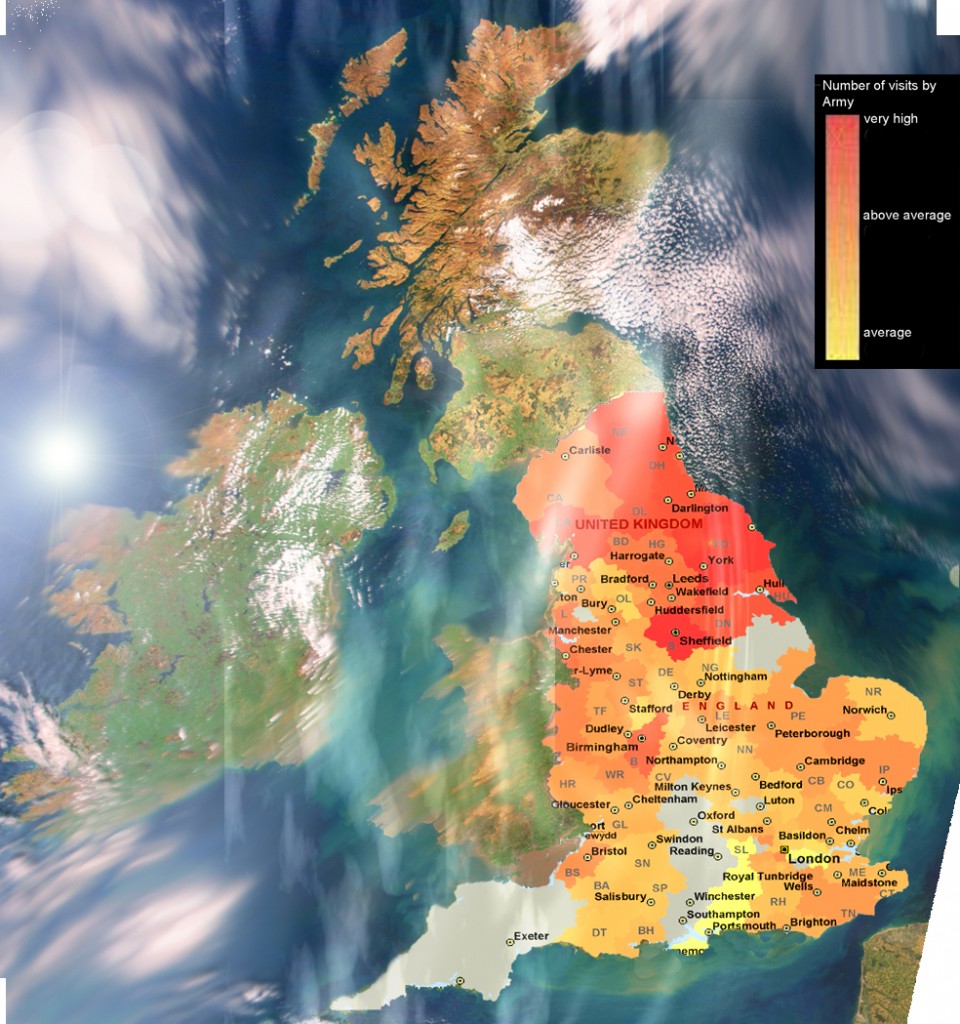
Here’s an example of how APIs can be useful to journalists when they need to combine two sets of data.

I recently spoke to Lincoln investigative journalism student Sean McGrath who had obtained some information via FOI that he needed to combine with other data to answer a question (sorry to be so cryptic).

He had spent 3 days cleaning up the data and manually adding postcodes to it. This seemed a good example where using an API might cut down your work considerably, and so in this post I explain how you make a start on the same problem in less than an hour using Excel, Google Refine and the Google Maps API.

Step 1: Get the data in the right format to work with an API

APIs can do all sorts of things, but one of the things they do which is particularly useful for journalists is answer questions. Continue reading

New York Times paywall: sense prevails over ideology (almost)

So, the plans for the New York Times paywall are out. I said when they were first mooted that they looked to be thinking along the right lines in allowing people to view content for free if they came via social media – but I feared that that innovation would be lost along the way.

It’s enormously encouraging to see that it hasn’t.

Why is it encouraging? For two main reasons: firstly, it recognises the importance of distribution in online publishing. If you erect an arbitrary paywall, many people will not bother to link to you because they don’t want to frustrate their friends. That not only hurts your social media traffic, it hurts your search engine ranking.

Variety magazine suffered from this so much recently, it seems, that they launched a blog outside of their paywall with an email begging other sites to link to it.

Secondly, it recognises that they need to balance quality with quantity. Online advertising has yet to settle into any sort of pattern, but metrics of engagement are rising in importance, and one of those metrics is how much traffic comes from recommendations, i.e. social media.

Another metric is, of course, how loyal a user is, how many articles they read, and how much you know about them. The subscription options will allow the NYT to gather that information too – without sacrificing the huge numbers that most advertisers will be looking for.

Curiously, the chairman of The New York Times Company is quoted as saying “A few years ago it was almost an article of faith that people would not pay for the content they accessed via the Web.”

But I don’t think they are paying just for the content. I think this system recognises that they are paying for convenience (you pay more to get the content across web, mobile and iPad than you do to get the same content on fewer platforms – and you could get all the content for free if you can bother to go through Bing), and reliability (not hitting a wall when you want to read the 21st article of the month).

In many ways it is no different to traditional subscriptions: it is the difference between paying for regular deliveries of the whole paper package, and picking up a newspaper that someone has left on the bus or the staff canteen, or borrowing one from a friend, for free.

In the past we accounted for those ‘freeloaders’ and ‘parasites’ – as we call them online – by adjusting our readership figures to reflect that every copy bought was read by 4 people. We didn’t lock down the newspapers and tell subscribers what they could do with them.

And so here we are, with the most mature, intelligent, and commercially sensible paywall model yet.

But we still have no idea if it will work…

UPDATE: Aside from the technical implementation I think Dave Winer has a point about the content proposition