Journalisme et code : 10 grands principes de programmation expliqués

Cedric Motte asked if he could translate Coding for journalists: 10 programming concepts it helps to understand into French. Here’s the result – first published on NewsResources.

Si vous envisagez de vous mettre à la programmation, il y a de fortes chances que vous butiez sur une série de termes techniques, un jargon qui peut être particulièrement rébarbatif, notamment dans les tutoriels, dont les auteurs ont tendance à oublier que vous êtes inexpérimentés en programmation.

Les sections qui suivent décrivent et indiquent dix concepts que vous êtes susceptible de – non, que vous allez – rencontrer. Continue reading

Coding for journalists: 10 programming concepts it helps to understand

If you’re looking to get into coding chances are you’ll stumble across a raft of jargon which can be off-putting, especially in tutorials which are oblivious to your lack of previous programming experience. Here, then, are 10 concepts you’re likely to come across – and what they mean.

1. Variables

cat in a box

Variables are like boxes which can hold different things at different times. Image by Wolfgang Lonien.

A variable is one of the most basic elements of programming. It is, in a nutshell, a way of referring to something so that you can use it in a line of code. To give some examples:

  • You might create a variable to store a person’s age and call it ‘age’
  • You might create a variable to store the user’s name and call it ‘username’
  • You might create a variable to count how many times something has happened and call it ‘counter’
  • You might create a variable to store something’s position and call it ‘index’

Variables can be changed, which is their real power. A user’s name will likely be different every time one piece of code runs. An age can be added to at a particular time of year. A counter can increase by one every time something happens. A list of items can have other items added to it, or removed. Continue reading

Hyperlocal Voices: Jamie Summerfield, A Little Bit of Stone

It’s been a little while since we had a new entry in our Hyperlocal Voices series (where we interview hyperlocal practitioners about their experiences). To kick off our efforts for 2014, Damian Radcliffe touches base with Jamie Summerfield, to talk about A Little Bit of Stone, a community news website for Stone in Staffordshire.

Who were the people behind the blog?

I set up A Little Bit of Stone in August 2010 and was joined a month later by Jon Cook.

We quickly set up a partnership, me doing editorial and Jon looking after web and technical matters. Continue reading

Unicorns, racehorses – and a mule cameo: data journalism in 2014

unicorn animated gif

Recently it has felt like data journalism might finally be taking a step forward after years spent treading water. I’ve long said that the term ‘data journalism’ was too generic for work that includes practices as diverse as scraping, data visualisation, web interactives, and FOI. But now, in 2014, it feels like different practitioners are starting to find their own identity.

It starts with the unicorn. Continue reading

How do you cost your work as a freelance multimedia/data/community journalist? 3 questions to ask

Money and dice on scales

Dice and Money on Scales image by Images Money

Costing up your work as a freelance in multimedia, liveblogging, data journalism, community management or SEO isn’t straightforward. There’s no simple answer to ‘How much should I charge for this particular work?’ because the field isn’t standardised enough to have reliable rates.

But there are three questions you can ask yourself which can help you set a price or feel comfortable with the decision you make about taking or turning down work.

Question 1: What are your costs?

The basic cost is your time. How much time do you realistically think the work will take? And how much do you value that time, e.g. per hour? Journalism often takes more time than anticipated: contacts take more chasing; case studies fall through. Editors ask for new versions.

Travel is another cost, and accommodation and food for some work too. It may be worth negotiating on these costs separately, rather than including it in the fee, so the two can be distinguished.

Then there are equipment costs if you are working in multimedia. These are generally not specific to the project so shouldn’t have a big impact – but they do have an impact on question 3 below.

Question 2: What value does the work add to you?

How much value do you get from the work, for example:

  • Will it add to your CV in areas that it lacks (rather than areas you already have)?
  • Will it build your reputation?
  • Does it give you an opportunity to learn new skills that you couldn’t learn otherwise?
  • Does it give you an opportunity to meet people or gain access to places you wouldn’t otherwise – and what will add value to you in some way?

Question 3: What supply and demand exists for your skills?

Like any market, prices in journalism are significantly shaped by supply and demand.

For example, if there are very few people offering the skills that you have, and – crucially – a lot of clients demanding your skills, then you can ask for more.


Multimedia is one area where an investment in equipment can narrow the pool of those able to offer similar services – but not always.

It should be a judgement based on experience, not ego. You may think your skills are valuable, but if you’re not getting a lot of approaches for work then the demand is not there at this time. But if you’re getting more offers than you have time to do, then try increasing your price.

If the market is flooded by people with particular skills, prices drop. This is why freelance print journalism is so poorly paid: work that might take you two weeks to produce might only command £100, or £50, or zero, because there are enough people competing to do it for that price.

But it’s worth remembering that they might be competing to do it for that price because they a) think it will take them less time than you (rightly or wrongly); and/or b) get more value from the work than you. In other words, they have different answers to questions 1 and 2 above.

Upping the price: gathering an evidence base

One of the reasons why you may be offered less money than you expect is because publishers often don’t know the value of content themselves. Liveblogging, multimedia, and other new formats are still establishing their worth, while journalism as a whole continues to depreciate.

So collect evidence on effectiveness and make a case for the value your work has.

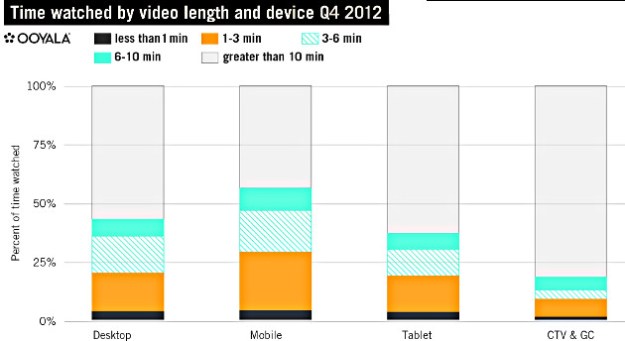
For example, liveblogging is known to drive traffic; there is evidence that data journalism tends to have much higher dwell times than other journalism. Multimedia generates higher engagement metrics. Good community management can increase conversion rates.
video-viewing-length-by-device-2012-ooyala

Showing the value of longform video – image from Ooyala 2012 end of year index report


Simple tools like bit.ly allow you to measure things like clickthrough on links; asking for analytics from employers – or even negotiating extra payments based on performance can encourage clients to look at metrics they might otherwise be ignorant of.

Do you have any other factors you consider when pricing up work? 

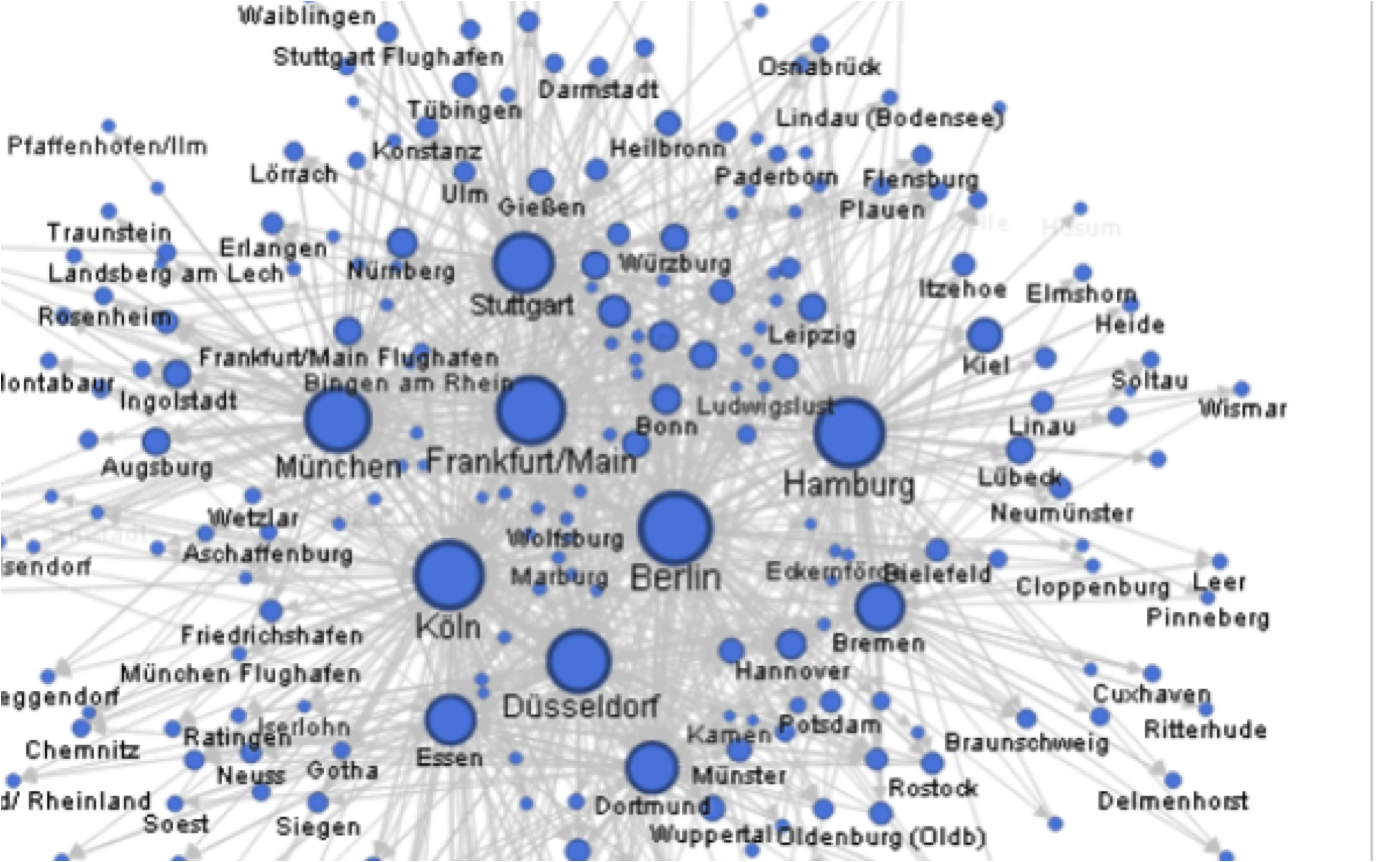
Guest post: How I did it – visualising carpooling patterns in Germany

Visualising carpool data

In a guest post for OJB, Natalia Karbasova explains how, with no coding experience, she used German carpool data for the basis of a data visualisation project.

Some time ago I was working on a new blog on the sharing economy, lets-share.de. It was high time to add some data-driven stories visualising important issues of the sharing economy, which change our lives.

Mitfahrgelegenheit.de is the popular German version of Carpooling.com. I decided to create a visualization which would show carpooling patterns between cities in Germany and, possibly, reveal hidden connections. Continue reading

Crowdfunding: what are you paying for?

Few examples illustrate the complexities of crowdfunding better than Shane Bauer‘s Beacon page to crowdfund $75,000 for a year-long investigation into US prisons. It includes a number of options for “backing” Bauer (a usefully generic term) which fall into 3 broad categories and are worth learning from:

1. Are you paying for content?

crowdfunding subscriptions on Beacon

The most obvious thing to charge for in a crowdfunding operation is content. And so, the most basic options in Bauer’s project (and in most Beacon projects) are subscriptions: monthly, six-monthly, and annual. Continue reading

My next ebook: Finding Stories in Spreadsheets

Finding Stories In Spreadsheets ebook cover

In a few weeks I will begin publishing my new ebook: Finding Stories In Spreadsheets.

The book has been written in response to requests from journalists who need a book on Excel aimed at storytellers, not accountants.

Finding Stories In Spreadsheets will outline a range of techniques, including ways to find the ‘needle in the haystack’ in text data, number calculations to make stories clearer, and methods of cleaning and combining data to tell new stories, including getting data ready for maps and charts.

The book will be available for a discounted rate for the first couple of weeks. To be informed when it’s available, register your interest on the Leanpub page.

Charging for journalism – crowdfunder SA Mathieson’s experience

SA Mathieson Beacon page

If you assumed that the future of journalism would only be free (or at least advertiser-funded), says SA Mathieson, you’re wrong. In a guest post for OJB Mathieson – who recently successfully crowdfunded his own project to report on the Scottish referendum – explains why the web turns out to be capable of charging for access too.

The Columbia Review of Journalism recently reported that the Financial Times now has nearly twice as many digital subscribers as print ones, having added 99,000 online customers in 2013.

They pay significant amounts for access: the cheapest online subscription to the FT is £5.19 a week. A free registration process does allow access to 8 articles a month – but try to access a ninth and you have to pay.

The FT was earlier than most to charge online, but many publishers have followed suit. Only a few – such as The Times – lock up everything, but titles including the Telegraph, New York Times and Economist all use metering, allowing non-paying readers access to a limited number of articles before a subscription is required. They have been joined by increasing numbers of trade and local publications.

This isn’t just an option for established titles: as a freelance journalist I write for Beacon, a start-up used by more than 100 journalists in more than 30 countries to publish their reporting. It has “more than several thousand” subscribers after five months’ operation, co-founder Adrian Sanders told the New York Times recently.

Continue reading

Fund an investigative project – and get analytics for free?

Lyra McKee is a brave young woman. Not (just) because of her investigation into the murder of a Northern Ireland politician – but because of her decision this week to offer supporters access to the metrics behind it.

Many journalists would find such an idea terrifying: telling everyone how many people are reading my work? Sharing it? Finishing it? There’s simply too much to lose. “Pay no attention to that man behind the curtain.”

But crowdfunding creates a different dynamic. When I backed SA Mathieson‘s project on Beacon, I wasn’t buying content: I was supporting something I believed in. I was supporting a writer to spend time on one topic.

Notably, Beacon’s own strategy acknowledges this: there is no way to subscribe to the ‘brand’ of Beacon – to get access to all content you must support one specific project. Continue reading