Tag Archives: freedom of information

Data, data visualization and interactives within news

In this extract from a book chapter in the new Routledge Companion to Visual Journalism, I look at how the explosion of data as a source for journalists, and the separation of content from interface in online publishing, have combined to lay the foundations for a range of new storytelling forms, from interactive infographics and timelines to charticles and scrollytelling.

Although the term ‘data journalism’ is a relatively recent one, popularised around 2010, data has been part of journalism throughout its history, from early newsletters covering stock prices and shipping schedules in the 17th century, to The Guardian’s 1821 first edition front page table of school spending, US investigations of politicians’ travel expenses in the 1840s and campaigning factchecking of lynching in the 1890s.

The introduction of computers into the newsroom in the 20th century added a new dimension to the practice. After some early experimentation by CBS News in predicting the outcome of the 1952 presidential election by applying computer power to data, a major breakthrough came in the 1960s with Philip Meyer’s use of databases and social science methods to investigate the causes of riots in Detroit.

Continue reading

Teaching data journalism — fast and slow

lecture theatre

Lecture theatre image by judy dean

I’ve now been teaching data journalism for over a decade — from one-off guest classes at universities with no internal data journalism expertise, to entire courses dedicated to the field. In the first of two extracts from a commentary I was asked to write for Asia Pacific Media Educator I reflect on the lessons I’ve learned, and the differences between what I describe (after Daniel Kahneman) as “teaching data journalism fast” and “teaching data journalism slow”. First up, ‘teaching data journalism fast‘ — techniques for one-off data journalism classes aimed at general journalism students.

Like a gas, data journalism teaching will expand to fill whatever space is allocated to it. Educators can choose to focus on data journalism as a set of practices, a form of journalistic output, a collection of infrastructure or inputs, or a culture (see also Karlsen and Stavelin 2014; Lewis and Usher 2014; Boyles and Meyer 2016). Or, they might choose to spend all their time arguing over what we mean by ‘data journalism’ in the first place.

We can choose to look to the past of Computer Assisted Reporting and Precision Journalism, emerging developments around computational and augmented journalism, and everything that has happened in between.

In this commentary, I outline the different pedagogical approaches I have adopted in teaching data journalism within different contexts over the last decade. In each case, there was more than enough data journalism to fill the space — the question was how to decide which bits to leave out, and how to engage students in the process. Continue reading

Keeping up to date with FOI and open data: new mailing list launched

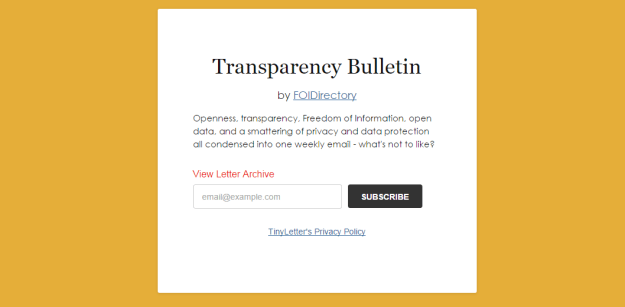
Transparency Bulletin by FOIDirectory

Matt Burgess, the man behind FOI Directory (and the former editor of Help Me Investigate Education) has launched a new weekly email newsletter providing regular updates on developments in Freedom of Information and transparency. Continue reading

Did St Albans Council give misleading figures on FOI requests from police – and could other authorities be doing the same?

St Albans Council are one of an increasing number of public bodies to complain about Freedom of Information requests. In calculating the cost to the body of a quarter of a million pounds every year, they said that over one in ten requests come from the Metropolitan Police.

But Tim Turner was skeptical. So he asked how many of the police requests actually mentioned FOI. They avoided the question:

“St Albans drew my attention to a section on the Information Commissioner’s website which says that any request for information that is plainly not an EIR or a subject access request should be treated as an FOI.”

The implication being that routine requests for information from other public bodies may be being classified as ‘FOI’ as a way of inflating costs and supporting the case against it – even where they would previously just be routine.

Turner then asked specifically how many of those police requests were made under the Data Protection Act:

They admitted that all of them were“.

Continue reading

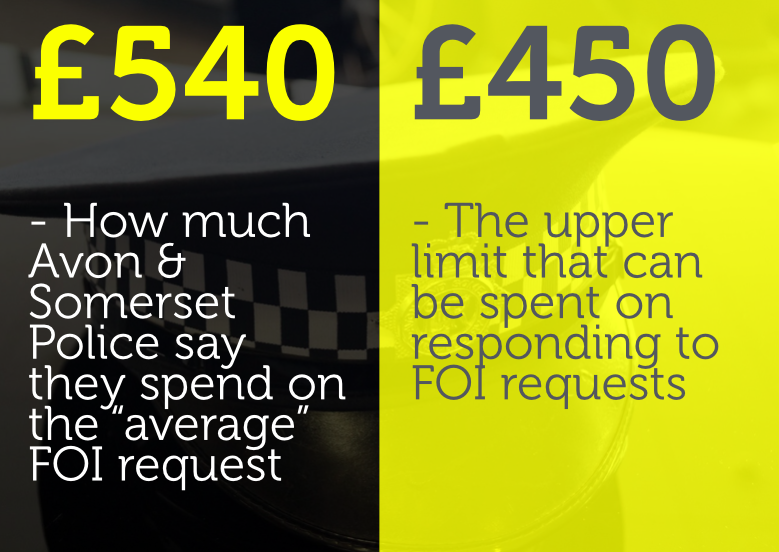
Avon and Somerset Police calculate an “average” cost for an FOI request which is higher than the maximum

£540 is claimed - but £450 is the maximum

Background image by Paul Townsend

While I’m on the subject of Freedom of Information, here’s an odd story in the recent onslaught of anti-FOI press releases, from Avon and Somerset Police.

The police force is just one of many public bodies recently to moan about “bizarre and comical” FOI requests*. They claim that Freedom Of Information cost the body over half a million pounds last year. But can we trust their calculations?

Here’s how they say they arrived at their figure of £514,620:

"The cost of answering requests is calculated on a basis of £30 per hour , with an average time of 18 hours per request."

“The cost of answering requests is calculated on a basis of £30 per hour , with an average time of 18 hours per request.”

That’s an average cost of £540.

Now, here’s the guidance on costs from the Information Commissioner:

“The cost limit for complying with a request or a linked series of requests from the same person or group is set at £450 for [non central] public authorities.”

So somehow Avon and Somerset have arrived at an average cost per request which is higher than the maximum cost for FOI requests.

How? Well, firstly the 18 hours “average” they mention is actually the maximum time that can be spent on an FOI request. So either every requester is somehow managing to hit that magical maximum, or they cannot calculate an average.

Worse, the £30 cost per hour is higher than they are supposed to charge.

According to the Ministry of Justice:

“£25 is the standard hourly rate that all authorities must use to calculate the staff costs of answering requests.”

Perhaps we need an FOI request to find out why Avon and Somerset Police are charging so much to answer FOI requests, and the calculations they used to arrive at an ‘average’?

UPDATE: It seems someone did exactly that:

avon somerset police foi story

*Apparently it’s “bizarre and comical” to ask how many police officers failed a physical. The answer is one in ten.

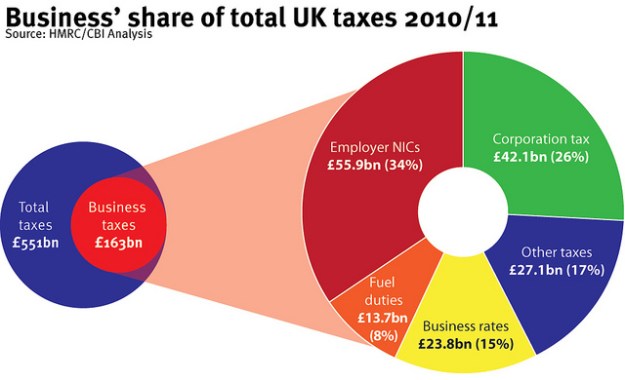
Too many FOI requests are “commercial”? You know that businesses pay tax too?

Every so often public officials who wish to curtail Freedom of Information rights will argue that money spent on fulfilling FOI requests might be better spent on healthcare, or fixing roads, or catching criminals.

This argument is superficially persuasive, but there are two significant counter-arguments:

  • Firstly, that as taxpayers we have already ‘paid’ for the collection of information held by public authorities and have the right to access that;
  • And secondly that FOI allows citizens to scrutinise how our money is being spent and highlight inefficiencies and abuse.

In other words, even if your argument is purely economic (rather than, say, about democratic accountability), Freedom of Information may save at least as much money as it costs: money which, well, might also be better spent on healthcare, or fixing roads or catching criminals.

A system in which public officials can spend money without scrutiny is a system more open to abuse and overspending. So curtailing Freedom of Information to ‘save money’ may be a false economy.

The latest weapon to be used in attacking FOI is to list how many requests are being made by businessesSt Albans Council‘s media offensive against the FOI Act, for example, mentions that:

“57 percent of the requests were from businesses, 15 percent from the national media and 13 percent from the Metropolitan Police.”

Continue reading

Hyperlocal Voices: Simon Pipe, St Helena Online

After a short summer break, our Hyperlocal Voices series returns.  In this issue we visit the tiny island South Atlantic island of Saint Helena. Perhaps best known for being the home of an exiled Napoleon, it is frequently described as one of the world’s most isolated islands. At just 10 x 5 miles, and with a population of 4,255 people, Simon Pipe’s St Helena Online, offered Damian Radcliffe an insight into a very different type of hyperlocal site. Continue reading

2 guest posts: 2012 predictions and “Social media and the evolution of the fourth estate”

Memeburn logo

I’ve written a couple of guest posts for Nieman Journalism Lab and the tech news site Memeburn. The Nieman post is part of a series looking forward to 2012. I’m never a fan of futurology so I’ve cheated a little and talked about developments already in progress: new interface conventions in news websites; the rise of collaboration; and the skilling up of journalists in data.

Memeburn asked me a few months ago to write about social media’s impact on journalism’s role as the Fourth Estate, and it took me until this month to find the time to do so. Here’s the salient passage:

“But the power of the former audience is a power that needs to be held to account too, and the rise of liveblogging is teaching reporters how to do that: reacting not just to events on the ground, but the reporting of those events by the people taking part: demonstrators and police, parents and politicians all publishing their own version of events — leaving journalists to go beyond documenting what is happening, and instead confirming or debunking the rumours surrounding that.

“So the role of journalist is moving away from that of gatekeeper and — as Axel Bruns argues — towards that of gatewatcher: amplifying the voices that need to be heard, factchecking the MPs whose blogs are 70% fiction or the Facebook users scaremongering about paedophiles.

“But while we are still adapting to this power shift, we should also recognise that that power is still being fiercely fought-over. Old laws are being used in new waysnew laws are being proposed to reaffirm previous relationships. Some of these may benefit journalists — but ultimately not journalism, nor its fourth estate role. The journalists most keenly aware of this — Heather Brooke in her pursuit of freedom of information; Charles Arthur in his campaign to ‘Free Our Data’ — recognise that journalists’ biggest role as part of the fourth estate may well be to ensure that everyone has access to information that is of public interest, that we are free to discuss it and what it means, and that — in the words of Eric S. Raymond — “Given enough eyeballs, all bugs are shallow“.”

Comments, as always, very welcome.

Is Ice Cream Strawberry? Part 4: Human Capital

This is the fourth part of my inaugural lecture at City University London, ‘Is Ice Cream Strawberry?’. You can find part one here, part two here, and part three here.

Human capital

So here’s person number 4: Gary Becker, a Nobel prize-winning economist.

Fifty years ago he used the phrase ‘human capital’ to refer to the economic value that companies should ascribe to their employees.

These days, of course, it is common sense to invest time in recruiting, training and retaining good employees. But at the time employees were seen as a cost.

We need a similar change in the way we see our readers – not as a cost on our time but as a valuable part of our operations that we should invest in recruiting, developing and retaining. Continue reading