Author Archives: Paul Bradshaw

Alternatives to Google Reader – which one will you use? (Comment call)

So Google Reader is closing down. Quickly getting the denial, anger and bargaining out of the way, which service will you switch to?

I’ve started an open* spreadsheet so you can add the alternatives you know of, and look at the features of others. (This worked particularly well when Delicious was being sold)

You can also vote for your preferred service here.

*After 24 hours I had to restrict access to the spreadsheet and restore an earlier version after 20 rows were deleted. The sheet is now available for editing by request.


7 buttons you should be using in the WordPress edit view

Wordpress Formatting Menu with selectedText

If you’re writing blog posts there are a number of formatting options you should be using regularly to make your article easier to read for users, and easier to understand for search engines (and therefore search engine optimisation). Here’ s a rundown of the 7 most important ones. Continue reading

Interactive journalism for students – on air

Around this time last year I wrote on this blog about ‘Generation Audioboo’ and the opportunities for anyone entering the field of digital journalism.  A year on, there are more free tools, and more editorial choice. Google Hangouts are now ‘On Air’ for all, for example.

Students on the Interactive Journalism MA course at City University London have been setting up their own live events. Yesterday’s group ran a Google Hangout, themed around social media use for journalists. It was live on air; you can view it – and the class discussion below the video – here.

Rob Grant, a student on the course, led the discussion with to Sarah Marshall, technology editor at Journalism.co.ukAdam Tinworth, journalist and consultant (and a visiting lecturer at City) and Nick Petrie, social media and campaigns editor at The Times about journalism and social media in a Google+ Hangout. Continue reading

Hyperlocal Voices: Paul Smith, HU17.net

https://i0.wp.com/humbernews.co.uk/wp-content/uploads/2011/03/hu17.pngThe latest in our Hyperlocal Voices series features the work of Paul Smith at HU17.net.

Over the past five years Paul has built an online presence which enjoys 140k visitors a month, as well as a weekly printing offering which has been running for some years. Continue reading

A sample dirty dataset for trying out Google Refine

I’ve created this spreadsheet of ‘dirty data‘ to demonstrate some typical problems that data cleaning tools and techniques can be used for:

  • Subheadings that are only used once (and you need them in each row where they apply)
  • Odd characters that stand for something else (e.g. a space or ampersand)
  • Different entries that mean the same thing, either because they are lacking pieces of information, or have been mistyped, or inconsistently formatted

It’s best used alongside this post introducing basic features of Google Refine. But you can also use it to explore more simple techniques in spreadsheets like Find and replace; the TRIM function (and alternative solutions); and the functions UPPER, LOWER, and PROPER (which convert text into all upper case, lower case, and titlecase respectively).

Thanks to Eva Constantaras for suggesting the idea.

UPDATE: Peter Verweij has put together an introduction to some other cleaning techniques here.

Online video and audio – a multimedia introduction

Here are a series of videos, audio slideshows and podcasts that demonstrate some key lessons in producing audio and video for the web – and how that is different from broadcast.

Here are a series of videos, audio slideshows and podcasts that demonstrate some key lessons in producing audio and video for the web – and how that is different from broadcast.

http://storify.com/paulbradshaw/online-video-and-audio-a-multimedia-introduction/

2 how-tos: researching people and mapping planning applications

Mapping planning applications

Sid Ryan’s planning applications map

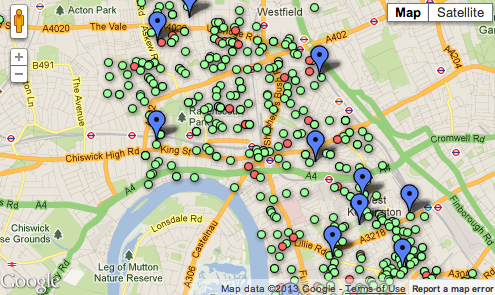
Sid Ryan wanted to see if planning applications near planning committee members were more or less likely to be accepted. In two guest posts on Help Me Investigate he shows how to research people online (in this case the councillors), and how to map planning applications to identify potential relationships.

The posts take in a range of techniques including:

  • Scraping using Scraperwiki and the Google Drive spreadsheet function importXML
  • Mapping in Google Fusion Tables
  • Registers of interests
  • Using advanced search techniques
  • Using Land Registry enquiries
  • Using Companies House and Duedil
  • Other ways to find information on individuals, such as Hansard, LinkedIn, 192.com, Lexis Nexis, whois and FriendsReunited

If you find it useful, please let me know – and if you can add anything… please do.

Motion graphic video workflow – a video tutorial

Motion graphics has become an increasingly popular way to present data in a compelling visual form. In a series of videos guest contributor Sihlangu Tshuma outlines his workflow process for managing a motion graphics video project, the results of which are shown at the end. All 13 videos are also available in this playlist.

1: Motion graphics introduction

2: Researching the project

3: Motion graphics treatments Continue reading

Notes on setting up a regional newspaper datablog

Behind the Numbers - Birmingham's regional datablog

I’ve been working recently with the Birmingham Mail to launch Behind The Numbersa new datablog project with Birmingham City University supported by Help Me Investigate. I’m told that it is probably the UK’s first regional newspaper datablog, although whether that’s a meaningful claim is debatable*.

The first story generated by the project – what is the worst time to be seen at A&E – was published in the newspaper a week ago. But it’s what happens next that’s going to be interesting. Continue reading