Just go here. And discuss.
Google are in the political journalism business – and they’re doing it better than you
6 Replies

Just go here. And discuss.
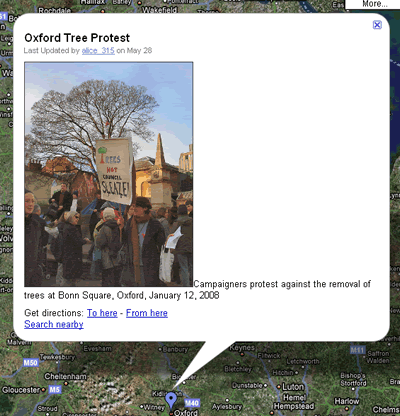
Alice Fanning's map of UK eco stories
As a new semester begins it seems a good time to finally post about how my second year journalism degree students approached the ‘interactive’ element of their portfolio way back in May (yes, everything they do is interactive, but bear with me).
For the first time I gave them an open brief in terms of what they did interactively (in previous years I asked them to produce Flash interactives). Having been taught how to create everything from audio slideshows and image maps to multimedia interactives, Google Maps and Yahoo! Pipes mashups, I was curious to see what they would pick. Would they all plump for the same option? Continue reading
Thanks to James Thornett for pointing out this wonderful tool. MapTube allows you to select any two or maps and combine them, so: “For example, to see a map of the London Underground overlayed on top of a map of population, go to the search page and enter the keywords “tube” and “population”. Then click on the two relevant maps to add them. They will be displayed when you click on “View”.”
Not only that, but you can add your own data and combine them with others too, something which the BBC – James’ employer – has done on user surveys on issues such as the credit crunch and anti-social behaviour.
If you manage to have a play, let me know how you get on.
![Reblog this post [with Zemanta]](https://i0.wp.com/img.zemanta.com/reblog_e.png)
Following the Liverpool Post’s imaginative use of comics in its coverage of the 50-foot, 37-tonne mechanical spider La Princess, Toronto’s Globe and Mail has this great graphic explanation of the financial crisis:

Financial crisis cartoon (Toronto’s The Globe and Mail)
Here’s the Post’s graphic novel insert cover if you’re interested…

Liverpool Daily Post - Spider comic
Last week I was at a magazine publishers talking about social media platforms, when it was put to me that the platform I was talking about was “mainly used by Valley types”, and why should journalists invest time in a platform when the majority of readers of more conservative titles don’t use it?
It’s a recurring question – so much so that I have decided to present my answer here. I’d welcome any additions. Continue reading
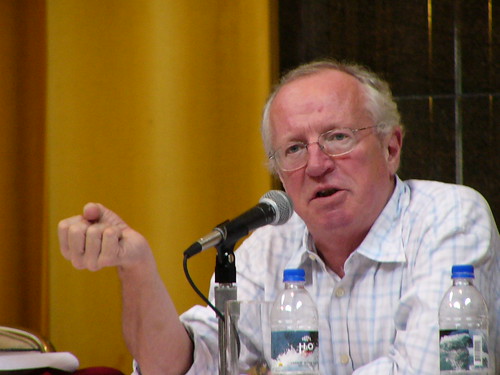
Robert Fisk
Legendary reporter Robert Fisk recently gave a public lecture in Wellington, New Zealand, writes Dave Lee, and offered some very strong personal thoughts on web journalism. Newswire reports:
“Mr Fisk said the internet had led to the erosion of quality writing. Continue reading
What’s the BBC’s approach to training for online journalism? Alex Lockwood spoke to Nick Shackleton-Jones, the BBC’s Manager for Online & Informal Learning and lead behind the BBC College of Journalism.
What is it you do, and what’s the BBC’s approach to multimedia training, development and learning? Continue reading
Continuing the final part of this series (part 1: Community is here) I look at conversation. I look at why conversation is becoming a form of publishing itself, why journalists need to be a part of that conversation, and a range of ways they can join in. Continue reading
This season, after years of loyalty to the BBC/Channel 4 fantasy football competition, I’ve switched to The Guardian’s. Their game takes advantage of the reams of player data now available to newspapers – not just goals scored, clean sheets and assists, but also clearances, interceptions, tackles, shots on target, and so on, making for a very different challenge indeed.
The move mirrors that made by The Telegraph a year ago when they introduced a Flash element to their match reports that allowed you to look at an incredible range of match statistics. As I wrote at the time: it’s like having your own ProZone.
What’s all this got to do with the future of news? This: data. It’s one of the few advantages that news organisations have, and they should be doing more with it. What the Guardian fantasy football and the Telegraph demonstrate is the flexibility of that data.
And if we can do it in sport, why aren’t we doing it more elsewhere? Schools tables, pollution records, crime data, geotagged information, and election results are just a few that spring to mind – can you add some more?
For a good example of a particularly creative use of data (again with a sport twist), see Channel 4’s alternative Olympics medals table, which matches medals results against various other country stats, such as human rights record.
Oh, and by the way, if you want to join my fantasy football friends’ league, search for Game 39 – or just post a comment below…
In the final parts of this series I look at two concepts that have become increasingly central to online journalism in the post-Web 2.0 era: community and conversation. I look at why journalists need to understand how both have changed, how they are linked, and how to embrace them in your work processes.
Conversation and community have always been the lifeblood of journalism. Good journalism has always sought to serve a community; commercially, journalism has always needed large or affluent communities to support it. And good journalism – whether informative or sensationalist – has always generated conversation. Continue reading

