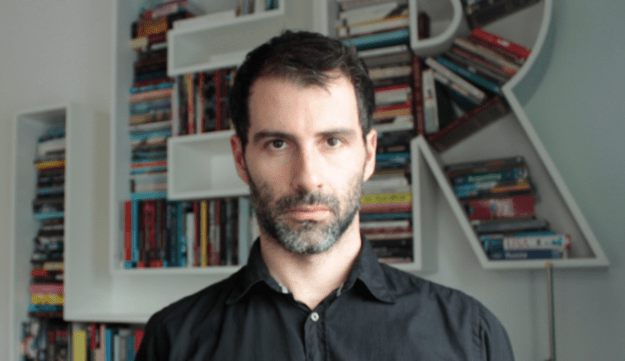
A new email newsletter has been launched by Brazilian journalist and journalism lecturer Moreno Cruz Osório to provide a weekly roundup of key research, developments and stories in the media industry in the country — in English. Continue reading

A new email newsletter has been launched by Brazilian journalist and journalism lecturer Moreno Cruz Osório to provide a weekly roundup of key research, developments and stories in the media industry in the country — in English. Continue reading

When it comes to news websites’ referral traffic, Google beats Facebook hands-down, with the search giant accounting for 40% compared to Facebook’s 26%. And yet hyperlocals, says publisher John Guinn, are making it harder for people to find them by not making the most of four simple SEO settings. In a guest post for OJB, John explains what those settings are — and how hyperlocal sites can use them to improve their SEO. Continue reading
LiveCity is a new data-driven project from Le Parisien that aims to bring together a range of public data sources to serve audiences across its webpages and apps. In a guest post for OJB, Project Director Stanislas de Livonnière, spoke to Steve Carufel about the challenge of aggregating one city’s dispersed open and live data feeds into a single set of dashboards and widgets that could be integrated into the outlet’s website and apps.
Continue reading

Information overload image by James Marvin Phelps
It’s nothing new to say that email overload is one of the biggest problems we face in trying to organise our time. But let’s be more specific: there are, it seems to me, two core problems caused by email: firstly, reaching the end of a day and realising you’ve done nothing but respond to emails; and secondly, finding you are never relaxing because you are getting emails or email notifications on your phone.
I’ve tried various approaches to email management — and there is a whole literature of tips and guidance on the subject. Here are some of the techniques I’ve found work for me in solving the problems above (note: they may not work for everyone). Continue reading
 My new book — Mobile-First Journalism, with Steve Hill — is published this week.
The book tackles various aspects of the new wave of mobile-centred publishing, from “mojo” techniques and creating mobile apps to native content and visual storytelling.
Along the way we also looked at the new critical issues raised by the shift, from strategic decisions involved in platform publishing, to fake news, trolling and verification.
It’s been a timely book — building on my experiences of designing the new MA in Multiplatform and Mobile Journalism at Birmingham City University (with some of the first students’ work inspiring parts of the book) — and fun to write.
I’ll be posting extracts from the book in the coming months…
Knitting yarn optional. image by Rachel
As the summer begins, I’ve been recommending some things that my incoming students might do in preparation for their MA in Multiplatform and Mobile Journalism or MA in Data Journalism. I thought I’d share my advice here for anyone else starting a journalism course this Autumn… (oh, and these are just ideas — you don’t have to do all of these!)
When teaching journalism you notice quickly that the students who produce the most polished pieces of journalism are the ones who consume the most journalism. The more journalism that you read, watch, listen and use, the more journalistic conventions, techniques and tricks you absorb, and more instinctively reproduce. Continue reading

In an extended extract from the forthcoming second edition of the Data Journalism Handbook, I look at the different types of impact that data journalism can have, and how can better think about it.
If you’ve not seen Spotlight, the film about the Boston Globe’s investigation into institutional silence over child abuse, then you should watch it right now. More to the point — you should watch right through to the title cards right at the end.
In an epilogue to the film — this is a story about old-school-style data journalism, by the way — a list scrolls down the screen. It details the dozens and dozens of places where abuse scandals have been uncovered since the events of the film, from Akute, Nigeria, to Wollongong, Australia.
But the title cards also cause us to pause in our celebrations: one of the key figures involved in the scandal, it says, was reassigned to “one of the highest ranking Roman Catholic churches in the world.”
This is the challenge of impact in data journalism: is raising awareness of a problem “impact”? A mass audience, a feature film? Does the story have to result in penalties for those responsible for bad things? Or visible policy change? Is all impact good impact? Continue reading
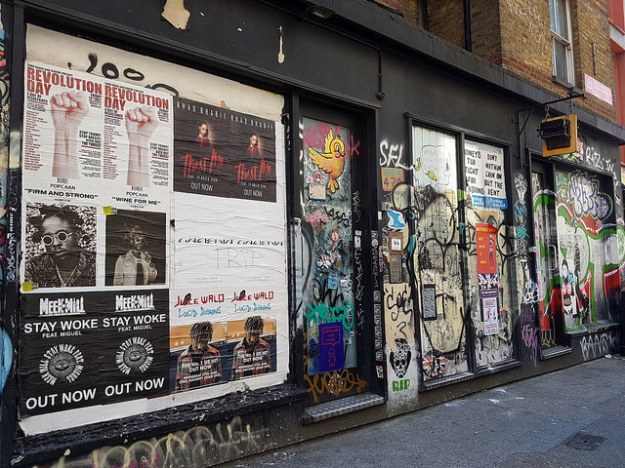
Empty Shops image by Dan Thompson
For the last three years Gavin Chait has been fighting — and winning — multiple Freedom of Information cases to unlock data on vacant properties. In a special guest post ahead of his latest hearing, he explains how he uses a range of evidence to fight a widely misused exemption.
I don’t know how to break this to you, but you’re probably a terrorist.
According to Richard Woolford, Strategic Director of Security and Counter Terrorism with the City of London Corporation, unoccupied properties — and especially unoccupied commercial properties — are attractive for those intent on committing terrorism.
Any knowledge about vacant properties is so dangerous, he believes, that no information about them should be placed in the public domain.
This will come as tough news to terrorism enablers, especially real-estate agents, property developers, banks, insurers, and Google Street View.
If you were hoping to find somewhere new to live, or somewhere to open your dream business, then – for the safety of everyone – you’ll need to stay put. Continue reading
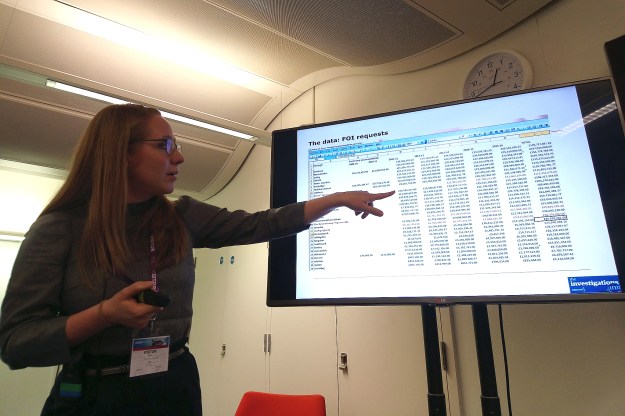
Emma Youle speaking at the Data Journalism UK conference in 2017 – photo by Wan Ulfa Nur Zuhra
As Archant’s award-winning Emma Youle announces she is to leave local newspapers to join Huffington Post UK as a special correspondent. Victoria Oliveres spoke to the investigative journalist about setting up local investigations, using data, and campaigning.
If you’ve looked at any UK journalism awards ceremony in the last few years, chances are you will have seen Emma Youle’s name: winner of the Private Eye Paul Foot Award in 2017, and the Weekly Reporter of the Year at Regional Press Awards 2016, she has also been shortlisted in many others, largely for her approach to showing the impact of national decisions at local level.
This success has come after a career of over a decade in journalism, including the last three years as part of Archant‘s investigations unit, where she uncovered in-depth stories from London boroughs.
The unit was set up in 2015, which Youle considers to be quite pioneering at the time.
“I think local newspapers are one of the best places to do in depth investigations because they are very well connected to the community,” Emma says. Continue reading

robot image by Max Wheeler
Following a request on the Bureau Local Slack channel (join here) I created a tutorial on how to create a Slack bot which would post alerts whenever a new House of Commons or House of Lords event was added to the Parliamentary calendar (this can be adapted for any events calendar that provides an RSS feed). I thought I’d share it here too…
Slack is a great platform for organising a team — and it’s very easy to integrate with bots that will post alerts to a channel whenever something happens. Here’s how to do that using the free tool IFTTT. Continue reading
 Online Journalism Blog