Category Archives: online journalism

The Scarcity Principle: writing online headlines which ‘click’

Increasingly, when journalists now write headlines for the web or for social media, they specify the medium or format involved. They shout VIDEO and AUDIO in caps at the start of the tweet or post; MAPPED or INFOGRAPHIC; INTERVIEW or LIVEBLOG.

Sometimes the medium or format is implied more subtly, with a call to action: we urge users to ‘Watch’, ‘See’ and ‘Listen’. But we also invite them to ‘Join’, ‘Meet’ and ‘Find out’.

Users choose the medium as well as the message

Why do we do this? Part of it is that we recognise that the medium is something special; that users often make a choice based on the medium itself.

But I think putting the medium/format front and centre is about more than just user preference: it’s about abundance and scarcity. Continue reading

Did St Albans Council give misleading figures on FOI requests from police – and could other authorities be doing the same?

St Albans Council are one of an increasing number of public bodies to complain about Freedom of Information requests. In calculating the cost to the body of a quarter of a million pounds every year, they said that over one in ten requests come from the Metropolitan Police.

But Tim Turner was skeptical. So he asked how many of the police requests actually mentioned FOI. They avoided the question:

“St Albans drew my attention to a section on the Information Commissioner’s website which says that any request for information that is plainly not an EIR or a subject access request should be treated as an FOI.”

The implication being that routine requests for information from other public bodies may be being classified as ‘FOI’ as a way of inflating costs and supporting the case against it – even where they would previously just be routine.

Turner then asked specifically how many of those police requests were made under the Data Protection Act:

They admitted that all of them were“.

Continue reading

Data journalism books: bundles now available

Scraping for Journalists and Data Journalism Heist

You can now buy ‘bundles’ of my data journalism books on Leanpub for special discounted prices:

Excel for journalists books

If there’s any interest in other bundles I’ll try to set those up too.

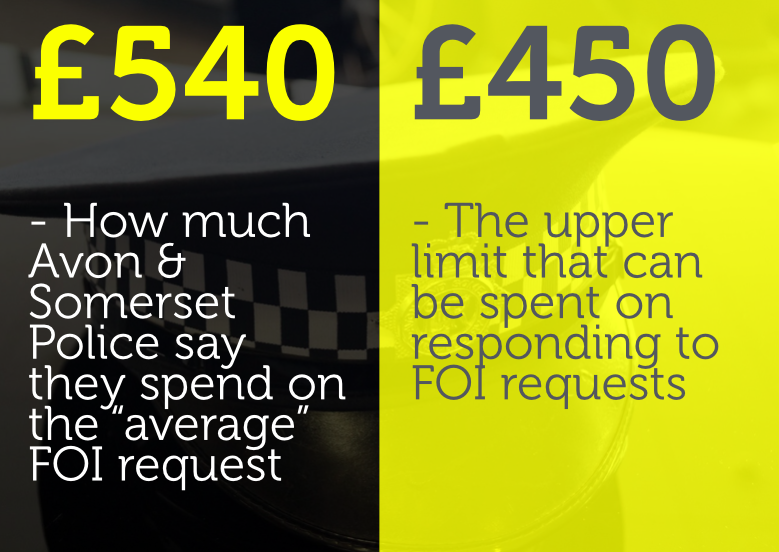
Avon and Somerset Police calculate an “average” cost for an FOI request which is higher than the maximum

£540 is claimed - but £450 is the maximum

Background image by Paul Townsend

While I’m on the subject of Freedom of Information, here’s an odd story in the recent onslaught of anti-FOI press releases, from Avon and Somerset Police.

The police force is just one of many public bodies recently to moan about “bizarre and comical” FOI requests*. They claim that Freedom Of Information cost the body over half a million pounds last year. But can we trust their calculations?

Here’s how they say they arrived at their figure of £514,620:

"The cost of answering requests is calculated on a basis of £30 per hour , with an average time of 18 hours per request."

“The cost of answering requests is calculated on a basis of £30 per hour , with an average time of 18 hours per request.”

That’s an average cost of £540.

Now, here’s the guidance on costs from the Information Commissioner:

“The cost limit for complying with a request or a linked series of requests from the same person or group is set at £450 for [non central] public authorities.”

So somehow Avon and Somerset have arrived at an average cost per request which is higher than the maximum cost for FOI requests.

How? Well, firstly the 18 hours “average” they mention is actually the maximum time that can be spent on an FOI request. So either every requester is somehow managing to hit that magical maximum, or they cannot calculate an average.

Worse, the £30 cost per hour is higher than they are supposed to charge.

According to the Ministry of Justice:

“£25 is the standard hourly rate that all authorities must use to calculate the staff costs of answering requests.”

Perhaps we need an FOI request to find out why Avon and Somerset Police are charging so much to answer FOI requests, and the calculations they used to arrive at an ‘average’?

UPDATE: It seems someone did exactly that:
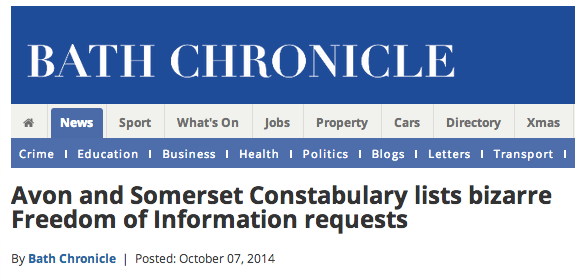
avon somerset police foi story

*Apparently it’s “bizarre and comical” to ask how many police officers failed a physical. The answer is one in ten.

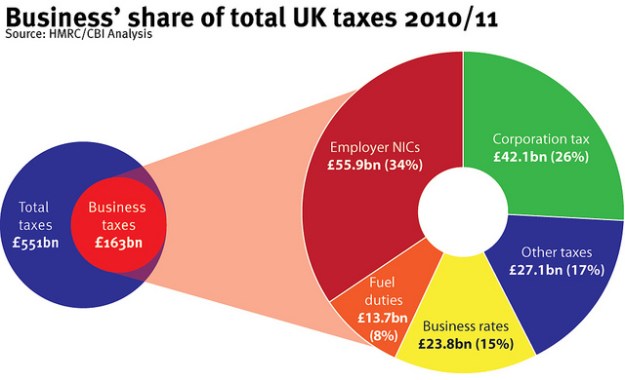
Too many FOI requests are “commercial”? You know that businesses pay tax too?

Every so often public officials who wish to curtail Freedom of Information rights will argue that money spent on fulfilling FOI requests might be better spent on healthcare, or fixing roads, or catching criminals.

This argument is superficially persuasive, but there are two significant counter-arguments:

  • Firstly, that as taxpayers we have already ‘paid’ for the collection of information held by public authorities and have the right to access that;
  • And secondly that FOI allows citizens to scrutinise how our money is being spent and highlight inefficiencies and abuse.

In other words, even if your argument is purely economic (rather than, say, about democratic accountability), Freedom of Information may save at least as much money as it costs: money which, well, might also be better spent on healthcare, or fixing roads or catching criminals.

A system in which public officials can spend money without scrutiny is a system more open to abuse and overspending. So curtailing Freedom of Information to ‘save money’ may be a false economy.

The latest weapon to be used in attacking FOI is to list how many requests are being made by businessesSt Albans Council‘s media offensive against the FOI Act, for example, mentions that:

“57 percent of the requests were from businesses, 15 percent from the national media and 13 percent from the Metropolitan Police.”

Continue reading

Hyperlocal Voices: Jenny Shepherd, Upper Calder Valley Plain Speaker

For the latest in our series of interviews with hyperlocal publishers we head North to Hebden Bridge in West Yorkshire, where online journalist Jenny Shepherd talks to Damian Radcliffe about the Upper Calder Valley Plain Speaker.

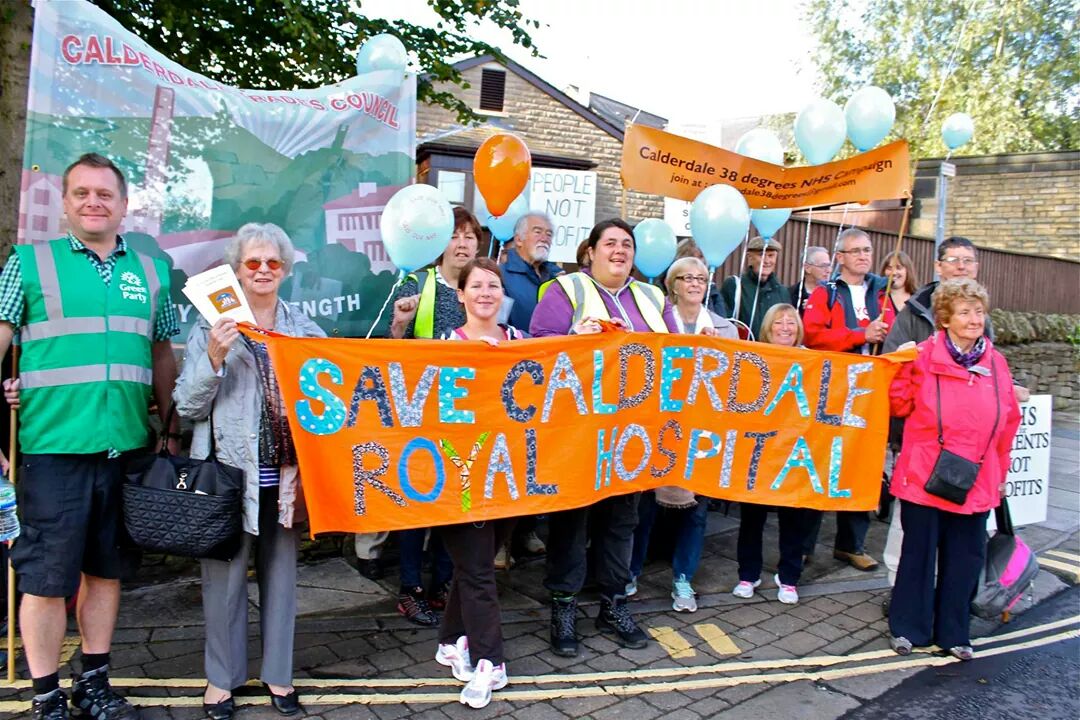
Formerly the “Changing More Than Lightbulbs” website, Jenny explains the collaborative journey that the site went on to go live – with input and encouragement coming from a range of sources; how she derived inspiration from a combination of boredom and The Archers; and their current campaign efforts to help Save Calderdale Royal Hospital.

wpid-img_4163821570131

Who were the people behind the blog?

At first the DCarb Upper Calder Valley group at Hebden Bridge Alternative Technology Centre were behind the blog. I also met UnLtd at a Screen Yorkshire digital workshop, who strongly encouraged me to set it up. And UnLtd then provided a Millenium Award as start-up funding. Continue reading

Why do you optimise content for search and social? 4 reasons and a mnemomic to boot

Content strategies are one of the many things that used to be the preserve of publishers and editors. We didn’t call it ‘content strategy’ then: we ‘chose angles’ or adopted an ‘editorial approach’.

Now of course every journalist is a publisher, an editor, and a distributor. We control our Twitter platform, Facebook page, perhaps a professional blog and other platforms to boot. We are expected to be web first in all sorts of ways.

That means new responsibilities. We have to make choices about style, medium, timing and platform that we never had to think about before. Why? Because we want people to engage with what we are reporting on.

Read these other posts on content strategy:

It’s as simple as that. That engagement is what defines us as journalists, and not just people who enjoy writing. What also defines us is the speed at which we have to do that. And to make editorial decisions quickly most journalists use content strategies.

For example, we choose this subject over another because it is more important to our audience. We choose this angle over another because it is more relevant to our audience. We choose this time because that’s when our audience is online. We choose this platform because that’s where the audience is at that time.

But I come back to ‘why’. Because it isn’t quite as simple as just getting people to read. Continue reading

Hyperlocal Voices: Mark Baynes, Love Wapping

In our latest interview with hyperlocal practitioners, Damian Radcliffe speaks to Mark Baynes from Love Wapping.  A journalist, professional photographer and user experience designer; Mark explains how his mutual love of data and wildlife has manifested itself in this East London  hyperlocal site.

mark-baynes-geese-300x225

Who are the people behind the blog?

Just me! Fortunately I have an odd mix of professional skills that are invaluable for hyperlocal work: photography, journalism, print production and web design and development. Continue reading

Thinking of doing your student project online? Here are 5 mistakes to avoid

Journalism courses often expect students to spend a large part of their final year or semester producing an independent project. Here, for those about to embark on such a project online, or putting together a proposal for one, I list some common pitfalls to watch out for… Continue reading

16 reasons why this research will change how you look at news consumption

Most research on news consumption annoys me. Most research on news consumption – like Pew’s State of the News Mediarelies on surveys of people self-reporting how they consume news. But surveys can only answer the questions that they ask. And as any journalist with a decent bullshit detector should know: the problem is people misremember, people forget, and people lie.

The most interesting news consumption research uses ethnography: this involves watching people and measuring what they actually do – not what they say they do. To this end AP’s 2008 report A New Model for News is still one of the most insightful pieces of research into news consumption you’ll ever read – because it picks out details like the role that email and desktop widgets play, or the reasons why people check the news in the first place (they’re bored at work, for example).

Now six years on two Dutch researchers have published a paper summarising various pieces of ethnographic and interview-based consumption research (£) over the last decade – providing some genuine insights into just how varied news ‘consumption’ actually is.

Irene Costera Meijer and Tim Groot Kormelink‘s focus is not on what medium people use, or when they use it, but rather on how engaged people are with the news.

To do this they have identified 16 different news consumption practices which they give the following very specific names:

  1. Reading
  2. Watching
  3. Viewing
  4. Listening
  5. Checking
  6. Snacking
  7. Scanning
  8. Monitoring
  9. Searching
  10. Clicking
  11. Linking
  12. Sharing
  13. Liking
  14. Recommending
  15. Commenting
  16. Voting

Below is my attempt to summarise those activities, why they’re important for journalists and publishers, and the key issues they raise for the way that we publish. Continue reading