Four more social media psychological complaints

Following my post on the Seven psychological complaints of bloggers and social media addicts, it appears there have been more syndromes identified. Here they are:

Meme Orphanism

Identified by KerryJ, sufferers exhibit intense feelings of alienation after missing out on viral ‘event’, e.g. Twitter Cartoon Day. See also: FOOcamp anxiety.

Wit Anxiety Gloom Syndrome (WAGS)

Identified by Sarah Hartley: “The sufferer feels what they have to add to the world is so humourous it must be shared – but only after every one of the 140 characters has been considered in depth. Stems from a deep-rooted phobia of “comment shame”.”

Community Disconnection Attack

Patient experiences disorientation upon becoming stranded from social media ‘anchors’ such as Facebook groups, Twitter, blog community etc. Triggers include: service outage; power or battery failure; loss of wifi signal.

User Account Phantasm

Patient is haunted by the ghosts of user accounts created but never used, or long since abandoned. Symptoms include random friend invites from imaginary MySpace users; emails from Plaxo; and Pownce files from the ghostly Dave Winer.

The Chinese earthquake and Twitter – crowdsourcing without managers

There’s been an earthquake in China, and the Twittersphere is alive with it. I’m going to write a post on this and keep adding to it through the next hour or so. Let me know anything interesting you’ve spotted @paulbradshaw

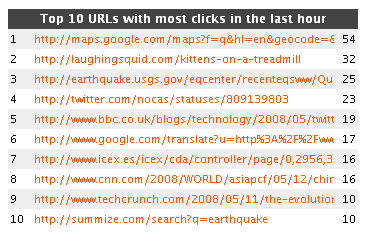
The first interesting point is Tweetburner: its most-clicked links shared on Twitter are almost entirely about the earthquake, and show some interesting uses:

China Earthquake tweets on Tweetburner

  1. A Google map of the earthquake location
  2. A BBC blog post about Twitter coverage of the earthquake
  3. A Twitter user’s tweet about experiencing the earthquake (in Shanghai)
  4. A Google translation from Chinese to English of tweets from Twitterlocal
  5. The Earthquake Center’s page on the earthquake
  6. CNN’s report
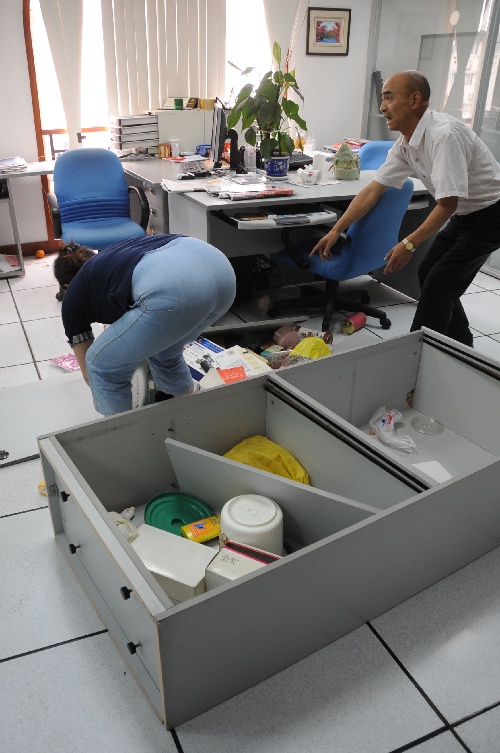
  7. A picture which appears to be capturing the earthquake in an office
  8. A Summize search for ‘earthquake’

Here is crowdsourcing without the editorial management. How quickly otherwise would a journalist have thought of using Twitterlocal with a Google translation? And how soon before someone improves it so it only pulls tweets with the word ‘earthquake’, or more specific to the region affected? (It also emphasises the need for newspapers and broadcasters to have programmers on the team who could do this quickly) Continue reading

Some questions about blogging, from a student

Another day, another set of questions from a journalism degree student – this time, one of my own, Azeem Ahmad. If you want to help him by answering the questions, post your comments below.

How important is blogging to you, and your business?

If my ‘business’ is education and freelance journalism, then: enormously important on every level: generating ideas, gathering information, publishing stories and ideas, and marketing and distributing those and, I suppose, myself as a journalist and (*cough*) academic. I find conversation extremely helpful in working through ideas and finding new information, and blogging is a wonderful way of having that conversation with some very well informed and intelligent people. I hope it makes me more intelligent and well informed in turn. Continue reading

How useful could Seesmic be for journalists?

See this video and respond on Seesmic

I’ve recently been playing with Seesmic once again, having briefly dabbled with an alpha invite a few months ago and stupidly written it off as a vague video blogging platform.

It isn’t.

It’s social. Continue reading

Skoeps closure: CitJ is not about money

Skoeps.nl, a citizen-journalism venture, closed down last week after its owners declared it unprofitable. The business plan seemed simple enough to succeed:

  1. Find loads of money,
  2. Advertise massively, and
  3. Share advertising and syndication revenue with writers.

The plan worked, except that there wasn’t enough revenue to share. Skoeps cash-flow was in the black, which means that, if investors refused to go forward, growth must have been minimal and could not have offset the initial investment in the near future. Continue reading

How do you measure a blog’s success?

Brazil correspondent Gabriela Zago looks at the variety of metrics for evaluating the popularity of blogs. A Portuguese language version of this is available here.

There are many ways to measure a website’s success. Some use a more quantitative approach, and others are more qualitatively based. You can say a weblog is popular for many reasons, such as:

  • traffic (page views, visits, visitors),
  • discussions (comments, trackbacks, linkbacks),
  • position in search engines (page rank),
  • readership (feed subscriptions, blogroll presence) and
  • reputation (a more subjective approach, based on what people think of a website, and the qualifications of the person that writes for it).

If you obtain all that data and construct rankings based on these different types of information, chances are that not all blogs ranked will appear in the exact same position in each one of the ranks. Continue reading

French, Norwegian and US newspapers added to News Interactivity Index

Just to let you know that the News Interactivity Index now includes newspapers from Norway (thanks Kristine Lowe), France, the Netherlands and the US. You can use it to compare any two newspapers or country averages. The following countries are now covered:

  • France
  • Hungary
  • Macedonia
  • Netherlands
  • Norway
  • Poland
  • Portugal
  • Spain
  • Switzerland
  • UK
  • US