How journalism has changed – Guardian ‘3 pigs’ video says it better than anything

There’s something almost seminal about this video promoting The Guardian’s ‘open journalism’. I’m not sure whether it’s the unusually honest acknowledgement that news is more complicated than it is often presented; the way that the video itself plays with our preconceptions, drawing attention to them in the process; or the portrayal of a production process in which non-journalists are a vital part.

I lie, of course: it’s all of those things. It’s an image of journalism utterly different from how it presented itself in the 20th century, different – if we’re honest – from the image in most journalists’, and most journalism students’, minds.

I expect I’ll be showing this a lot. Watch it.

[flv:http://cdn.theguardian.tv/brightcove/2012/2/29/120229ThreeLittlePigs-16×9.mp4 autoplay=’false’]

PS: If you have another 3 minutes, here’s Alan Rusbridger giving a slightly less dramatised angle on the same topic:

[flv:http://cdn.theguardian.tv/brightcove/2012/2/29/120229OpenAlanRusbridger-16×9.mp4%5D

…And then move on to these videos linked from this page on how to get involved: from head of news Ian Katz:

[flv:http://cdn.theguardian.tv/brightcove/2012/2/29/120229OpenIanKatzEdit-16×9.mp4%5D

…and on sports journalism:

[flv:http://cdn.theguardian.tv/brightcove/2012/2/29/120229OpenSeanIngleEdit-16×9.mp4%5D

…and culture reporting:

[flv:http://cdn.theguardian.tv/brightcove/2012/2/29/120229OpenCatherineSEdit-16×9.mp4%5D

…and comment:

[flv:http://cdn.theguardian.tv/brightcove/2012/2/29/120229OpenBeckyGardinerEdit-16×9.mp4%5D

8 common mistakes when writing for the web – and what to do about them {now 9}

Image of post it notes by Anselm23 on Flickr

Image of post it notes by Anselm23 on Flickr

Here is a checklist covering 8 mistakes made repeatedly by first-time web writers, which I’ve put together for one of my classes. The idea is simple: if you answer ‘No’ to any of these, carry on to the accompanying guidance that follows underneath.

Checklist: are you doing the following? Continue reading

8 common mistakes when writing for the web – and what to do about them

Image of post it notes by Anselm23 on Flickr

Image by Anselm23 on Flickr

Here is a checklist covering 8 mistakes made repeatedly by first-time web writers, which I’ve put together for one of my classes. The idea is simple: if you answer ‘No’ to any of these, carry on to the accompanying guidance that follows underneath. Continue reading

Creating dynamic visualisations using Google Forms and Google Gadgets

If you need to gather data on the ground – or want to crowdsource data through an online form – this is how you can visualise the results as they come in using 3 Google Docs tools. They are:

  • Google Forms
  • Google Docs spreadsheet
  • Google Gadgets

And here’s the process: Continue reading

FAQ: Online journalism ethics, accuracy, transparency and objectivity

Answers to another set of questions around ethics and online journalism, posed by a UK student, and reproduced here as part of the FAQ series:

Do you believe online journalism presents new ethical dilemmas and should have standards of its own?

Yes, I think any changing situation – whether technological or cultural – presents new ethical dilemmas.

But should ‘online journalism’ have a separate code? I don’t see how it can. Where would you draw the line when most journalists work online? Ethical standards are relatively platform-agnostic, but journalists do have to revisit those when they’re working in new environments. Continue reading

Generation AudioBoo: how journalism students are interacting online

This post is by Judith Townend (@jtownend).

The journalism class of 2012 has a pretty enviable opportunity to get their stuff out there; the development of online platforms like Twitter, Google+, Storify, Tumblr, Posterous, AudioBoo, Pinterest, Facebook, Instagram, CoverItLive and Vimeo allows piecemeal dissemination of content to relevant and engaged audiences, without necessarily needing to set up a specific site.

Free technology allows them to find and do journalism outside journalism, in productive and creative ways. To adapt David Carr’s description of Brian Stelter, his browser tab-flicking colleague at the New York Times, we’re seeing the rise of the ‘robots in the basement‘. Continue reading

“All that is required is an issue about which others are passionate and feel unheard”

Here’s a must-read for anyone interested in sports journalism that goes beyond the weekend’s player ratings. As one of the biggest names in European football goes into administration, The Guardian carries a piece by the author of Rangerstaxcase.com, a blogger who “pulled down the facade at Rangers”, including a scathing commentary on the Scottish press’s complicity in the club’s downfall:

“The Triangle of Trade to which I have referred is essentially an arrangement where Rangers FC and their owner provide each journalist who is “inside the tent” with a sufficient supply of transfer “exclusives” and player trivia to ensure that the hack does not have to work hard. Any Scottish journalist wishing to have a long career learns quickly not to bite the hands that feed. The rule that “demographics dictate editorial” applied regardless of original footballing sympathies.

“[…] Super-casino developments worth £700m complete with hover-pitches were still being touted to Rangers fans even after the first news of the tax case broke. Along with “Ronaldo To Sign For Rangers” nonsense, it is little wonder that the majority of the club’s fans were in a state of stupefaction in recent years. They were misled by those who ran their club. They were deceived by a media pack that had to know that the stories it peddled were false.”

Over at Rangerstaxcase.com, the site expands on this in its criticism of STV for uncritical reporting: Continue reading

Announcing Help Me Investigate the Olympics

My crowdsourced investigative journalism project Help Me Investigate has launched a fourth specialist site: Help Me Investigate the Olympics.

The site is being run by a colleague of mine from Birmingham City University, Jennifer Jones, as part of a project we’re working on which sees students at BCU and other universities connecting to wider online networks in investigating Olympics-related questions.

Jennifer knows those networks particularly well as the coordinator for #media2012, web editor and staff editor for Culture @ the Olympics. She is also writing her PhD on Social Media, Activism and the Olympic Games at the University of the West of Scotland.

If you want to contribute to the site or related investigations, get in touch in the comments or via Olympics@helpmeinvestigate.com

Soft skills: can you make a ‘born journalist’?

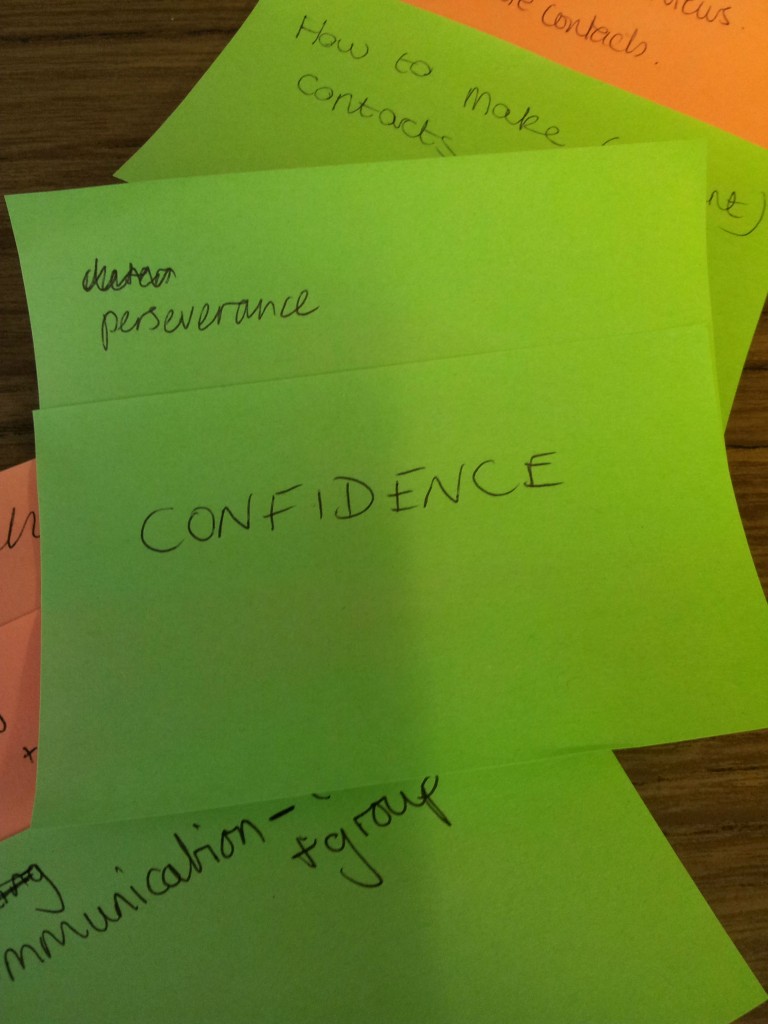
Perseverance and confidence - what students want to learn

When asked to write what they wanted to learn, two students in one of my classes explicitly asked for "Perseverance" and "Confidence"

Are journalists born or made? Some will tell you that there are certain qualities you can’t teach: dogged determination, for example; nosiness; skepticism.

It’s a sort of nature/nurture debate that runs through not only the profession itself, but also many of those who train journalists. “There’s only so much you can teach,” they will say.

But is there? Continue reading

The New Journalists #13: Rosie Taylor

Rosie Taylor

As part of an ongoing series of profiles of young journalists, I interviewed Rosie Taylor about her work as founding editor of student media showcase site Ones To Watch which she balances with a role as trainee reporter at the Daily Mail.

What led you to your current roles?

I got the bug for journalism writing for my student newspaper at the University of Sheffield and was news editor in my final year. My involvement in student media gave me the idea for Ones to Watch.

I did work experience everywhere I could find a sofa to sleep on for a week, got a minimum wage job covering reporters on leave at my local paper and managed to get a Scott Trust Bursary to do a postgraduate course in Print Journalism at Sheffield.

This ultimately led to a job at the Mail, where I spent five months on secondment at the Manchester Evening News before moving to the Mail offices in London this year.

What do your jobs involve?

I run Ones to Watch in my spare time, which mainly involves looking through hundreds of articles produced by students around the UK every day and putting a selection of the best ones on the site. I’m also constantly on the look out for new start-ups, student media news and ways to expand the site.

In my day job I’m a general news reporter, covering anything that gets thrown at me!

How do you see things developing in the future?

I’m still clinging to the hope that journalism, in one form or another, will survive throughout my lifetime. I want to keep writing stories and breaking news and I’m fascinated by how the platform for doing so is changing all the time.

I hope that Ones To Watch will continue to expand and that my mission to raise the profile of student media as a vital part of our press will continue to gain momentum.