Category Archives: online journalism

Want your reporting to better reflect the diversity of your audience? There’s a free ebook for that

Two of my colleagues at Birmingham City University have produced a rather wonderful free guide to help journalists and journalism educators make reporting more inclusive and diverse. As they explain in the introduction: Continue reading

Brave new world? 5 things your newsroom can do now to protect your journalism against the Snooper’s Charter

The Investigatory Powers Act has now been law for almost six months. For journalists and publishers this means having to remember that the webpages that you and your sources visit, who you call on your phone, and where you take it, are all being collected and potentially accessed by a range of authorities*.

It also gives the state the power to hack into devices and to require companies to help them compromise the security of users of their websites and apps.

But most importantly, it means understanding that unlike previous legal regimes it is likely that you will not be aware if any of this is happening, nor will you have an opportunity to mount a legal defence to argue against it.

If this makes you feel powerless to protect your sources, here are some things you can do to feel better:

Continue reading

How do you run a liveblog when you’re shut in a room and not allowed to film or take pictures?

theresa may liveblogCornwall Live‘s coverage of Prime Minister Theresa May’s visit to the area has attracted a lot of attention for the way in which local reporters were denied opportunities to film, take pictures, or ask more than two questions.

“Having covered several high-profile politicians’ and royal visits over the years,” the liveblog reported, “the level of media control here is far and above anything I’ve seen before.”

But it also demonstrates some of the things to consider when planning a liveblog — and how journalists can still manage to make a success of the coverage regardless of PR control-freakery. Continue reading

Why a council is threatening journalists’ access — and what it says about local news

ban symbol by Vince

Ban symbol – photo by Vince

A council is warning it will reduce access to journalists if they aren’t regulated or don’t offer a right of reply. Andrew Brightwell asks if this marks a turning point for journalism’s relationship with local councils.

Two weeks ago, Thurrock Council approved its communications strategy, setting out how it will talk to residents and media.

Communications strategies are approved every day by councils without controversy, but Thurrock’s has provoked accusations that the authority wants to play ‘judge and jury’ to its coverage in the media, as YourThurrock first reported.

What does Thurrock Council’s strategy say?

Most of the document — which you can read here (PDF) — is innocuous, but a section on media liaison says it will only consider journalists’ organisations as ‘media’ if they are signed up to a press or broadcast regulator. Continue reading

How to: find local sources for an election in another country using Facebook Graph

people born in france who live in Birmingham

Last week one of the students on my MA in Online Journalism was looking to find French people based in the city for a local angle on the presidential elections taking place in France. “Ah!” I thought. “That’s a job for a Facebook Graph search”. It’s the sort of situation that arises regularly in the newsroom — so here’s how to do it:

What is Facebook Graph search — and why is it useful for journalists?

Facebook Graph Search in 2013

Facebook Graph Search in 2013

Facebook Graph was launched in 2013 as a specific tool for finding people based on their interests. The ‘graph’ part refers to its ability to find people based on intersecting qualities: combinations of their likes, places of work, friends, and where they live and come from.

The tool itself was dropped in 2014, but the ability to search based on intersecting qualities remained, as part of the general Facebook search. You just have to know how to use it… Continue reading

5 ways journalists can use Nuzzel with Twitter lists

Nuzzel news from your friends

Nuzzel offers a short-cut to the most shared stories in your Twitter timeline – and is already popular with journalists. But while it’s best known for directing you to your friends’ most popular links, it has other uses. In a guest post for OJB, Andy Brightwell shows how you can use Nuzzel to burst your filter bubble, follow people in a particular location or industry, see the world from someone’s perspective, or create a niche newsletter.

Since Nuzzel added Twitter lists it’s been possible to curate ‘custom feeds’ from sets of tweeters. For journalists this means an opportunity to seek new perspectives on communities, places and politics through Twitter. Below I’ve outlined five different ways to use the feature — but first, a bit of background… Continue reading

FAQ: Data journalism and computer science

basic_code

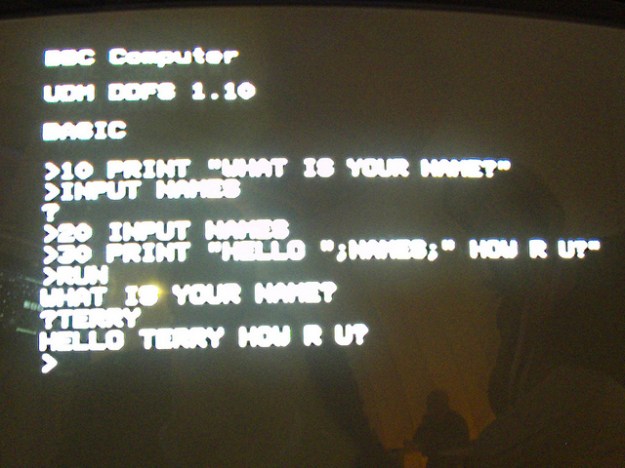
Where I started, with BASIC code. Image by Terry Freedman

I have a habit of posting replies to questions on OJB: this one is in response to a series of questions from a student at the University of the West of England about data journalism.

How do you feel about the intertwining of computer science with journalism?

Not surprisingly, I’m quite positive about it. I think most industries benefit from being exposed to different practices and ideas, as they make you reevaluate your own habits and assumptions.

That has very much been the case with the influence of computer science on journalism: in many ways data journalism is more open and more collaborative than other parts of journalism, and that has led to some of its best work.

For example, when organisations like Quartz, Vox or NY Public Radio open source their code, it makes it easier for other news organisations to innovate with that, and improve on it. Continue reading

Why salsa dancing is good for Instagram journalists (and other tips on mobile phone health)

Health and safety guidance for journalists typically focuses on traditional issues like working in dangerous locations, or using desktop computers. Few resources tackle the issues raised by frequent use of mobile devices for work. One exception is a new ebook on Instagram by one of my students, Robyn Bateman. In this extract, Robyn outlines the potential side effects of frequent mobile phone use and techniques to combat that.

I’m interested in Instagram, but I’m also interested in the potential health implications for mobile journalists or, indeed, anyone regularly using a mobile phone to create content out in the field. Including Instagrammers.

I suffer terribly from this. Bought on by bad posture and enhanced by a lot of computer and mobile phone use, I get everything from a numb hand and arm, to tension in my jaw, knotted shoulders, dizzy and tired spells.

So I did some research — and the good news is our mobile phones aren’t to blame: we are. We don’t have to ditch smartphones for personal or professional use (or both), we just have to change the way we use them. Continue reading

Tap to advance: the rise and rise of the horizontal story

Snapchat's horizontal navigation

Another month, another set of new feature launches: this time the longform blogging platform Medium announcingSeries‘, a “new type of story”, then days later Facebook announcing its ‘Messenger Day‘ feature.

Last month it was Instagram‘s Carousel feature and WhatsApp‘s Status feature.

What all have in common is the almost unquestioned use of a horizontal storytelling mode: a move from scroll-based navigation to navigating through a swipe or a tap.

What does that mean for journalism and storytelling? I think it’s about time we asked. Continue reading