Category Archives: online journalism

5 great data visualisation pieces from outside the newsroom

Some of the most interesting examples of journalistic data visualisation come not from newsrooms, but from creative agencies or companies. In a post first published on her datavis blog Dinfografia, Maria Crosas Batista outlines 5 of the best examples:

1. The Refugee Project
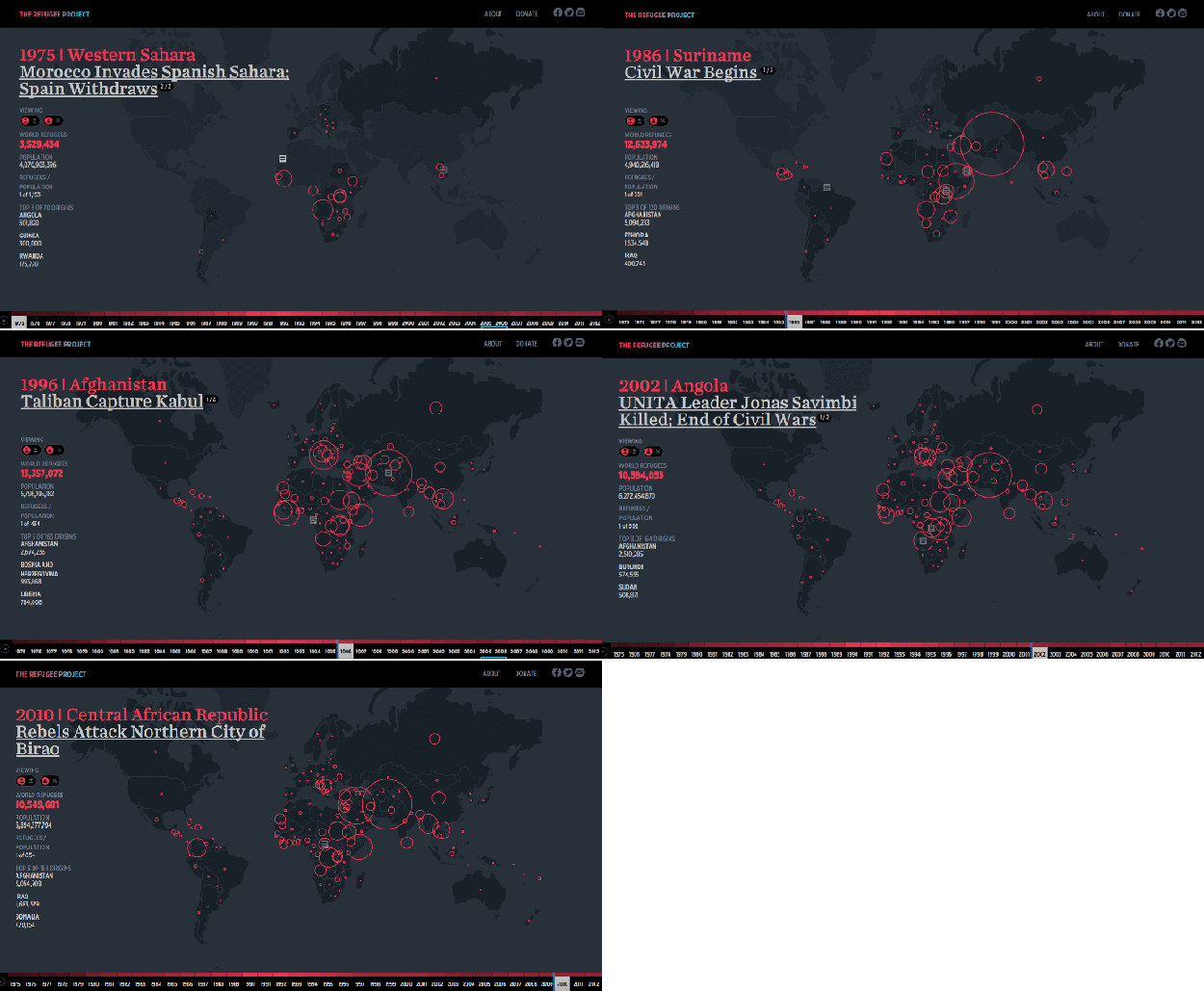
The Refugee Project GIF

Interactive map designed by Hyperakt & Ekene Ijeoma about refugees’ migrations since 1975. It includes historical explanations of some large movements and events to contextualise them. Continue reading

Twitter’s algorithm changes make it key that journalists take control

For some time now Twitter has been flirting with abandoning the reverse-chronological ordering that attracted so many journalists to the service.

Having already introduced “While you were away…” tweets a year ago, and the curated “Moments” storylines 4 months ago, the suggestion is that it may finally be ready to make the leap to a Facebook-style “what we think you’ll like” timeline.

This may be initially opt-in, but then so, once upon a time, was Facebook’s algorithm.

I’m not one of those old users who are inevitably crying about the death of Twitter. We all change as we get older, and Twitter is no exception: once an always-on special companion, now it is a more occasional big crowd encounter. Continue reading

Linking ethically (and for SEO): canonical and nofollow

copying_gif

If you’re cross-posting material online, being paid to include links in a post, or linking to material which raises ethical challenges around taste and decency, there are two snippets of HTML you should be aware of. Here’s a quick guide…

Cross posting: use canonical links

It’s not uncommon to post a copy of your work on your personal blog, or for someone to ask if they can republish on their site something you have written on yours. Continue reading

Peach: social media meets sensor journalism

looping photobooth

Peach includes a feature called the ‘looping photobooth’

Will Peach be to 2016 what Meerkat was to 2015? This app fascinates me, but I have very mixed emotions.

Why? Well, this is a new social network which cherry-picks bits of functionality from Twitter, Snapchat, Tumblr and Slack, then adds some Storify-esque built-in media search tools and a bit of text-as-images functionality and its own ‘looping photobooth’.

But it’s the sensor-driven elements which fascinate me. Continue reading

Curation is the new obituary: 8 ways media outlets marked Bowie’s life and death [now 16]

The media’s reaction to David Bowie‘s death from cancer early this morning demonstrates just how widely curation has become in journalism practice – and specifically, how it has become the web native version of the obituary. Below I’ve done a bit of curation of my own: 8 13 16 ways that different publications used curation to mark the death of a legend. If you have seen others, please let me know.

1. Liveblogging curation

The Telegraph’s live reporting of Bowie’s death is an example of curation itself, incorporating just some of the following elements:

  • The Facebook update of the statement confirming Bowie’s death
  • Embedded tweets from key figures reacting to the death
  • A video playlist
  • A single video of his last single, along with other videos to illustrate reactions
  • A posting from Bowie’s official Instagram account

Continue reading

5 ways journalists can use Google tools – from the Digital News Roadshow

Google Digital News RoadshowGoogle organised a free workshop on 14 December 2015 in Birmingham focused on how journalists can use technology to improve and complement their stories.

In this post Carla Pedret summarises some tips Google News Lab’s Matt Cooke gave during the event. You can read more about the event using the hashtag #DNRoadShow.

1. Putting ourselves in our audience’s shoes

As journalists we sometimes use words that we think are commonly used by our audience but actually are not.

In addition, one of the biggest difficulties is how to approach a story in a fresh way or a way that is attractive for our readers. Google Trends can give us some clues. Continue reading

Visualising 40 years of organised crime in Mexico: NarcoData

Narco Data
How has Mexico moved from 2 cartels in the 1970s to 9 cartels today? That is the question the Mexican website Animal Político wanted to answer when in January 2015 they started to work on NarcoData, a data journalism project that shows the evolution of 40 years of drug dealing in Mexico, home to the most violent cartels in the world. Carla Pedret reports.

The origin of the project was a document Animal Político journalist Tania Montalvo obtained in October 2014 from the country’s Attorney General’s Office, after a request under the Mexican Freedom of Information lawContinue reading

FAQ: How has working online changed how you write?

The latest post in the FAQ series (where someone has sent me questions and I republish it here) had 22 questions. This one just has two, and they’re all about writing online:

Q: Do you think that working online has allowed you to be more open and express your opinions more freely than through another medium (e.g. print)?

Absolutely, but I don’t think that’s to do with the medium so much as the institutional framework surrounding that. Continue reading