A couple weeks ago Tony Hirst published a rather wonderful post about what he calls ‘tech anatomy’: in other words the workings “of the computing related stuff that populates our daily lives”. These include:
The Anatomy of a URL
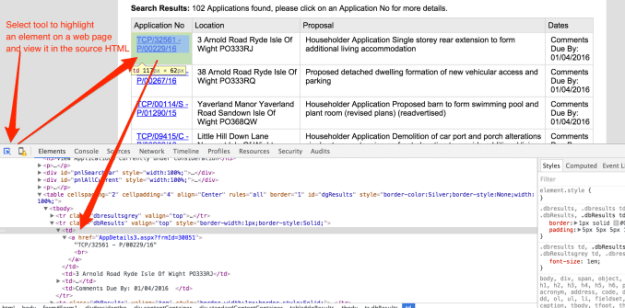
The Anatomy of a Web Page
The Anatomy of a Tweet
The Anatomy of an Email Message
The Anatomy of a Powerpoint File
The Anatomy of an Image File
In admirably succinct fashion, and with illustrations, he picks apart those six things. It’s a masterclass in the sort of system knowledge that every journalism student should have, because this knowledge is crucial to newsgathering and verification. Continue reading →
Qanda is a new app which invites you to ask your friends, idols, politicians, or anyone else, questions and, crucially – using selfie video – provides the opportunity for you and your subjects to share the answers. Anna Noble speaks to creator Martin Verpaalen about the potential of the app (currently only available on iOS) for journalists.
“If you could ask anyone, anything, what would it be?”
The openness of social networks like Twitter or the ability to find an expert on LinkedIn, might make you think that this is territory already covered. But how much do we really openly share our own ideas? Continue reading →
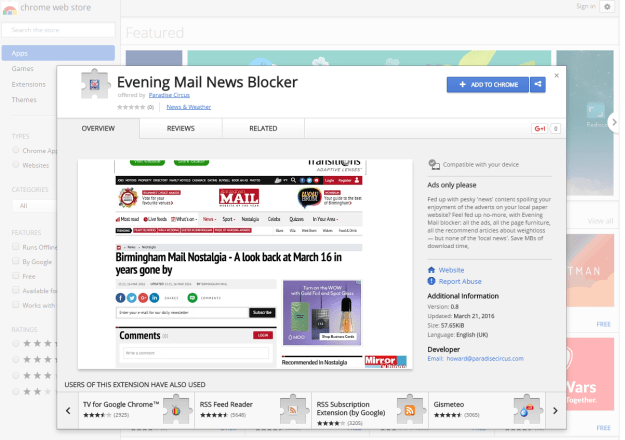
The Evening Mail News Blocker is available in the Chrome Web Store
What we need in the adblocking debate is a fresh perspective. Cue Birmingham website Paradise Circus, which has today released a browser extension to get rid of all that pesky journalism slowing down your daily advertising consumption: Continue reading →
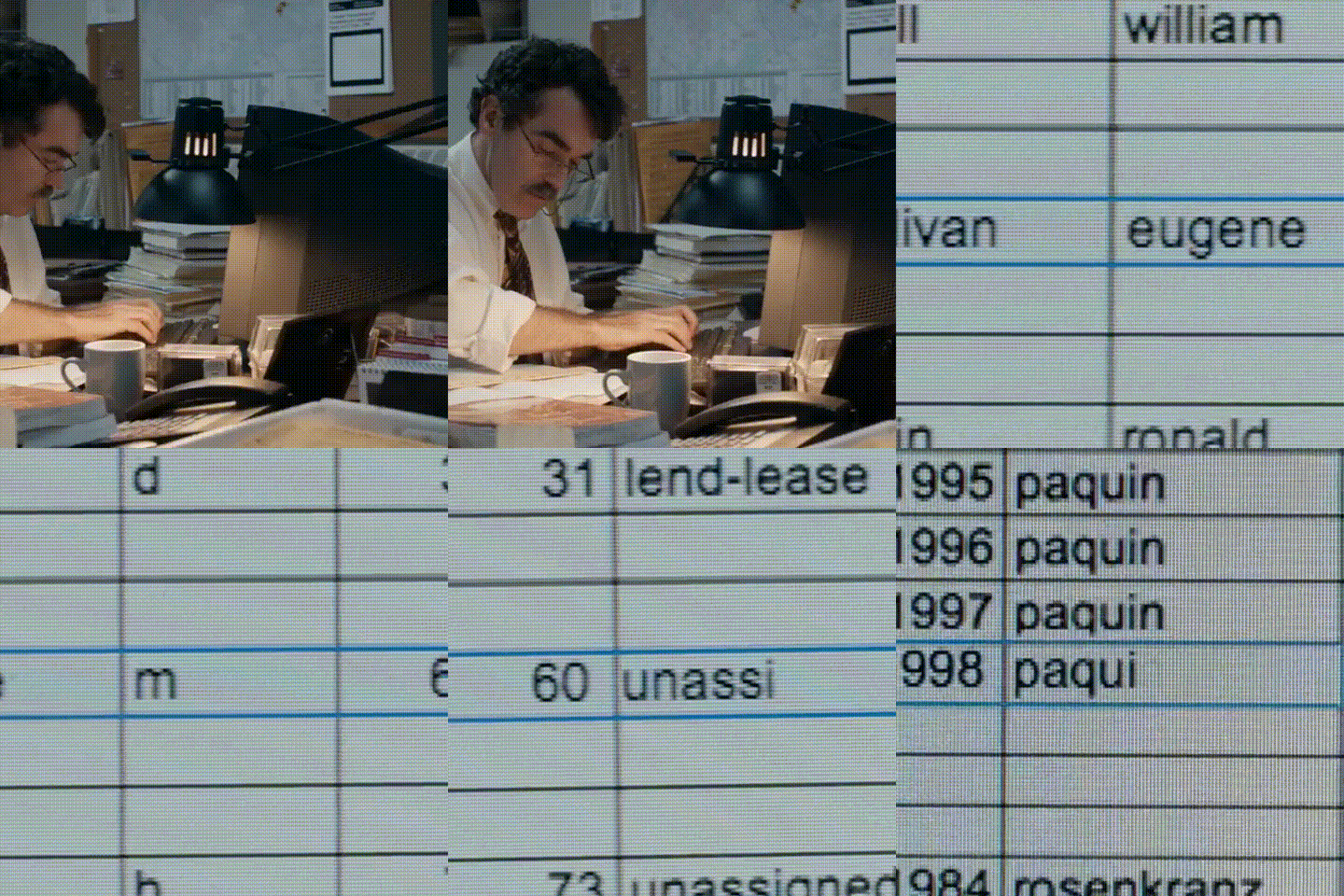
Brian d’Arcy James plays data journalist Matt Carroll in the movie Spotlight
Spotlight won an Oscar for its portrayal of the Boston Globe’s investigation into institutional silence over child abuse, including some old school data journalism by Matt Carroll. But it’s far from the only example of data journalism shaping policy: Anna Noble asked members of the NICAR-L computer assisted reporting forum for five of their own examples (first published here). Continue reading →
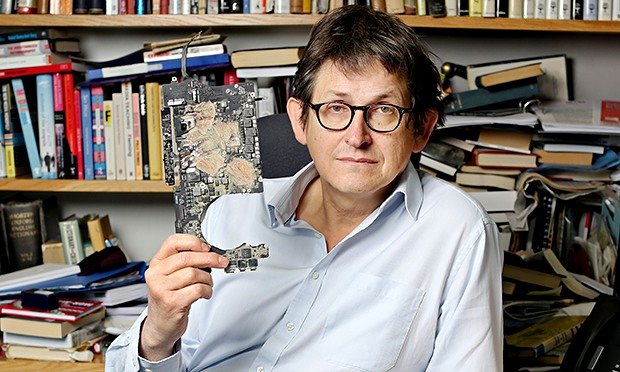
But there’s another part to the Bill which relates to facilitating state hacking – and an analysis by Danny O’Brien has thrown up some worrying ambiguity on this front for publishers – not just those based in the UK. Continue reading →
In a guest post first published on his blog, Joe Norman talks to the team behind The Anfield Wrap, a UK podcast which manages to employ four people through a subscription-based business model.
The Anfield Wrap is an independent podcast for Liverpool supporters. Starting in 2011 as a weekly show, usually on a Monday (post weekend match)— it was then picked up by local radio station Radio City Talk, who commissioned a second show for Fridays.
Neil Atkinson, content manager at The Anfield Wrap (TAW) and the main presenter, says they were very quicky seeing 20,000 downloads a week — and it became clear there was demand for more: Continue reading →
If you are working with map data that uses the shapes of regions or countries, chances are you’ll need to work with KML. In this guest post (first published on her blog) Carla Pedret explains how you can use the data cleaning tool Open Refine to ‘read’ KML files in order to convert them into other formats (for example to grab the names of places contained in the file).
KML (Keyhole Markup Language) is the default format used by Google’s mapping tool Fusion Tables (Google bought the company which created it in 2004), but it is also used by other mapping tools like CartoDB.
The open source data cleaning tool Open Refine can help you to open, process and convert KML files into other formats in order to, for example, match two datasets (VLOOKUP) or create a new map with the information of the KML file.
What is the difference between XML and KML?
In this post, you will learn how to convert a KML file into XML and download it as aCSV file.
XML – Extensible Markup Language – is a language designed to describe data and it is used in RSS systems.
XML uses tags like HTML, but there is a big difference between both languages. XML defines the structure of the information, whereas HTML focuses on other elements too, including their meaning and arrangement (even when it is not supposed to focus on appearance), and the importing of other code and media.
KML – Keyhole Markup Language – documents are XML files specific for geographical annotations. KML files contain the parameters to add shapes to maps or three-dimensional Earth browsers like Google Earth.
The big advantage of KML files is the users can customize the maps according to their data and without knowing how to code.
Type what you are searching for and add the word geometry or KML.
Open the fusion table and check that it has shapes by looking for a ‘map’ view (normally this has its own tab).
You should be able to download the KML when looking at that map view by selecting File > Download.
Once downloaded, to convert the file, upload your KML in Open Refine (download Open Refine here) and click Next.
In the blue box under your data, select XML files.
Now in the preview you can see the XML file with the structure of the information.
If you want to create a map with your own data and the shapes in the KML file, you need to match the KML with your data.
The example I have used contains the shapes of local authorities in the UK. I want to match the shapes in one dataset (the KML file) with information in another dataset on which party runs each council.
The element both datasets have in common (and therefore the element which will be used to combine them) is the name of the councils. But you need to check that those elements are the same: in other words, are the councils named in exactly the same way in both datasets, including the use of ampersands and other characters?
Have a look at the XML preview and try to find the tags that contain the information you need: in this case, authority names. In the example the tags containing the authority name are <name></name>.
Hover over that element so that you get a dotted box like the one shown below. Click on that rectangle and wait until the process has finished.
You should then see a column or columns as the picture shows.
On the right hand side of the page, change the name of your file and click on Create a new project.
Once created, you now only need to export it. Click on Export and select the format you prefer.
What originally was a KML file is now a filtered list with data ready to check and match against your other dataset.
Do you use Open Refine? Leave a comment with your tips and techniques or send it to me at @Carlapedret..
Is virtual reality the next step for video journalism? Catalina George looks at The Guardian’s forthcoming VR project about solitary confinement: 6×9.
The Guardian’s new media project 6×9 aims to give users an experience of solitary confinement through the use of virtual reality technology. Due to launch in April, Francesca Panetta, multimedia special projects editor, explains the project:
“6×9” is an immersive experience of solitary confinement in US prisons, which places viewers in a virtual segregation cell which they can explore and interact with. It aims to tell a story of the psychological damage that can ensue from isolation.






 Online Journalism Blog