Author Archives: Paul Bradshaw

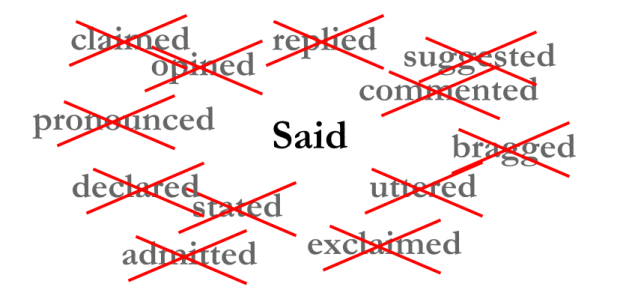
Why journalists ditch the thesaurus when it comes to “said” (for new journalism students who don’t)

Synonyms for "said"

It’s the start of a new term in journalism courses across the country, and journalism lecturers will once again be spending the first few weeks helping students to ‘unlearn’ a habit they acquire at school: the impulse to use multiple synonyms instead of the word “said”*.

It’s not their fault. At school pupils are encouraged to extend their vocabulary when writing. Using “said” repetitively is seen as limited or uncreative, and pupils are told to find other words to add variety. “Stated”, “uttered”, and “commented” are just three words that journalism tutors will be striking out in the coming weeks.

But these synonyms are rarely used in journalism. To find out just how rarely they are used — and what the exceptions are — I looked at a sample of the 10 most recent news stories from three outlets: the BBC, Daily Mail/MailOnline, and BuzzFeed (30 in total).

Here’s what I found — plus a little explanation of why we do this. Continue reading
How to: use the AtF Spark font to create charts with just text

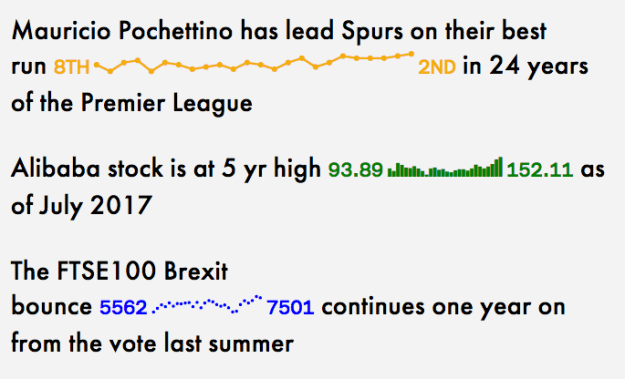
atfspark examples

AtF Spark is “a typeface for creating sparklines in text”. In other words, the fonts will convert numbers into something that looks like a chart. It looks pretty cool, and is a neat way to add a little spark (ahem) to your text.

But while the GitHub repo gives some basic instruction on using the fonts, it also assumes quite a bit of prior knowledge, so here’s a tutorial to explain how to use it if you’re not already familiar with web fonts and other technicalities of web design. Continue reading

The new edition of the Online Journalism Handbook is now out!

online journalism handbook 2nd edThe second edition of the Online Journalism Handbook has just been published. It’s an almost complete rewrite from the first edition — and 50,000 words longer to boot.

Among the changes are new chapters on writing for social media and chat apps, liveblogging and mobile journalism, and finding leads and sources online.

The chapter on UGC is now focused instead of community and social media management, while the history chapter has been expanded to cover business models and issues facing the future of online journalism.

There’s more to be written about those changes and what they say about online journalism itself. But for now, it’s here!

Here are 9 email newsletters about data… I think you’ll like at least 4 of them

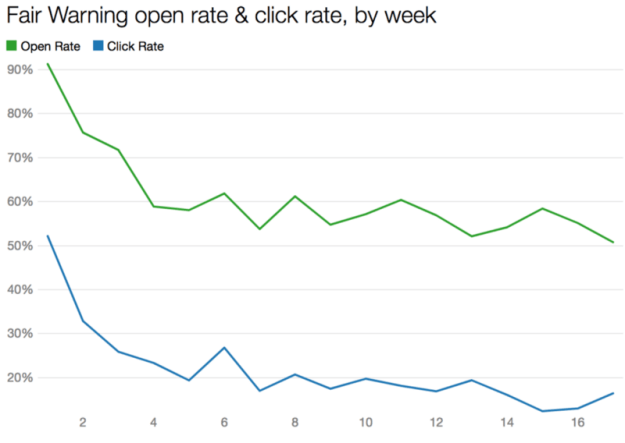
fairwarning metrics

Sophie Warnes doesn’t just round up data journalism in her emails, she *does* data journalism *about* her emails

As the first group of MA Data Journalism students prepare to start their course this month, I’ve been recommending a number of email newsletters in the field that they should be following — and I thought I should share it here too.

Here, then, are 9 email newsletters about data — if I’ve missed any please let me know. Continue reading

No, I’m not abandoning the term “storytelling”, Alberto — just the opposite (and here’s why)

A digital storyteller looks like this

digital storyteller image by Darren Kuropatwa

Alberto Cairo provoked quite a bit of reaction this week when he tweeted that data journalism and data visualisation ought to abandon the term “storytelling”…

https://twitter.com/albertocairo/status/907238441011773440

Given that in two weeks I’ll be doing exactly the opposite (my first intake of MA students begin a new module in Narrative at the end of the month) I thought I should add my own reaction. Continue reading

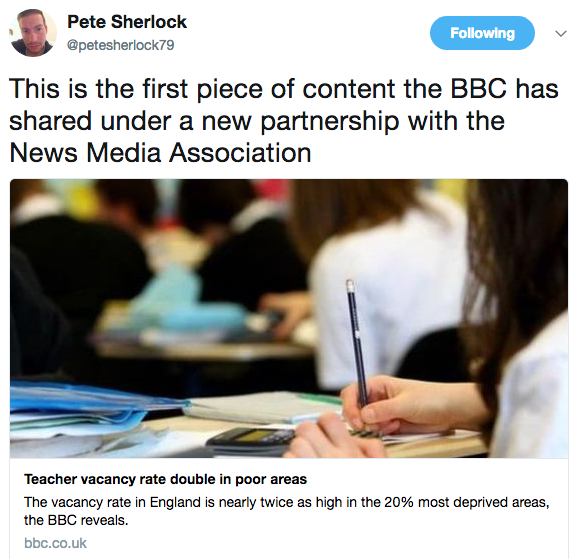
Pete Sherlock on Twitter This is the first piece of content the BBC has shared under a new partnership with the News Media Association

Local publishers — want some data journalism content from the BBC? Local News Partnership applications open again

https://twitter.com/petesherlock79/status/905380987667927040

The BBC’s Local News Partnership — a project to support local and hyperlocal media through access to extra content and staff — has just opened up applications to its second stage.

The ‘Section Two’ stage is focused on contracts for Local Democracy Reporters — but applicants can also now just complete the ‘Section One’ application to receive BBC content. Continue reading

Anchor just created a great audio-to-social-video tool – here are 5 other ways you can create social video from audio

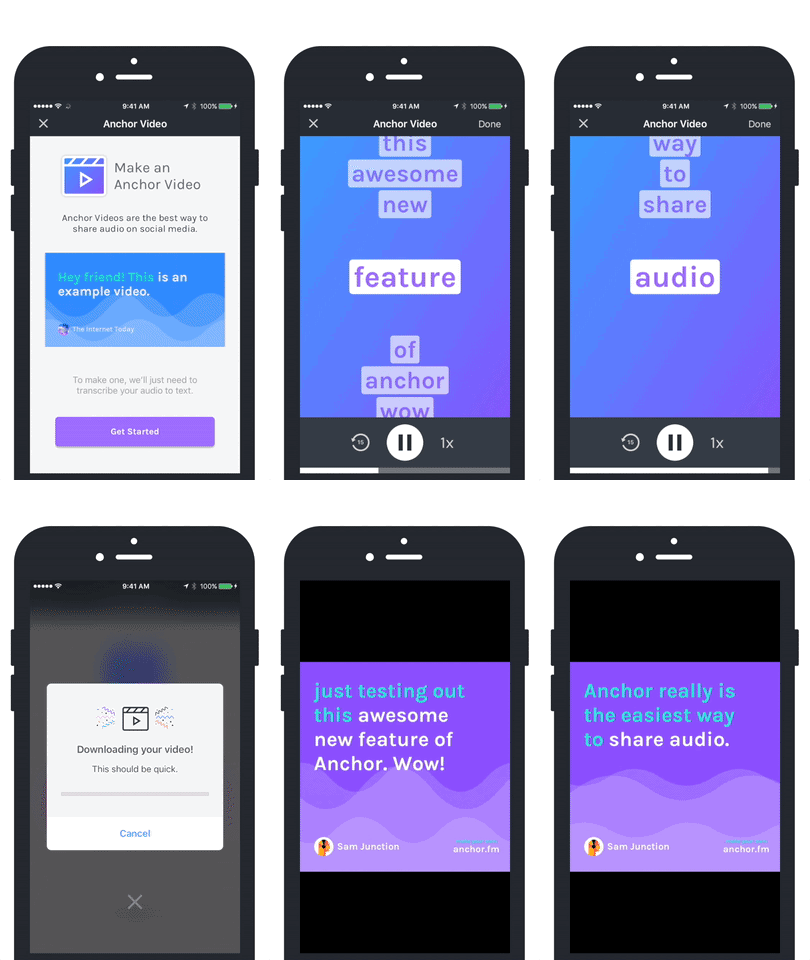
anchor speech recognition

The social audio app Anchor this month launched the latest – and possibly most powerful – addition to its toolset: the ability to convert audio clips into social media-ready videos.

Its incorporation of speech recognition and multiple output formats make it particularly useful – but it isn’t the only tool you can use to create social audio.

Here, then, are 5 other ways to achieve similar effects, from options hidden in dedicated audio recorders to animation tools… Continue reading

Got a new laptop? Here’s how to maintain your privacy from the start

When you get a new laptop – with no cookies on it! – it’s a great opportunity to start afresh and protect your privacy online by default. As I recently got a new laptop here’s what I did as I set it up…

Start from scratch – no importing of settings/applications

Many laptop setup wizards offer the option to import applications, documents or other elements from your existing laptop. I didn’t do this, partly because I didn’t want to bloat my new laptop with anything that wasn’t necessary (and if you use cloud storage then you can download from there anyway), but largely because I wanted to check the settings of each application as I went – this is much easier to do if you’re installing them.

Browsers – install them all

I use at least four different browsers: Safari, Chrome, Firefox and Opera. (You might also want to install Tor for particular use cases, although I’m not going to cover it here).

It’s useful to have different browsers partly because they offer different functionality, but also because it allows you to separate different activities. For example: Continue reading

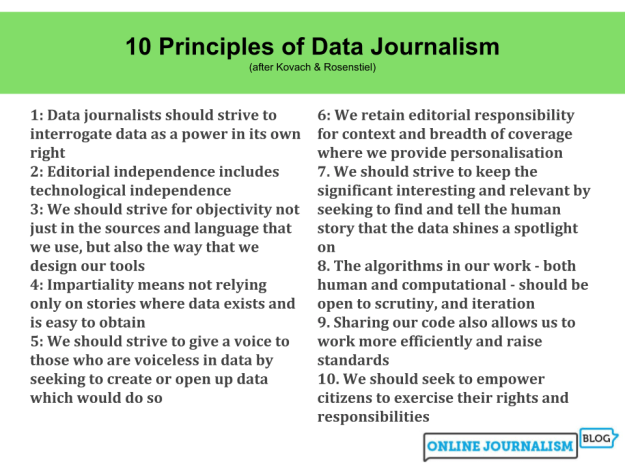
10 principles for data journalism in its second decade

10 principles Data journalism

In 2007 Bill Kovach and Tom Rosenstiel published The Elements of Journalism. With the concept of ‘journalism’ increasingly challenged by the fact that anyone could now publish to mass audiences, their principles represented a welcome platform-neutral attempt to articulate exactly how journalism could be untangled from the vehicles that carried it and the audiences it commanded.

In this extract from a forthcoming book chapter* I attempt to use Kovach and Rosenstiel’s principles (outlined in part 1 here) as the basis for a set that might form a basis for (modern) data journalism as it enters its second and third decades.

Principle 1: Data journalists should strive to interrogate data as a power in its own right

When data journalist Jean-Marc Manach set out to find out how many people had died while migrating to Europe he discovered that no EU member state held any data on migrants’ deaths. As one public official put it, dead migrants “aren’t migrating anymore, so why care?

Similarly, when the BBC sent Freedom of Information requests to mental health trusts about their use of face-down restraint, six replied saying they could not say how often any form of restraint was used — despite being statutorily obliged to “document and review every episode of physical restraint which should include a detailed account of the restraint” under the Mental Health Act 1983.

The collection of data, the definitions used, and the ways that data informs decision making, are all exercises of power in their own right. The availability, accuracy and employment should all be particular focuses for data journalism as we see the expansion of smart cities and wearable technology. Continue reading

Computational thinking and the next wave of data journalism

In this second extract from a forthcoming book chapter I look at the role that computational thinking is likely to play in the next wave of data journalism — and the need to problematise that. You can read the first part of this series here.

Computational thinking is the process of logical problem solving that allows us to break down challenges into manageable chunks. It is ‘computational’ not only because it is logical in the same way that a computer is, but also because this allows us to turn to computer power to solve it.

As Jeannette M. Wing puts it:

“To reading, writing, and arithmetic, we should add computational thinking to every child’s analytical ability. Just as the printing press facilitated the spread of the three Rs, what is appropriately incestuous about this vision is that computing and computers facilitate the spread of computational thinking.”

This process is at the heart of a data journalist’s work: it is what allows the data journalist to solve the problems that make up so much of modern journalism, and to be able to do so with the speed and accuracy that news processes demand. Continue reading