Author Archives: Paul Bradshaw

FAQ: Data journalism and gatekeeping

The latest frequently asked questions post comes in response to a PhD student looking at data journalism and gatekeeping. Here are the questions and my answers:

How do you think the role of journalists has changed during the 21st century, especially with the data explosion and the rise of misinformation and disinformation?

Journalists and news organisations have both been forced to adapt by the increased competition, and the changing nature of the world that we report on (i.e. the fact that it is more data-driven).

Many publishers tell me they want to give their journalists data skills because they feel that they need to ‘up their game’ in order to compete with new entrants to the sector, and to create distinctive content in an environment where celebrities, politicians, sportspeople etc. all publish direct to audiences rather than via media. Continue reading
How to prevent confirmation bias affecting your journalism

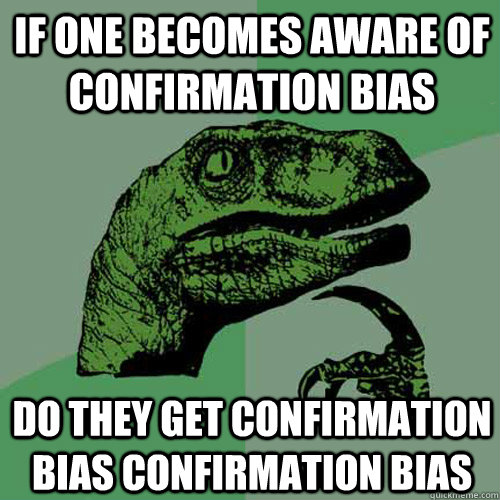
If one becomes aware of confirmation bias do they get confirmation bias confirmation bias

A couple weeks ago I published a guide to cognitive biases for journalists. I saved perhaps the biggest one of all — confirmation bias — for a post all of its own. It might be one of the best-known biases, but for that very reason it can be easy to underestimate. Here, then, is what you need to know — and what to do to reduce it.

What is confirmation bias — and how does it affect journalism?

Confirmation bias is the tendency to seek out — or more easily believe or recall — information that confirms our existing beliefs.

It leads us to make judgements that are not based on an equal assessment of all the evidence, but only that evidence we have cherry picked, remembered or attributed more credibility to.

Confirmation bias affects journalists in at least three ways: Continue reading

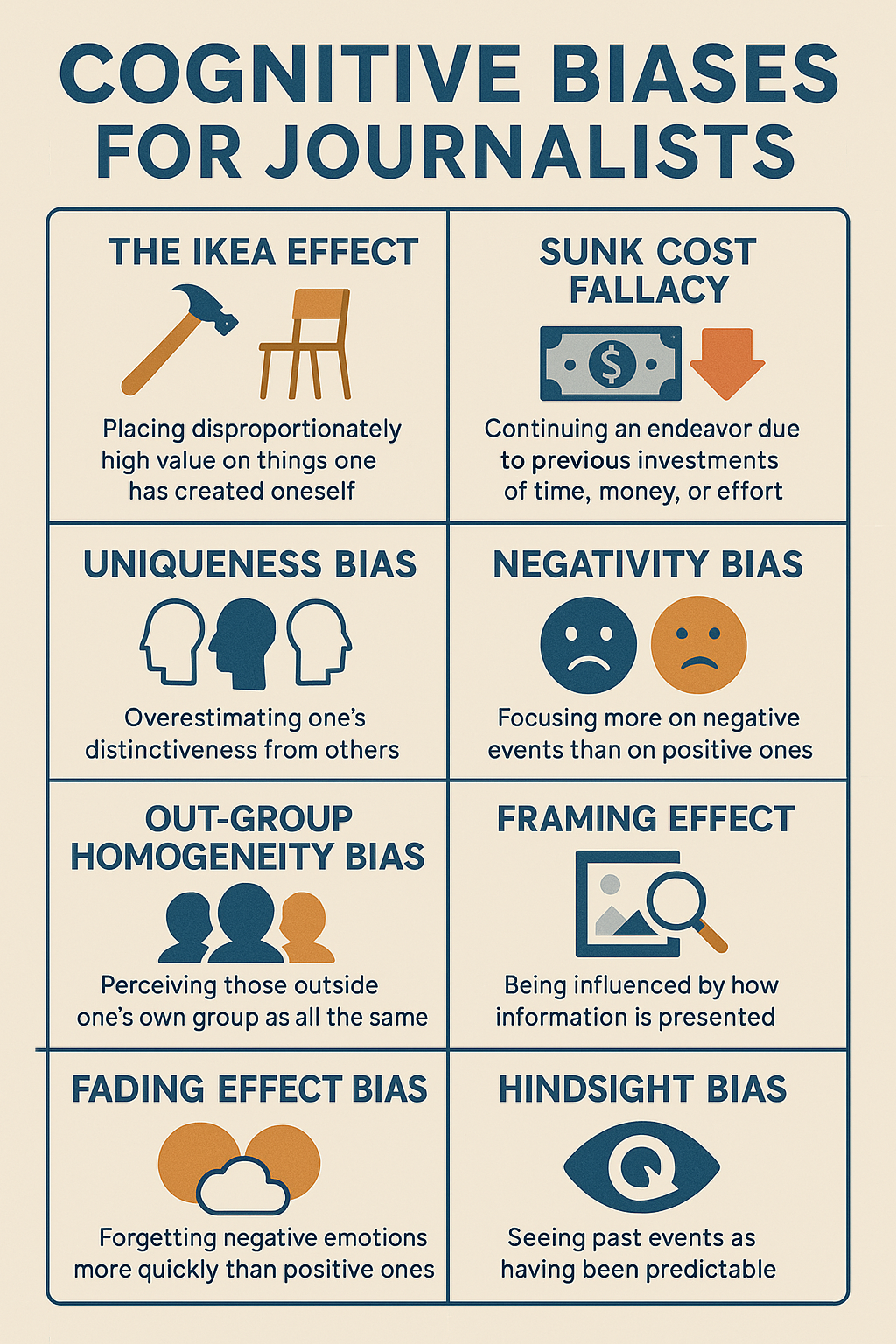
A journalist’s guide to cognitive bias (and how to avoid it)

Cognitive biases for journalists infographic

For the last few years I’ve been teaching my journalism students a dedicated class on cognitive bias — common ways of thinking that lead journalists (and audiences and sources) to make avoidable mistakes.

Journalism is particularly vulnerable to cognitive bias: we regularly make decisions at speed; we have to deal with too much information — or extract meaning where there isn’t enough of it. Each of those situations makes us vulnerable to poor decision-making — and many of the rules that we adhere to as journalists are designed to address that.

Some cognitive biases — such as groupthink, prejudice, and confirmation bias (covered in a second post here) — are well-known, but many others are not (there are over 180 of them). That includes bias blind spot: the tendency to see how biases affect other people, but not yourself.

So if you were thinking “this doesn’t apply to me”, read on for a guide to some of the cognitive biases likely to affect journalists — from being manipulated by sources to being bad editors of our own copy — and what to do to tackle them.

Continue reading

Teaching journalists how to find stories in company accounts: the story treasure hunt

stormtroopers digging up treasure

“These are not the treasures we’re looking for..” image by Stavos (CC BY-NC-ND 2.0)

Last week I shared some of the tips from a class for students on my MA in Multiplatform and Mobile Journalism and MA in Data Journalism on  how to find stories in company accounts. It’s a challenging subject to teach — but for the last couple of years I’ve used an approach that seems to work especially well: a story treasure hunt.

Here’s how it works. Continue reading

Here are 9 ways to find stories in company accounts (and only three of them involve numbers)

Found a conflict of interest on the last page

This week I’m teaching students on my MA in Multiplatform and Mobile Journalism and MA in Data Journalism  how to find stories in company accounts — so I thought it would be a good time to share just some of the ways that you can use these public documents for story leads and ideas (you can read this post in Russian here).

Here, then, are just 9 ways to find stories in company accounts — and most of them don’t involve any numbers at all. Continue reading

Empathy as an investigative tool: how to map systems to come up with story ideas

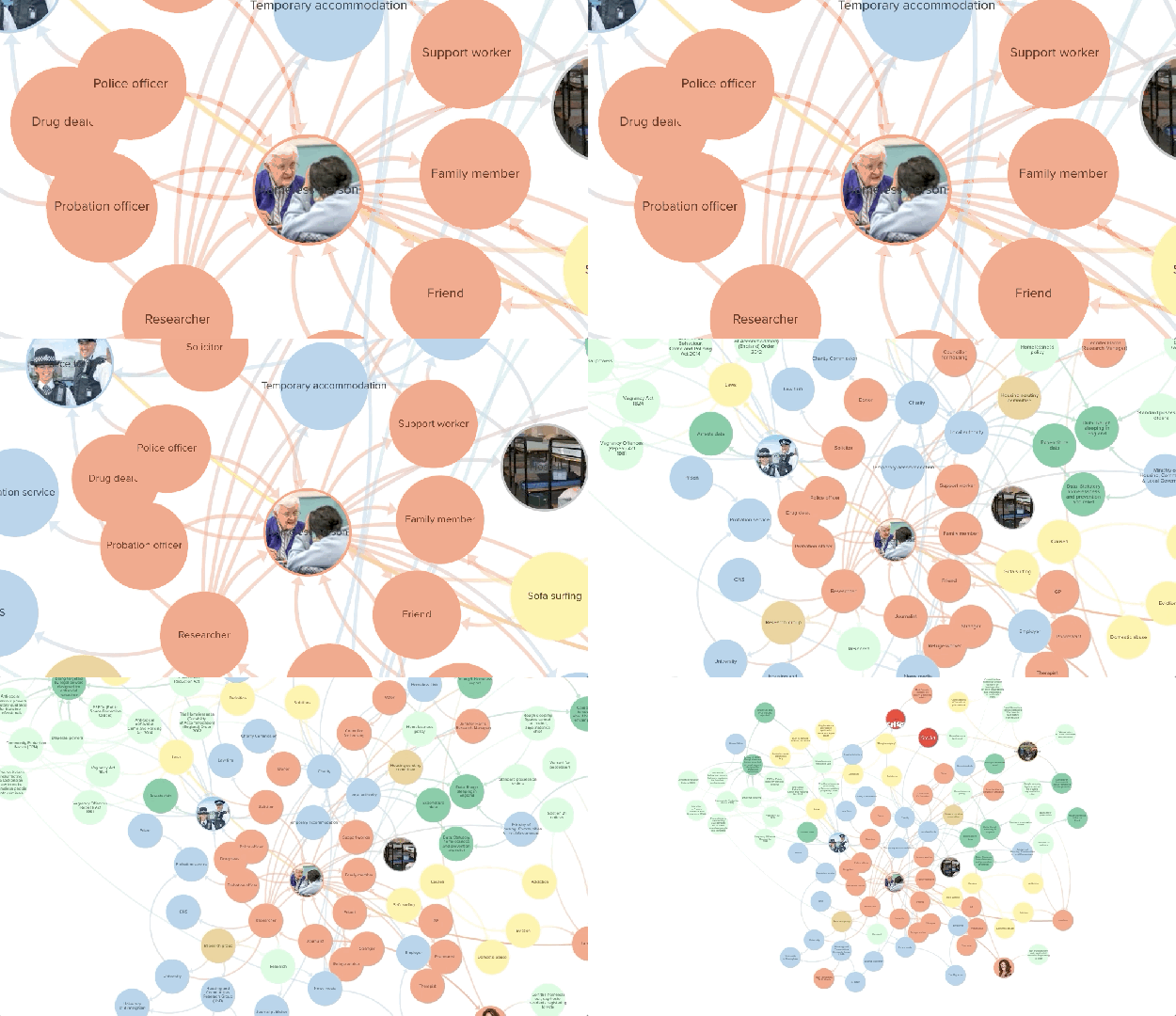
Zooming out of a network map of homelessness

By starting from one person you can start to identify the different parts of the systems that affect your topic — and useful story leads and ideas

For the last couple of weeks I’ve been helping students on my MA in Multiplatform and Mobile Journalism and MA in Data Journalism come up with story ideas for specialist reporting and investigations. Part of the process involves an exercise around scoping out a particular subject or system you are interested in — for example, the housing system, or ‘dark kitchens’, the Oscars, or air pollution — and identifying the gaps in your knowledge that can lead to stories.

It’s an exercise where empathy plays a central role.

Here’s how the process works — and why empathy is so important to it. Continue reading

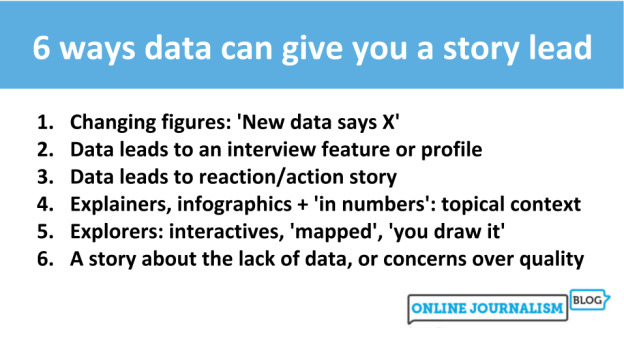
It’s not all about numbers: 6 ways that data can give you a story lead

Changing figures: 'New data says X' Data leads to an interview feature or profile Data leads to reaction/action story Explainers, infographics + 'in numbers': topical context Explorers: interactives, 'mapped', 'you draw it' A story about the lack of data, or concerns over quality

It’s a common misconception of data journalism that the resulting stories will be all about numbers. In fact, the data is often just a stepping stone — it might take you to interviews, or help you find case studies; it might give you the spark for a feature idea without a single number.

Recently I was asked about these alternatives to ‘number stories’ by one of my part time PGCert Data Journalism students — so here are the 6 tips I shared with them:
Continue reading

How to: plan a journalism project that needs data entry

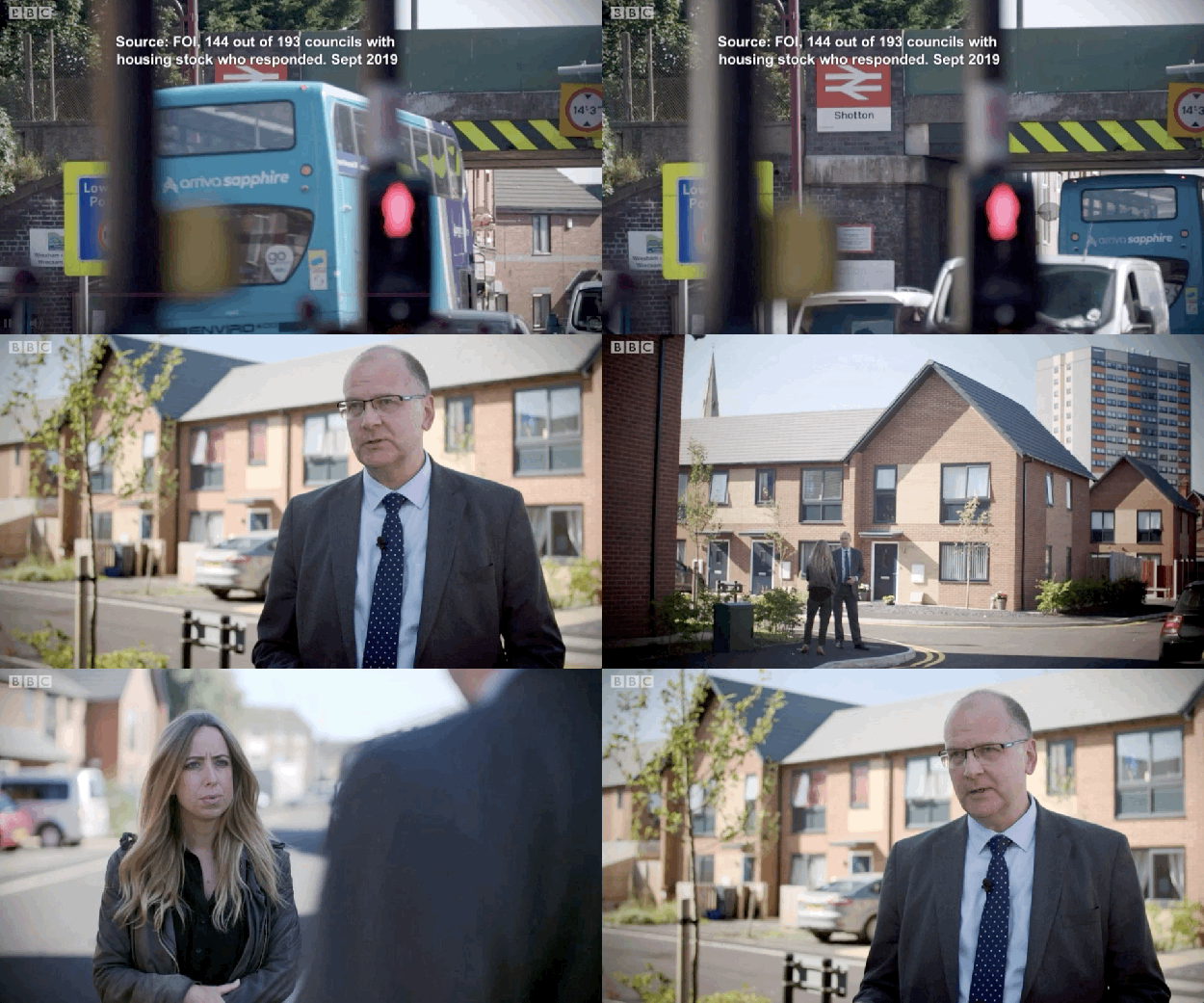
Panorama source: FOI sent to 144 councils

This Panorama investigation involved entering data from 144 FOI responses

Data-driven reporting regularly involves some form of data entry — some of the stories I’ve been involved with, for example, have included entering information from Freedom of Information (FOI) requests, compiling data from documents such as companies’ accounts, or working with partners to collect information from a range of sources.

But you’ll rarely hear the challenges of managing these projects discussed in resources on data journalism.

Last week I delivered a session on exactly those challenges to a factchecking team in Albania, so I thought it might be useful to share the tips from that session here.

They include some steps to take to reduce the likelihood of problems arising, while also helping to ensure a data entry project takes as little time as possible. Continue reading

Sigma Awards: new data journalism competition launched

Sigma awards

Data journalists are being invited to enter a new data journalism award, launched to “celebrate the best data journalism around the world [and] to empower, elevate and enlighten the global community of data journalists.”

The Sigma Awards were created by Aron Pilhofer and Reginald Chua, with support from Marianne Bouchart and Google’s Simon Rogers. Bouchart managed the Data Journalism Awards organised by the Global Editors Network, which closed last year.

There are nine awards across six categories:

  • Best data-driven reporting (small and large newsrooms)
  • Best visualisation (small and large newsrooms)
  • Innovation (small and large newsrooms)
  • Young journalist
  • Open data; and
  • Best news application

Aside from a trophy, up to two people from each winning project will receive an all-expenses-covered trip to the International Journalism Festival in Perugia on 1–5 April 2020 where the awards will be celebrated.

The organisers hope that winners will “participate in and lead data journalism panels, discussions and workshops” at the festival.

Entries to the competition are open until 3 February 2020 at 11:59 pm ET via an online form.

FAQ: How can journalism lecturers keep up with a fast-changing industry?

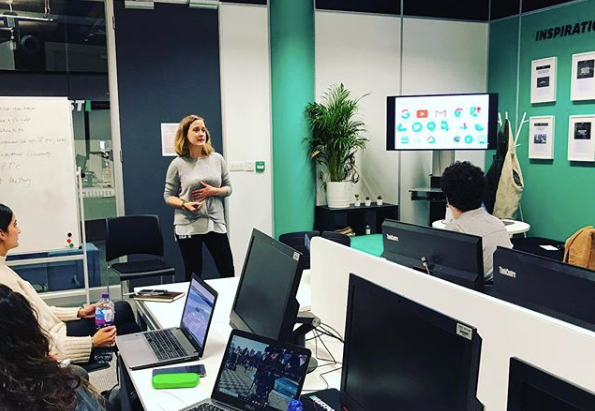
Abigail Edge teaching at BCU

Abigail Edge teaches a guest workshop on advanced Google tools in BCU’s newsroom

The latest frequently asked questions post is an answer to Ian Silvera who asks a number of questions about teaching journalism within the context a fast-changing industry. You can read his post here.

How do you think journalism lecturers should keep up with the fast-changing industry?

Following the industry press is pretty essential for anyone teaching in the field. Sites like Journalism.co.uk and Niemanlab are especially good at covering developments, but there’s also InPublishing and HoldtheFrontPage who cover it more broadly including new technologies and issues. And tons of email newsletters.

It’s easier than ever to follow individuals inside the industry, too – on Twitter as well as professional blogs, Medium.com and anywhere else. I maintain Twitter lists of people reporting in particular fields or in particular roles, for example, and generate Nuzzel newsletters for those lists so I’m up to date with what they’re sharing. Continue reading