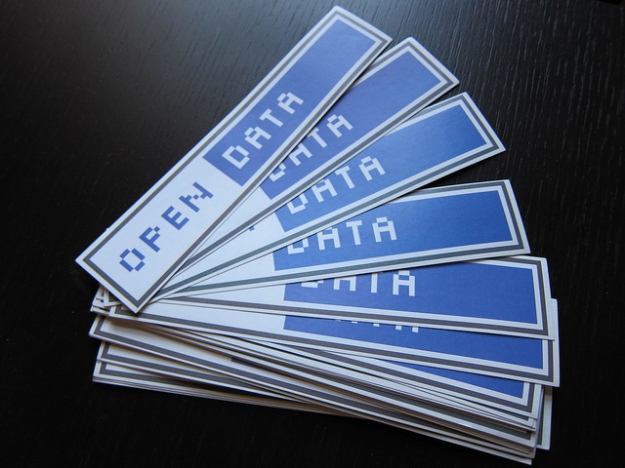
Data journalists will always need help. Image by Widhi Rachmanto
When people talk about data journalism the emphasis is almost always on the technicalities of the role: visualisation tools and spreadsheet formulae; scraping and cleaning; coding and mashing.
But data journalism isn’t just a technical skill – it is a cultural skill too.
Let me explain what I mean. If you were to list the technologies involved in data journalism you might start with Excel or a similar spreadsheet tool. Then add Open Refine for cleaning. Some scraping tools. Mapping tools. Some tools for charts, and infographics. Some understanding of HTML and CSS will help. Also XPath, SQL, regular expressions. JavaScript, Python or Ruby or PHP. R probably too… I could go on.
If those technologies sound like too much for one person to master all at once, you’d be right. They are.
So how do data journalists get the job done? They collaborate.
They use sites like CodePen, Stack Exchange and GitHub, where others can build on your work – and you can build on the work of others. They contribute to mailing lists; they share resources; and they work with a range of other individuals and groups.
It is an open approach to reporting that borrows more from the culture of programming than journalism’s own culture of guarding information jealously.
And understanding that culture is, for me, one of the first steps to becoming a successful data journalist.
No longer the gatekeepers
For example, notice my choice of words in the sentence two lines earlier: “contribute to”; “share”; “work with”. Sometimes journalists can make demands of communities of web developers that betray an exaggerated sense of their own importance, and an ignorance of the environments that developers often work in.
Those journalists are often given short shrift as a result of their clumsiness and lack of empathy.
If journalists were the gatekeepers of the 20th century, programmers are the gatekeepers of the 21st.
We no longer need journalists to get information to an audience; but we do need programmers to connect different parts of the networks we operate in.
Recognising this is so important that I’ve codified the requirement for understanding in my data journalism teaching at Birmingham City University and City University London.
Students at BCU on the MA in Online Journalism, for example, are required to engage with – and contribute to – wider communities of practice.
That means sharing what they learn, curating useful discussions in the community, interviewing key individuals and researching problems and questions that are important to that community.
The intention is twofold: firstly to embed good habits as a member of that community. And secondly to position them so that they are able to continue to learn not just while they are on the course, but after they graduate, as technologies and practices continue to develop.
A different culture of learning
A final difference is also important to highlight: journalists and programmers have different learning cultures.
One of the questions I am asked most often by aspiring data journalists is “What should I learn first?” My response is: “What you need to for the story you’re doing right now. And if that’s too much, then pick a simpler story then work up from there.”
If you think you learn to be a data journalist by doing Codecademy or reading a book on Python, you are likely to end up frustrated. It can be helpful – but it’s neither effective nor efficient.
The learning culture of the programmer is much more piecemeal, strategic, and reliant on others.
So I would never advise a journalist to learn a particular programming language for the sake of it. Instead learn some basic concepts in programming, such as variables, data types, loops and if/else tests, and then search the web for code that solves the problem you’re trying to solve, whether that’s “making a chart in JavaScript” or “scraping a spreadsheet in Python” or “Excel function to extract a year from a date”.
Often the next step will be a case of copying and pasting someone else’s code, and changing it slightly to see what works.
That might feel like plagiarism to a journalist, but to a programmer it is simply standing on the shoulders of giants.
Equally, if you’re trying things out in programming they often don’t work first time.
Again, that can feel like failure if you come from a humanities background. But look at it more like science: experimentation, trial and error are part of the process. In fact, programming is essentially a process of working with failure: diagnosing it, looking for solutions, and trying them with a vague expectation that it might not work.
I realised that I had learned this culture when some code of mine worked first time – and I was not only surprised – I was also vaguely disappointed. “Oh. It works. What do I do now?”
Straddling two cultures
Journalists often straddle two cultures: the sports reporter has to connect with fans, players and management; the health reporter with both doctor and patient.
In data journalism we have to draw on the same skill: only it’s not just our audience we’re connecting with, it’s the people who make those connections work.