Category Archives: online journalism

16 reasons why this research will change how you look at news consumption

Most research on news consumption annoys me. Most research on news consumption – like Pew’s State of the News Mediarelies on surveys of people self-reporting how they consume news. But surveys can only answer the questions that they ask. And as any journalist with a decent bullshit detector should know: the problem is people misremember, people forget, and people lie.

The most interesting news consumption research uses ethnography: this involves watching people and measuring what they actually do – not what they say they do. To this end AP’s 2008 report A New Model for News is still one of the most insightful pieces of research into news consumption you’ll ever read – because it picks out details like the role that email and desktop widgets play, or the reasons why people check the news in the first place (they’re bored at work, for example).

Now six years on two Dutch researchers have published a paper summarising various pieces of ethnographic and interview-based consumption research (£) over the last decade – providing some genuine insights into just how varied news ‘consumption’ actually is.

Irene Costera Meijer and Tim Groot Kormelink‘s focus is not on what medium people use, or when they use it, but rather on how engaged people are with the news.

To do this they have identified 16 different news consumption practices which they give the following very specific names:

  1. Reading
  2. Watching
  3. Viewing
  4. Listening
  5. Checking
  6. Snacking
  7. Scanning
  8. Monitoring
  9. Searching
  10. Clicking
  11. Linking
  12. Sharing
  13. Liking
  14. Recommending
  15. Commenting
  16. Voting

Below is my attempt to summarise those activities, why they’re important for journalists and publishers, and the key issues they raise for the way that we publish. Continue reading

Audio: UK Conference of Science Journalists panel on tools for journalists

Back in June I took part in a panel at the UK Conference of Science Journalists conference, discussing tools for reporters alongside BBC Trending’s Mukul Devichand and Digital Science’s community manager Laura Wheeler.

The conference website has just published audio of the session, including chair Daniel Clery’s tips and recommendations. You can listen to the clip below.

The Great British Bake Off copyright grab: We can use your #ExtraSlice Twitter images but not give you credit

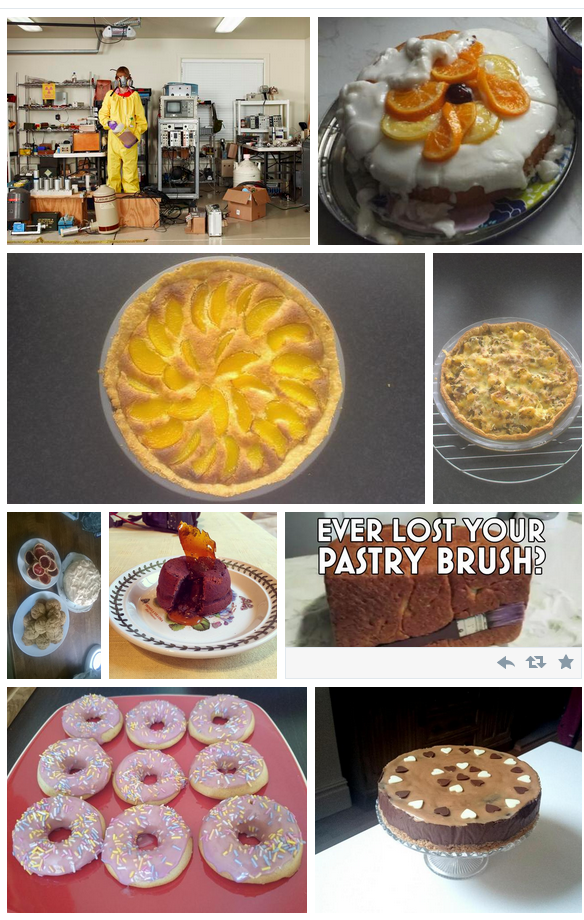
Images shared on the #ExtraSlice hashtag. I don't know who took these - they waived their moral rights

Images shared on the #ExtraSlice hashtag. I don’t know who took these* – they waived their moral rights

This year’s series of The Great British Bake Off has a social media-savvy spin-off: An Extra Slice.

It’s a mix of interviews, punditry and contributions from audience members and viewers. But the programme makers have a curious approach to copyright law which users of Twitter and Instagram may be ‘agreeing’ to without knowing about it. Continue reading

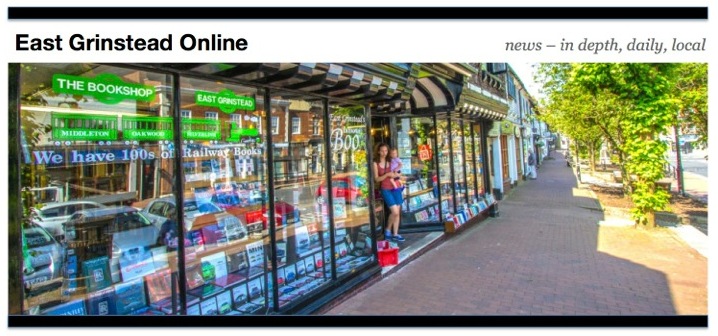
Hyperlocal Voices: Geraldine Durrant, East Grinstead Online

For the latest in our series of Hyperlocal Voices Damian Radcliffe heads back home to Sussex. Geraldine Durrant,  Editor of East Grinstead Online, explains how the site – ‘an idea whose time had come’ – serves the popular market town.

Launched just four months ago, East Grinstead Online is already generating substantial traffic, and publishes multiple stories every day. Here’s their story…

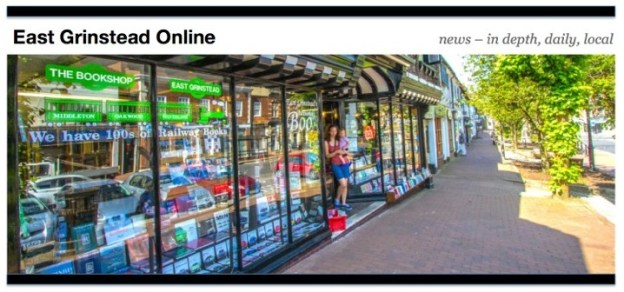
East Grinstead Online 

1.  Who were the people behind the blog?

I have been a journalist all my working life, and many years ago was news editor of the local paid-for paper.

I moved on as Group Feature Writer for the Croydon Advertiser group and subsequently set up a freelance agency with a photographer colleague which supplied features to newspapers and magazines around the world.

I am mainly retired, although I still do the PR for East Grinstead Town Council and write regularly for the Catholic press.

And I am the somewhat accidental author of four children’s books, the first three of which have been adapted for a stage production which has been touring  the UK this year. Continue reading

FAQ: Do you need new ethics for computational journalism?

This latest post in the FAQ series answers questions posed by a student in Belgium regarding ethics and data journalism.

Q: Do ethical issues in the practice of computational journalism differ from those of “traditional” journalism?

No, I don’t think they do particularly – any more than ethics in journalism differ from ethics in life in general. However, as in journalism versus life, there are areas which attract more attention because they are the places we find the most conflict between different ethical demands.

For example, the tension between public interest and an individual’s right to privacy is a general ethical issue in journalism but which has particular salience in data journalism, when you’re dealing with data which names individuals.

I wrote about this in a book chapter which I’ve published in parts on the blog. Continue reading

So Google scans email for dodgy images – should we be worried about scanning for sensitive documents?

Gmail logo

You could be forgiven for not having heard of John Henry Skillern. The 41 year old is facing charges of possession and promotion of child pornography after Google detected images of child abuse on his Gmail account.

Because of his case we now know that Google “proactively scours hundreds of millions of email accounts” for certain images. The technology has raised some privacy concerns which have been largely brushed aside because, well, it’s child pornography.

Sky’s technology correspondent Tom Cheshire, for example, doesn’t think it is an invasion of our privacy for “technical and moral reasons”. But should journalists be worried about the wider applications of the technology, and the precedent being set?

Continue reading

Hyperlocal Voices: Matthew Duffy, Coventry Culture

Coventry_Culture___Telling_The_Story

Not all hyperlocal sites cover everything that’s happening in the patch, some focus on specific subject areas. The latest in our series of Hyperlocal Voices sees Damian Radcliffe look at Coventry Culture. As the site celebrates its first anniversary this month, founder and editor Matthew Duffy tells him about his journey over the past 12 months. Continue reading

Four examples of different threat models

My post on threat models for journalists is quite lengthy, so I thought I’d put the sample threat models from that in their own, separate post. Here they are – note that these are very simple, sketchy threat models and you would want to expand on these. But hopefully they provide a starting point. I’d also recommend checking out this resource from Privacy for Journalists.

What info do you want to keep? Passwords. Why might someone want it? To spam. What can they do? Guess password, phishing. What might happen? Damage to brand, trust.

A basic threat model for anyone with access to a key social media account – or colleagues who do.

What info do you want to keep? Communication with sources. Why might someone want it? To prevent publicaiton, smear. What can they do? Guess/hack password, phishing, legal avenues. What might happen? Story killed, credibility, trust.

This is an example of a threat model for anyone who deals with protestors, complainants, or others who might be targets of others

What info do you want to keep? Identity/location of sources. Why might someone want it? To intimidate, attack, smear. What can they do? Guess/hack password, phishing, metadata, mobile trail, more. What might happen? Source attacked, imprisoned, trust.

When dealing with whistleblowers, leaks, or sources in oppressive regimes, you need to protect identity and location. Here’s a sample threat model for that.

What info? Documents. Why? To prevent publication, identify sources. What can they do? Guess, hack, phish passwords for cloud services. Legal avenues etc. What might happen? Story killed, credibility damaged, sources don't trust.

When working with documents, you may need to prevent others getting access to them. Here’s a sample threat model for that.

Why every journalist should have a threat model (with cats)

Just because you're paranoid doesn't mean they aren't after you

If you’re a journalist in the 21st century you have two choices: you can choose to be paranoid, or you can choose to be delusional.

The paranoid journalist assumes that someone is out to get them. The delusional journalist assumes that no one is.

In this post I will explain why and how every journalist – whether you’re a music reporter or a political correspondent – can take a serious and informed look at their security and arrive at a reasonable evaluation of risks and safeguards.

Don’t panic. I promise that by the end of this piece you will be less anxious about security, and no longer paranoid. I also promise to use lots of lolcats. Continue reading