Category Archives: social media

The third edition of the Online Journalism Handbook is now out!

The online journalism handbook: skills to survive and thrive in the digital age, by Paul Bradshaw

A new, third, edition of the Online Journalism Handbook is now out.

A comprehensive update to the 2017 second edition, it sees the addition of a new chapter on writing for email and chat.

There are new sections on formats from scrollytelling and charticles to threads, vertical Stories, social audio and audiograms, plus advice on how to use gifs, memes and emoji professionally as a journalist.

One notable development of the last few years reflected in the book is the improvement in accessibility provision — which is covered alongside techniques for better inclusivity and diversity in journalism practice.

Developments around harassment and online abuse, misinformation, news avoidance, and trust are all covered — and, of course, the impact of the pandemic on journalistic practices, including remote interviewing tips.

I’ll be publishing extracts and the material I had to leave out (it’s 20,000 words longer than the last edition) in the coming months.

VIDEO: Visual storytelling for journalists — from composition and emojis to gifs and memes

Being able to tell stories visually is a key skill for multiplatform journalists. This video, made for students on the MA journalism courses at Birmingham City University, explains a range of visual techniques that factual storytellers are using, from image composition to gifs and memes, as well as some tools that can help you make your own visuals.

The video was made for students on the MA in Multiplatform and Mobile Journalism and the MA in Data Journalism at Birmingham City University. The series of video posts can be found at this link.

VIDEO: Writing for social media: ‘shortform’ storytelling

Writing for social media is a different skill to writing news articles, or even writing headlines. In this video I explain key techniques in shortform storytelling, such as the importance of quotes and numbers, images and video, as well as examples of narrative structures used in tweets and threads.

The video includes the following checklist to use with any piece of social media writing:

  1. Does it have image/video/GIF/emojis?
  2. Does it NOT read like a headline?
  3. Is there a CTA (Call To Action)?
  4. Has it considered hashtags?
  5. Does it @ name subjects?
  6. Does it have beginning and end?
  7. Can it use quotes or numbers?
  8. Is it timed appropriately?
  9. Are you testing different versions?

The video was made for students on the MA in Multiplatform and Mobile Journalism at Birmingham City University. A series of video posts from my teaching can be found at this link.

FAQ: How has social media changed journalism – and what does the future hold?

tools on a shed wall

Tools image by Lachlan Donald

This latest set of frequently asked questions comes from a MA student at Coventry University who is researching Instagram. Their questions revolve around the impact of social media on journalism and Instagram in particular.

How are the new social media apps changing the way journalism is produced, distributed and consumed?

There’s a lot of scope in that question so in breaking it down it’s firstly worth making a distinction between apps (i.e. tools, used by producers to capture, publish and share) and platforms (i.e. a place where content is hosted).

So for example Instagram is a platform that hosts content which can be accessed on a tablet, or on mobile, or a desktop or laptop computer, but can also be published to through an app on mobile or tablet. Continue reading

AllSides’s John Gable: from the Dark Ages of the internet to bursting bubbles

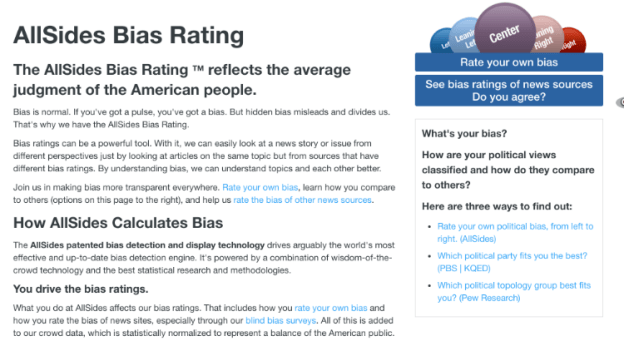
all-sides-bias-rating

AllSides uses a bias rating system

As part of a series of articles on the innovators tackling the filter bubble phenomenon, Andrew Brightwell interviews John Gable, founder and CEO of AllSides, a website that has devised its own way to present alternative perspectives on American news.

When a man who helped build the first successful web browser says there’s something wrong with the Internet, it probably pays to listen.

“The internet is broken.”

John Gable’s diagnosis has authority: he has more than 30 years in the tech business, including stints at Microsoft, AOL and as a product manager for Netscape Navigator.

Now he is founder and CEO of AllSides Inc, a news website with a distinct mission. Visit AllSides.com and it offers the news you’d expect on any US politics site, except that its lead stories include a choice of articles: one from the left, centre and right.

 “The headlines are so radically different that even reading [them together] tells you more about that topic than reading one story all the way through.”

Continue reading

Vine is gone. Here are 5 great ways it was used for datavis

After Vine’s announcement to discontinue the mobile app in the coming months, Maria Crosas Batista pulled together 5 good stories on data visualisation (first published on her site Dinfografia).

1.Legal vs illegal weapons in the US

2. The evolution of global warming

Continue reading

HuffPost editor Stephen Hull triggers furious reaction over being ‘proud’ not to pay writers

The Huffington Post’s UK editor-in-chief Stephen Hull has provoked a curious backlash on Twitter following an appearance on Radio 4’s Media Show where he was asked why he doesn’t pay writers, writes Alex Iacovangelo

“I love this question,” he replied:

“If I was paying someone to write something because I want it to get advertising, that’s not a real authentic way of presenting copy. 

“When somebody writes something for us, we know it’s real, we know they want to write it. It’s not been forced or paid for. I think that’s something to be proud of.”

Tweeters quickly condemned him for encouraging the tactic during a time when jobs are being cut and budding journalists struggle to financially survive.

Below are some of the tweets, you can read the rest on this link:

(Note: @edcaesar quoted Stephen Hull)


The viral choice: too good to check – or too good not to debunk?

We are in the golden age of verification: a generation of journalists trained to process content rather than check it; the culling of the subs who used to; and a generation raised on bullshit with the means to check it and the networks to exchange notes. Continue reading

The 10 most-read posts (and one page) on the Online Journalism Blog in 2014

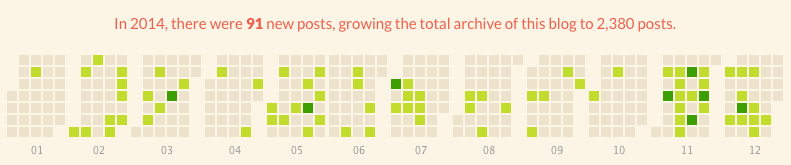
ojb post frequency 2014

The last 2 months of 2014 saw a return to regular blogging after some quiet periods earlier in the year

2014 was the 10th anniversary of the Online Journalism Blog, so I thought I’d better begin keeping track of what each year’s most-read posts were.

In 2014 the overriding themes for this blog were programming for journalists, web security, and social media optimisation. Here are the most-read posts of the year, plus one surprisingly popular new page with some background and updates. Continue reading

The Scarcity Principle: writing online headlines which ‘click’

Increasingly, when journalists now write headlines for the web or for social media, they specify the medium or format involved. They shout VIDEO and AUDIO in caps at the start of the tweet or post; MAPPED or INFOGRAPHIC; INTERVIEW or LIVEBLOG.

Sometimes the medium or format is implied more subtly, with a call to action: we urge users to ‘Watch’, ‘See’ and ‘Listen’. But we also invite them to ‘Join’, ‘Meet’ and ‘Find out’.

Users choose the medium as well as the message

Why do we do this? Part of it is that we recognise that the medium is something special; that users often make a choice based on the medium itself.

But I think putting the medium/format front and centre is about more than just user preference: it’s about abundance and scarcity. Continue reading