Tag Archives: TEXT

Words as data: how data journalists tell stories about documents and text

Documents and other collections of text can be goldmines for data journalism — if you know how to approach them as data. Here are some techniques and inspiration for your next data project.

From stories about political speech and song lyrics, to street names and social media chatter, data journalists now have a wide range of examples of text-as-data to draw inspiration and guidance from, while tools such as Pinpoint and NotebookLM are making text analysis easier than ever.

I compiled a list of over 200 pieces of data journalism where text or documents were used as sources. Quantification techniques ranged from counting the frequency of a single word and using Google’s ngram viewer, to machine learning and topic modelling.

Looking at those articles it’s clear that, once quantified, journalists tell the same stories about text as any other piece of data: using the seven most common angles.

But how those angles are used — and how often — is where it gets interesting…
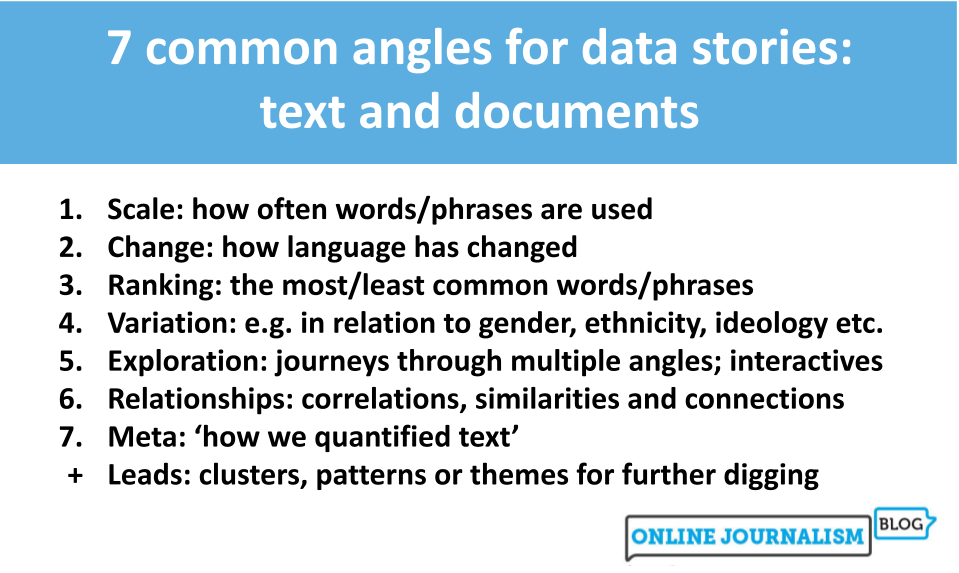
7 common angles for data stories: text and documents 
Scale: how often words/phrases are used
Change: how language has changed
Ranking: the most/least common words/phrases
Variation: e.g. in relation to gender, ethnicity, ideology etc.
Exploration: journeys through multiple angles; interactives
Relationships: correlations, similarities and connections
Meta: ‘how we quantified text’
Leads: clusters, patterns or themes for further digging
Continue reading

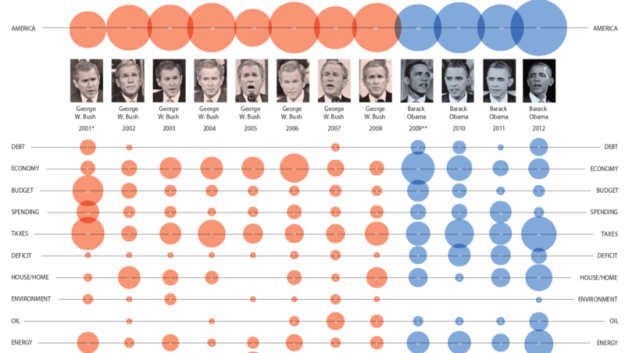
Text-as-data journalism? Highlights from a decade of SOTU speech coverage

January 2012: The National Post’s graphics team analyzes keywords used in State of the Union addresses by presidents Bush and Obama / Image: © Richard Johnson/The National Post

January 2012: The National Post’s graphics team analyzes keywords used in State of the Union addresses by presidents Bush and Obama / Image: © Richard Johnson/The National Post

In a guest post for OJB, Barbara Maseda looks at how the media has used text-as-data to cover State of the Union addresses over the last decade.

State of the Union (SOTU) addresses are amply covered by the media —from traditional news reports and full transcripts, to summaries and highlights. But like other events involving speeches, SOTU addresses are also analyzable using natural language processing (NLP) techniques to identify and extract newsworthy patterns.

Every year, a new speech is added to this small collection of texts, which some newsrooms process to add a fresh angle to the avalanche of coverage.

Continue reading

What do journalists do with large amounts of text?

books

Photo: Pixabay

Barbara Maseda is on a John S. Knight Journalism Fellowship project at Stanford University, where she is working on designing text processing solutions for journalists. In a special guest post she explains what she’s found so far — and why she needs your help.

Over the last few months, I have been talking to journalists about their trials and tribulations with textual sources, trying to get as detailed a picture as possible of their processes, namely:

  • how and in what format they obtain the text,
  • how they find newsworthy information in the documents,
  • using what tools,
  • for what kinds of stories,

…among other details.

What I’ve found so far is fascinating: from tech-savvy reporters who write their own code when they need to analyze a text collection, to old-school investigative journalists convinced that printing and highlighting are the most reliable and effective options — and many shades of approaches in between.

What’s your experience?

If you’ve ever dug a story out of a pile of text, please let me know using this questionnaire. It doesn’t matter if you’ve used more or less sophisticated tools to do it.

Here are a few reasons and incentives to contribute: Continue reading

How to: fix spreadsheet dates that are in both US and UK formats

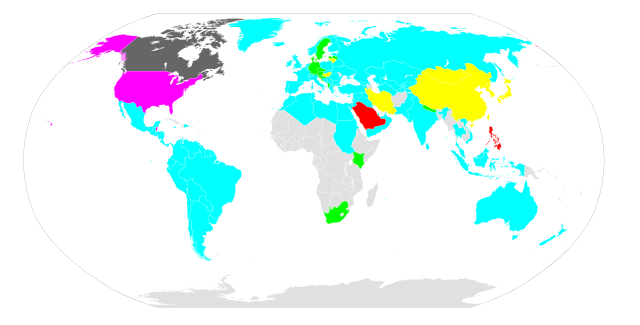
640px-Date_format_by_country.svg

This map by Artem Karimov shows which countries use which data formats

It’s quite common when working with Google Sheets to have data set to US format (Month-Day-Year) without realising it. This is because Google will format your dates based on what ‘locale’ or language you have set – and the default is US English.

Instructions on how to change that are here – but what if it’s too late? What if you’ve already inputted or imported data which, when updated to a different format, will make it the wrong date? Continue reading