Author Archives: Paul Bradshaw

Report: looking back at 2016 — looking forward to 2017…

2017 prediction charts

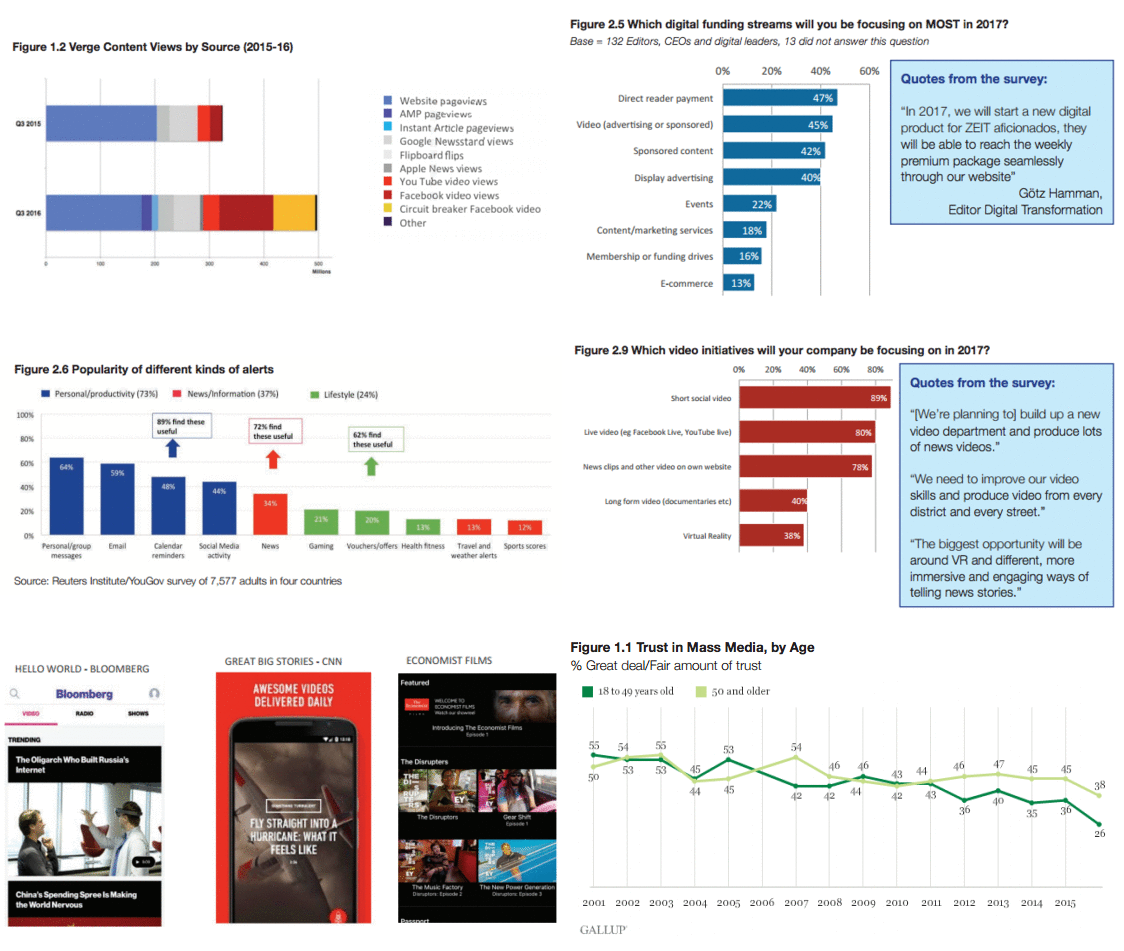
A couple weeks ago I published my responses to Nic Newman’s annual review exercise. Now the resulting report is out (PDF here).

As usual it’s a great roundup of the last 12 months, and some crystal-ball-gazing that will be as interesting historically as it will be for anything it gets right. It includes some particularly good sections on some news organisations’ plans around advertising, membership, and audio.

The funniest bit of the report comes with the statistic that 70% of editors, CEOs and digital leaders surveyed “said worries over the distribution of fake/inaccurate news in social networks will strengthen their position”.

Hm.
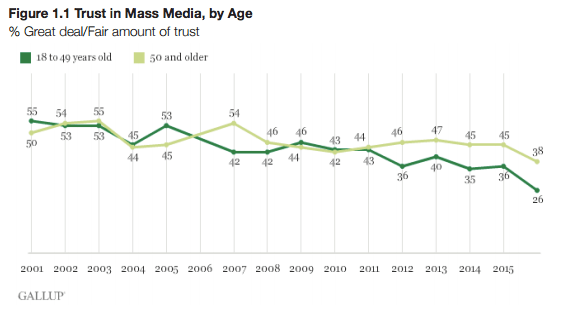
trust-in-mass-media-by-age

Chart taken from the Digital News Project 2017

NiemanLab already have a decent write up of the report here.
The most-read posts on Online Journalism Blog — and on Medium — in 2016

2016

Rounding up the best posts of the year is a good habit to get into, but one that I’ve failed to acquire. In 2014 – the ten year anniversary of this site – I rounded up the year’s best performing posts, which does give you a flavour of what was happening that year — but I forgot to repeat it for 2015.

Here, then, are some reflections on the 10 pieces which did best in 2016 (there were 100 posts across the year), plus the older posts which keep on giving, and a comparison of some pieces which did far better on Medium than on OJB. Continue reading

Someone asked me about 2016 and 2017. This is what I said

Crystal ball image by Christian R. Hamacher

Crystal ball image by Christian R. Hamacher

Every year Nic Newman asks a bunch of people for their reflections on the last 12 months and their anticipations for the year ahead. Here’s what I’ve said this year — as always, to be taken with significant doses of salt. 

What surprised you most in 2016?

Perhaps the sheer number of significant developments (compare the posts for 2015 and 2014). It was the year when bots went mainstream very quickly, and platforms took further significant steps towards becoming regulated as publishers.

It was a year of renewed innovation in audio. 2016 saw the launch of a number of new audio apps, including Anchor, Pundit, Clyp and Bumpers.fm, as various companies attempted to be the ‘Facebook of audio’. The only problem: Facebook wants to be the Facebook of audio too: at the end of the year they introduced live audio. Continue reading

From Bana and #boycottdelta to gaslighting and AI – why we’re headed for confusion fatigue in 2017

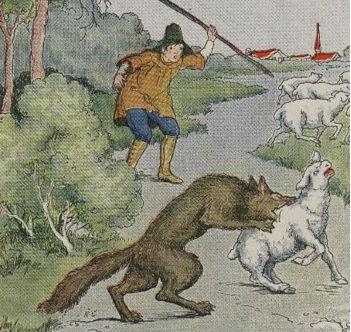
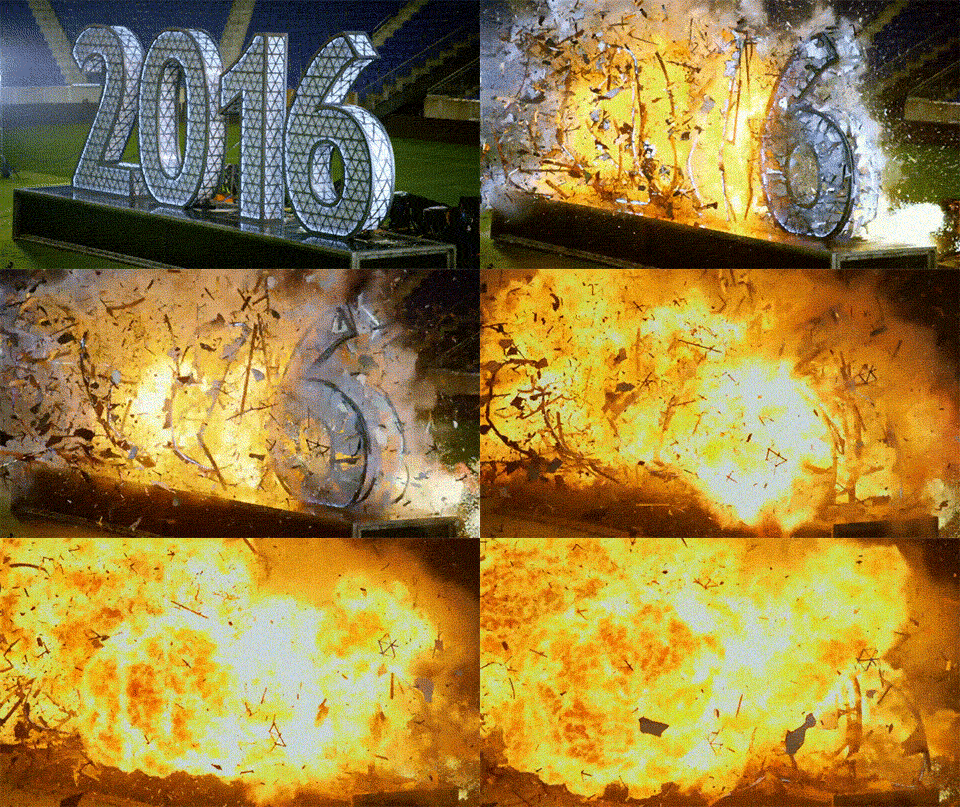
Goodbye 2016, the year of The Boys Who Cried Wolf. Not just a year of ‘fake news’, but something more: a crisis in people’s ability to believe anything.

And in 2017 it’s likely to get worse.

To explain what I mean, you need to go back to 2003, when Salam Pax, the ‘Baghdad Blogger’, was posting updates in the middle of the Iraq War. While some questioned whether he was really based in Iraq, that debate was relatively limited by today’s standards. It was a manageable doubt.

The boys who cried wolf in Aleppo

Cut to Aleppo in 2016 and you see how things have changed. Bana Alabed is perhaps Aleppo’s ‘Baghdad Blogger’: a Twitter account about the experiences of a seven year old Syrian girl, maintained by her mother.

But she is not alone: the number of voices speaking from the ground has proliferated… Continue reading

2016 was the year of the bot — here’s a brief history of how they have been used in journalism

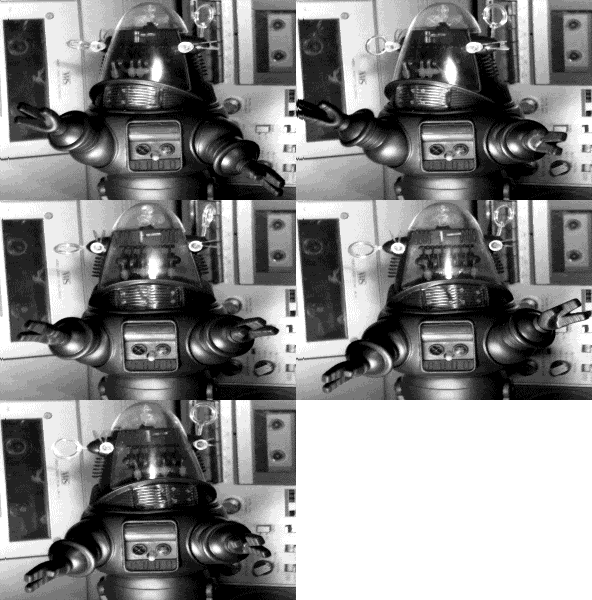
Robot gif

2016 was the year of the bot in journalism. In this edited extract from the forthcoming second edition of the Online Journalism Handbook, I outline what bots are, how bots have been used by media organisations from early Twitter bots to the recent wave of ‘chatbots’, and some tips and tools for getting started with journalistic bots.

‘Bots’ are ‘robots’ – only on the internet. Without the mechanical body of their physical counterparts, all that leaves is a disembodied computer script, normally created to perform repetitive tasks.

This broad description takes in a whole range of activities, and so the term ‘bot’ is used to talk about very different things in different contexts:

  • In search you might talk about bots used to index webpages, such as the ‘Googlebot’.
  • In finance and commerce you might talk about bots used to monitor information online and respond to it by buying or selling things.
  • And in advertising and politics you might talk about bots being used for nefarious purposes: for example, to make it look like more people are viewing webpages, clicking on adverts, or arguing for a particular candidate.

This article isn’t about any of those.

In the context of journalism and publishing, the term ‘bot’ is normally used to refer to something which users can interact with. Examples include: Continue reading

Snapchat for Journalists now available in Spanish

Snapchat para periodistas libro

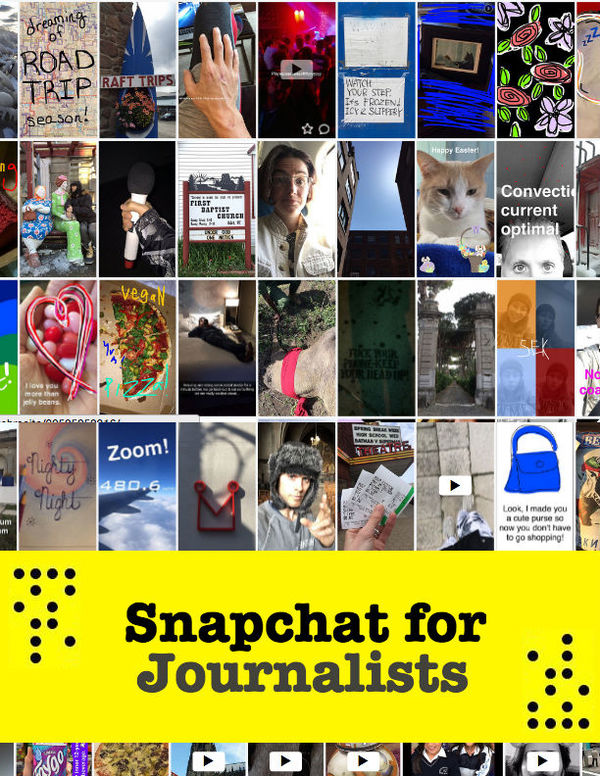
My ebook Snapchat for Journalists is now available in Spanish: Snapchat para periodistas.

The new translation also includes specific examples from Spanish language media and journalists using the platform.

A Spanish language blog post by Barbara Maseda, with more details about the translation, can be found here.

Barbara has also translated two of my other books into Spanish: Periodismo de datos: Un golpe rápido (Data Journalism Heist) and Excel para periodistas (Excel for Journalists)

Whatever happened to the audio slideshow?

Remember the audio slideshow? Once one of the most compelling editorial formats – and a truly web-native one at that – it is now rare to see them on a news website. And a whole wave of audio slideshow work is starting to disappear from the web.

The page for BBC’s Jazz junctions – riding New York’s A Train now lacks the audio slideshow it once held, while The Guardian is awash with pages showing gaps where a slideshow should be – like After the riots and Timbuktu’s ancient manuscripts (both from 2007), error messages about Flash (from 2010 and 2011) – or no pages at all in the case of Shrimp fishing in the Wash or Somalia’s refugee camps.

audio-slideshows-chart new-york-times

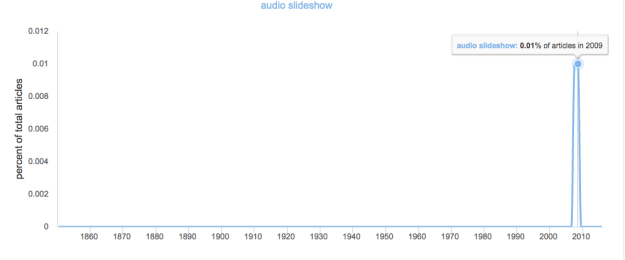
A search on the New York Times Chronicle tool shows a spike in mentions of audio slideshows at the end of the last decade. After 2010 they aren’t mentioned at all.

2012 seems to have been the last time audio slideshows were part of the fabric in the UK: most of the work on the Guardian’s Audio Slideshows section is from that year, while it represents the peak of production at the BBC. Here’s just a selection: Continue reading

My online journalism Masters course is changing its name. Here’s why

telegraph-newsroom image by alex-gamela

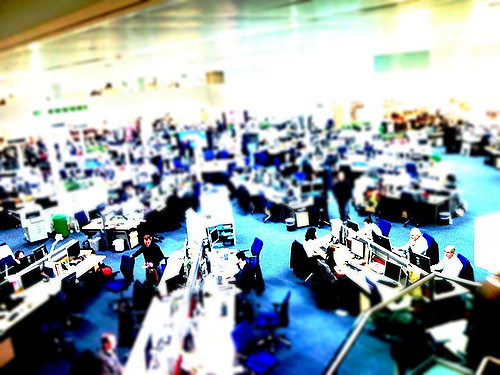
MA student Alex Gamela took this image of the Telegraph newsroom during the first year of the MA

My MA in Online Journalism has a new name: the MA in Multiplatform and Mobile Journalism*. It’s still a course all about finding, publishing and distributing journalism online. So why the name change?

Well, because what ‘online‘ means has changed.

For the last 18 months I’ve been talking to people across the industry, reflecting on the past 7 years of teaching the MA, and researching the forthcoming second edition of the Online Journalism Handbook. Here, then, are the key conclusions I arrived at, and how they informed the new course design:

1: Adapting to new platforms is a specific skill

In the last few years a significant change has taken place. Journalism is now increasingly ‘native’, playing to the strengths of multiple platforms rather than just using them as promotional ‘channels’. It went from web and social to chat, keeps remembering email, and in the near future will take in cars, the home and other connected devices too. Continue reading

See all the presentations from Data Journalism UK 2016

If you enjoyed the first Data Journalism UK conference on November 22, or followed from afar, I’ve gathered together all the presentations from the day on a special Slideshare account here.

The BBC’s Dan Wainwright has written about his session on data journalism on this blog, Anna Noble wrote about some of her work on The Information Lab, there’s a brief summary in the Media Mill email newsletter here, and you can also read a write-up of the event by Benjamin Cooley on Journalism.co.uk:

We’re already starting to plan ahead for Data Journalism UK 2017, so if there are sessions or people you’d like included, please let me know in the comments or on Twitter.