Category Archives: online journalism

Finding Stories in Spreadsheets – ebook now live!

Finding stories in spreadsheets book cover

Cover design by Matt Buck/Drawnalism

My latest ebook – Finding Stories in Spreadsheets – is now live on Leanpub.

As with Scraping for Journalists, I’m publishing the book week-by-week so the book can be updated based on reader feedback, user suggestions and topical developments.

Each week you can download a new chapter covering a different technique for finding stories, from calculating proportions and changes, to combining data, cleaning it up, testing it, and extracting specific details.

There’s also a downloadable spreadsheet at the end of each chapter with a series of exercises to practise that chapter’s technique and find particular stories.

Along the way I tackle some other considerations in telling the story, such as context and background, and the importance of being specific in the language that you use.

If there’s anything you’d like covered in the book let me know. You can also buy the book in a ‘bundle’ with its sister title Data Journalism Heist, which covers quick-turnaround techniques for finding stories in spreadsheets using pivot tables and advanced filters.

Hyperlocal media and engagement with political parties: what’s been your experience?

One of my abiding memories of the 1997 General Election involves bumping into a candidate from one of the major parties in a beer cellar. The candidate was supposed to have been on air at the time, participating in a live hustings for the small local radio station I was working for.

During a short conversation with them it quickly became clear that they felt an informal meet and greet with a bunch of bemused students was a better use of their time.

That was until I gently nudged him in the direction of the nearest cab…

A decade and a half later I hoped this sort of incident was a thing of the past. But is that the case? Continue reading

Is there a ‘canon’ of data journalism? Comment call!

Looking across the comments in the first discussion of the EJC’s data journalism MOOC it struck me that some pieces of work in the field come up again and again. I thought I’d pull those together quickly here and ask: is this the beginnings of a ‘canon’ in data journalism? And what should such a canon include? Stick with me past the first obvious examples…

Early data vis

These examples of early data visualisation are so well-known now that one book proposal I recently saw specified that it would not talk about them. I’m talking of course about… Continue reading

Journalisme et code : 10 grands principes de programmation expliqués

Cedric Motte asked if he could translate Coding for journalists: 10 programming concepts it helps to understand into French. Here’s the result – first published on NewsResources.

Si vous envisagez de vous mettre à la programmation, il y a de fortes chances que vous butiez sur une série de termes techniques, un jargon qui peut être particulièrement rébarbatif, notamment dans les tutoriels, dont les auteurs ont tendance à oublier que vous êtes inexpérimentés en programmation.

Les sections qui suivent décrivent et indiquent dix concepts que vous êtes susceptible de – non, que vous allez – rencontrer. Continue reading

Coding for journalists: 10 programming concepts it helps to understand

If you’re looking to get into coding chances are you’ll stumble across a raft of jargon which can be off-putting, especially in tutorials which are oblivious to your lack of previous programming experience. Here, then, are 10 concepts you’re likely to come across – and what they mean.

1. Variables

cat in a box

Variables are like boxes which can hold different things at different times. Image by Wolfgang Lonien.

A variable is one of the most basic elements of programming. It is, in a nutshell, a way of referring to something so that you can use it in a line of code. To give some examples:

  • You might create a variable to store a person’s age and call it ‘age’
  • You might create a variable to store the user’s name and call it ‘username’
  • You might create a variable to count how many times something has happened and call it ‘counter’
  • You might create a variable to store something’s position and call it ‘index’

Variables can be changed, which is their real power. A user’s name will likely be different every time one piece of code runs. An age can be added to at a particular time of year. A counter can increase by one every time something happens. A list of items can have other items added to it, or removed. Continue reading

Hyperlocal Voices: Jamie Summerfield, A Little Bit of Stone

It’s been a little while since we had a new entry in our Hyperlocal Voices series (where we interview hyperlocal practitioners about their experiences). To kick off our efforts for 2014, Damian Radcliffe touches base with Jamie Summerfield, to talk about A Little Bit of Stone, a community news website for Stone in Staffordshire.

Who were the people behind the blog?

I set up A Little Bit of Stone in August 2010 and was joined a month later by Jon Cook.

We quickly set up a partnership, me doing editorial and Jon looking after web and technical matters. Continue reading

Unicorns, racehorses – and a mule cameo: data journalism in 2014

unicorn animated gif

Recently it has felt like data journalism might finally be taking a step forward after years spent treading water. I’ve long said that the term ‘data journalism’ was too generic for work that includes practices as diverse as scraping, data visualisation, web interactives, and FOI. But now, in 2014, it feels like different practitioners are starting to find their own identity.

It starts with the unicorn. Continue reading

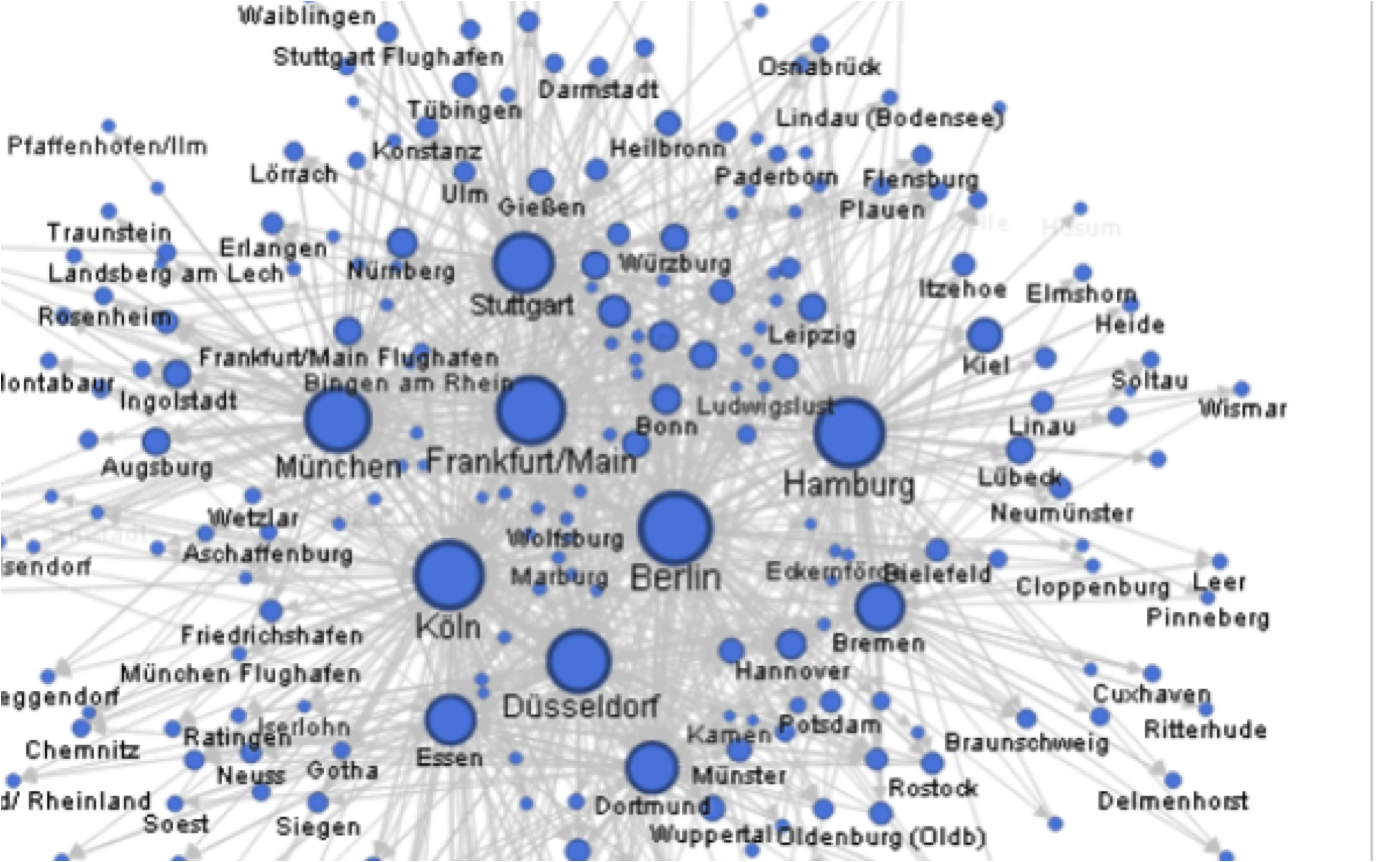
Guest post: How I did it – visualising carpooling patterns in Germany

Visualising carpool data

In a guest post for OJB, Natalia Karbasova explains how, with no coding experience, she used German carpool data for the basis of a data visualisation project.

Some time ago I was working on a new blog on the sharing economy, lets-share.de. It was high time to add some data-driven stories visualising important issues of the sharing economy, which change our lives.

Mitfahrgelegenheit.de is the popular German version of Carpooling.com. I decided to create a visualization which would show carpooling patterns between cities in Germany and, possibly, reveal hidden connections. Continue reading

Crowdfunding: what are you paying for?

Few examples illustrate the complexities of crowdfunding better than Shane Bauer‘s Beacon page to crowdfund $75,000 for a year-long investigation into US prisons. It includes a number of options for “backing” Bauer (a usefully generic term) which fall into 3 broad categories and are worth learning from:

1. Are you paying for content?

crowdfunding subscriptions on Beacon

The most obvious thing to charge for in a crowdfunding operation is content. And so, the most basic options in Bauer’s project (and in most Beacon projects) are subscriptions: monthly, six-monthly, and annual. Continue reading

My next ebook: Finding Stories in Spreadsheets

Finding Stories In Spreadsheets ebook cover

In a few weeks I will begin publishing my new ebook: Finding Stories In Spreadsheets.

The book has been written in response to requests from journalists who need a book on Excel aimed at storytellers, not accountants.

Finding Stories In Spreadsheets will outline a range of techniques, including ways to find the ‘needle in the haystack’ in text data, number calculations to make stories clearer, and methods of cleaning and combining data to tell new stories, including getting data ready for maps and charts.

The book will be available for a discounted rate for the first couple of weeks. To be informed when it’s available, register your interest on the Leanpub page.