Category Archives: online journalism

Teaching data journalism in developing countries: lessons from ODECA

Eva Constantaras

Eva Constantaras

Eva Constantaras is a data journalist and trainer who recently wrote the Data Journalism Manual for the UN Development Program. In a special guest post she talks about the background to the manual, her experiences in working with journalists and professors who want to introduce data journalism techniques in developing nations, and why the biggest challenges not technological, but cultural.

Over the last few years, there has been a significant shift in global experiments in data journalism education away from short term activities like boot camps and hackathons to more sustained and sustainable interventions including fellowships and institutes.

There is a growing awareness that the challenge of teaching data journalism in many countries is split straight down the middle between teaching data and teaching journalism — where neither data science nor public interest journalism are particularly common. Open data can be a boon to democracy — but only if there are professionals capable and motivated to transform that data into information for the public. Continue reading

Research on information security in local newspapers – the published version

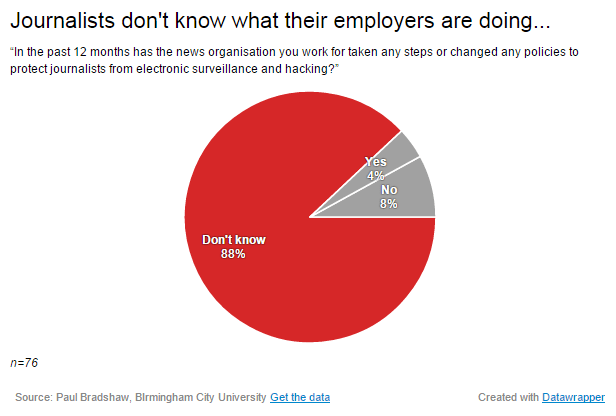
Pie chart: 88% of respondents did not know what their employers were doing about information security

Previously on OJB I posted about some ongoing research I was conducting into whether security practices in local news organisations had changed in the wake of the Snowden and RIPA (UK surveillance powers) revelations.

Now the full research paper has been published in the academic journal Digital Journalism, as part of a special edition on Journalism, Citizenship and Surveillance Society. The abstract pretty much sums it up:

“Despite reports of widespread interception of communications by the UK government, and revelations that police were using surveillance powers to access journalists’ communications data to identify sources, regional newspaper journalists show few signs of adapting source protection and information security practices to reflect new legal and technological threats, and there is widespread ignorance of what their employers are doing to protect networked systems of production. This paper argues that the “reactive” approach to source protection that seeks to build a legal defence if required, is no longer adequate in the context of workforce monitoring, and that publishers need to update their policies and practice to address ongoing change in the environment for journalists and sources.”

Other highlights of the edition include:

Instagram has launched a new “carousel” feature – here’s how journalists can use it

Example of using Instagram's new feature to tell Storm Doris story

Using Instagram’s new feature to tell Storm Doris story. Note the call to action to ‘swipe’: this can also be done in the caption to the first image or video.

This week Instagram announced a new feature that allows its users to share up to 10 pictures and videos within a single post. The feature resembles Stories in some ways, but with this key difference: posts are permanent. In a special guest post, Sam Gould explores how the feature can be used by journalists and news organisations.

You might be mistaken for thinking Instagram’s new “multiple photos and videos in one post” feature is just the same as Instagram’s Stories feature, which they introduced in August. But there is one difference which is key for journalists and publishers: these posts are permanent.

Although Instagram haven’t referred to the new updates as a slideshow or gallery, that is perhaps the simplest way to describe the new feature: users can swipe from left to right to move between pictures, and/or videos. Continue reading

Completa la versión en español de Excel para periodistas

excel para periodistasLa versión en español de mi tercer libro electrónico de periodismo de datos, Excel para periodistas, ya está terminada.

Es un texto que cubre una amplia variedad de técnicas de trabajo con hojas de cálculo: desde operaciones básicas hasta otras mucho más complejas para fusionar conjuntos de datos, buscar errores o procesar fechas. Continue reading

Hyperlocal publishers: BBC inviting feedback on local reporter and data hub plans

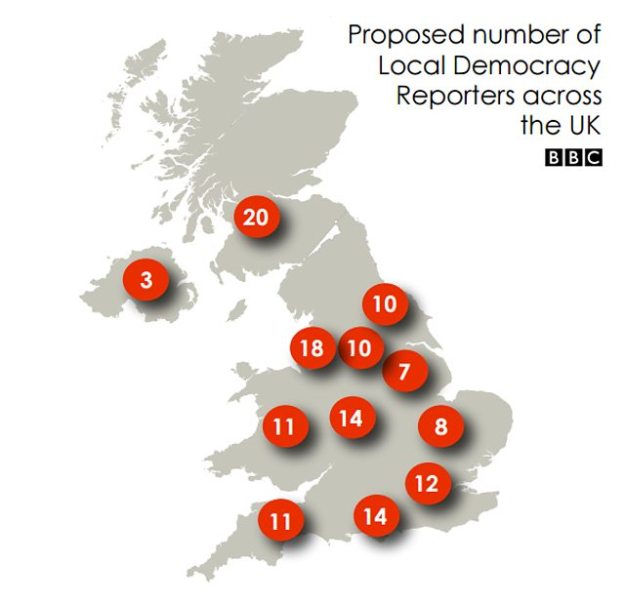
Map of BBC local democracy reporters

Image: BBC

Some time ago the BBC announced that it would be supporting local journalism by paying “local democracy reporters” (LDRs) to cover councils, courts and public services. The resulting stories would be supplied to local and hyperlocal news organisations.

Last month at an event in Birmingham more details were unveiled — and they didn’t make promising reading for hyperlocal publishers, as one of my students, Jane Haynes, reported: Continue reading

AllSides’s John Gable: from the Dark Ages of the internet to bursting bubbles

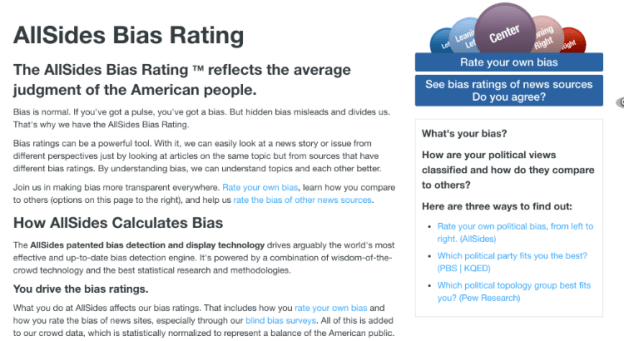
all-sides-bias-rating

AllSides uses a bias rating system

As part of a series of articles on the innovators tackling the filter bubble phenomenon, Andrew Brightwell interviews John Gable, founder and CEO of AllSides, a website that has devised its own way to present alternative perspectives on American news.

When a man who helped build the first successful web browser says there’s something wrong with the Internet, it probably pays to listen.

“The internet is broken.”

John Gable’s diagnosis has authority: he has more than 30 years in the tech business, including stints at Microsoft, AOL and as a product manager for Netscape Navigator.

Now he is founder and CEO of AllSides Inc, a news website with a distinct mission. Visit AllSides.com and it offers the news you’d expect on any US politics site, except that its lead stories include a choice of articles: one from the left, centre and right.

 “The headlines are so radically different that even reading [them together] tells you more about that topic than reading one story all the way through.”

Continue reading

5 highlights from news:rewired: from live video ethics to mobile data journalism

principal

Photo: Reuters News Agency

In a guest post for OJB, Livia Vieira rounds up some of the highlights of News:Rewired 2017, from best practices to deal with fake news and engagement with live videos, to newsroom automation, mobile data journalism and collaborative storytelling and groundbreaking initiatives in newsrooms. 

1. Engagement and ethics in live social video

According to Alfred Joyner, head of video of IBT Media, 66% of the views on Facebook Live videos happen after they end, so it is important to re-package the content, giving it new meaning.

Alfred also emphasised that IBT trains its anchors and uses high quality equipment to ensure the quality of transmissions — although all speakers hit on the point that Facebook Live is not TV, and so does not need to have that ‘casted’ format. Continue reading

Filter burst: Read Across The Aisle

Nick Lum

In a new series of interviews, Andrew Brightwell talks to the innovators fighting the polarising force of social media filter bubbles. First up, Read Across The Aisle – an app that monitors the political bias of your reading habits.

“This was a problem created by apps, so it’s natural that it might be solvable by apps.”

Nick Lum is describing his latest venture, Read Across The Aisle, a smartphone app that he hopes will offer its users a way out of their politically partisan echo chambers.

Currently, on KickStarter, Read Across The Aisle promises to do for your politics what Fitbit has done for your health.

By colour-coding the political slant of the news sites you read, it will indicate the potential bias you’re getting from your news. Continue reading

41 key moments in the history of online journalism {now 45} – have I missed any?

July 7 bombings image

A key moment in recent journalism history: Adam Stacey’s image taken during the July 7 bombings

In the history chapter of the Online Journalism Handbook you will find a timeline of key events in web journalism. While working on the forthcoming second edition I recently revisited and updated the timeline. Below are the 41 key events I have settled on — but have I missed any? Let me know what you think. Continue reading

The machine that learns how to stop whistleblowers

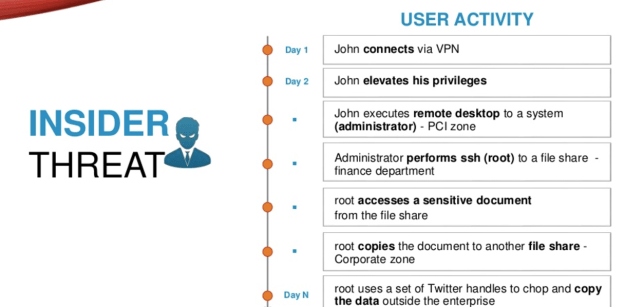
INSIDER THREAT John connects via VPN Administrator performs ssh (root) to a file share - finance department John executes remote desktop to a system (administrator) - PCI zone John elevates his privileges root copies the document to another file share - Corporate zone root accesses a sensitive document from the file share root uses a set of Twitter handles to chop and copy the data outside the enterprise USER ACTIVITY

An example of whistleblower behaviour taken from Harry McLaren’s slides

Workplace surveillance is nothing new, but this slide from Harry McLaren’s talk on Machine Learning for Threat Detection illustrates particularly well the challenges facing journalists wishing to protect whistleblowers.

McLaren is talking about malicious threats, and the way that machine learning can be used to identify suspicious patterns of behaviour. But the example given above is equally useful in illustrating the way that similar behaviour might be used to identify an employee intending to whistleblow on illegal, unethical or dangerous behaviour by his or her organisation. Continue reading